Tesla's door handles have been a regulatory headache and a source of owner confusion for years. Now, a unified redesign — one lever, one action, no ambiguity — appears to be headed to every vehicle in the lineup. Here's what you need to know.

1. The core change: one lever replaces two separate systems
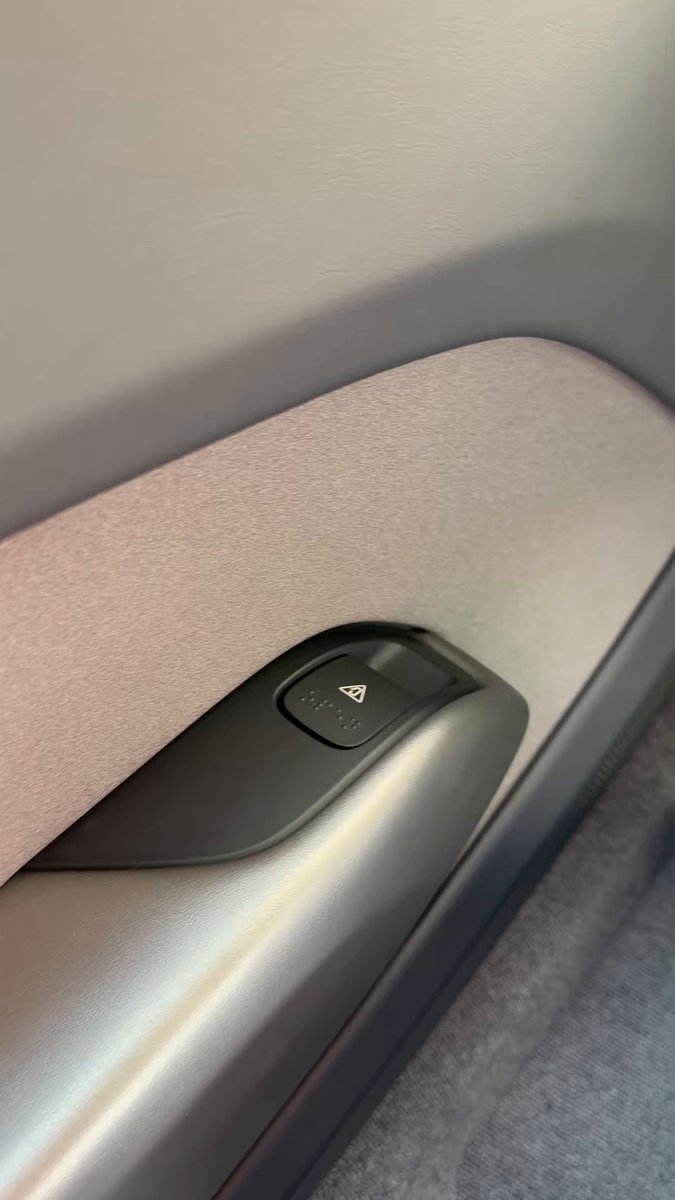
Today, Tesla interiors separate the powered door release from the emergency mechanical release — a distinction that has confused passengers, first responders, and regulators alike. The redesigned mechanism collapses both into a single pull-style lever marked "Open" (including in braille). A light pull activates the powered release; pulling further engages the mechanical backup. No hunting for a hidden tab. No wondering which one to use in an emergency. According to previous statements from Tesla Chief Designer Franz von Holzhausen, this single-lever approach is the direction Tesla has been working toward since at least September 2025.
2. The Cybertruck already shows the way
If you want a preview of where the rest of the lineup is headed, look at the Cybertruck. Its doors use electrically powered operation with exterior release buttons and a clearly accessible manual override for power-loss situations. Prominent Tesla observer Whole Mars Catalog flagged the design this week, calling it "much simpler" and predicting it will become standard across all Tesla vehicles. The Cybertruck's architecture is effectively the proof of concept the rest of the fleet is being redesigned around.
3. Regulators on both sides of the Pacific pushed this
This isn't purely a design preference — regulatory pressure has been building for years. In the United States, NHTSA opened a defect-petition investigation in December 2025 covering roughly 179,000 Model 3 (model year 2022) vehicles over concerns that the manual release was hidden and unintuitive during a power loss. By July 2026, NHTSA had expanded scrutiny to approximately 174,000 Model Y (model year 2021) vehicles following reports of exterior handle electrical faults. On July 23, 2026, NHTSA formally approved a rulemaking process to establish new federal safety standards for "reliable and readily apparent door escape systems" — language that directly targets flush electronic handle designs. Meanwhile, China's Ministry of Industry and Information Technology has drafted rules, effective 2027, that will outright ban electric-only door handles and require an accessible mechanical release on both interior and exterior surfaces of all new vehicles sold there.
4. Tesla has already acted in China — and it's a signal
Tesla didn't wait for China's 2027 deadline to start moving. The company conducted a voluntary recall covering approximately 4.3 million Model 3, Y, S, and X vehicles in China, adding warning labels and a software update that automatically lowers windows after a collision — a workaround that helps with door egress when handles fail. That recall, affecting essentially the entire China fleet, signals how seriously Tesla is treating the regulatory environment there. The permanent hardware fix — the unified lever — is the longer-term answer to what that software patch was addressing in the short term.
5. Late 2026 or early 2027 is the expected production window
According to background reporting, the redesigned door handles are expected to appear on production vehicles in late 2026 or early 2027. Franz von Holzhausen reaffirmed the planned redesign as recently as July 2026. The NHTSA rulemaking process will take additional years to finalize, but Tesla appears to be moving ahead of the regulatory timeline rather than waiting for a mandate. Owners of current vehicles won't get a hardware retrofit — this is a new-production change — but the software-side improvements (automatic window lowering post-collision) have already been pushed to existing cars via over-the-air updates.
The door handle has been one of Tesla's most persistent friction points — elegant in concept, frustrating in practice when things go wrong. A single, clearly marked lever that works the same way whether the car has power or not is the kind of unglamorous fix that matters far more to real-world safety than most headline features. If Whole Mars Catalog's read is right, every Tesla rolling off the line in 2027 will handle this the same way — and the debate over hidden releases will finally be over.
Related Gear
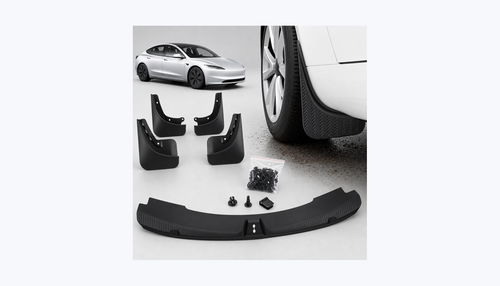
Gear up your Model 3 with tested, custom-fit BASENOR accessories — shop Model 3 accessories →
Sources & reporting notes
The links below identify the material source records used for this report.
- @wholemars on X (2026-09-17T20:13:47.000Z) — Direct source
Source links are preserved as published or accessed. See our editorial standards and corrections policy.
The BASENOR Editorial Desk covers Tesla, SpaceX, and related technology, curating reporting from primary sources — official accounts, regulatory filings, and software release data. Every article passes source-record and fact-checking review before publication. About the newsroom.
This report was curated by the BASENOR Editorial Desk from the sources listed above. Read our editorial standards or email editorial@basenor.com to report an error.