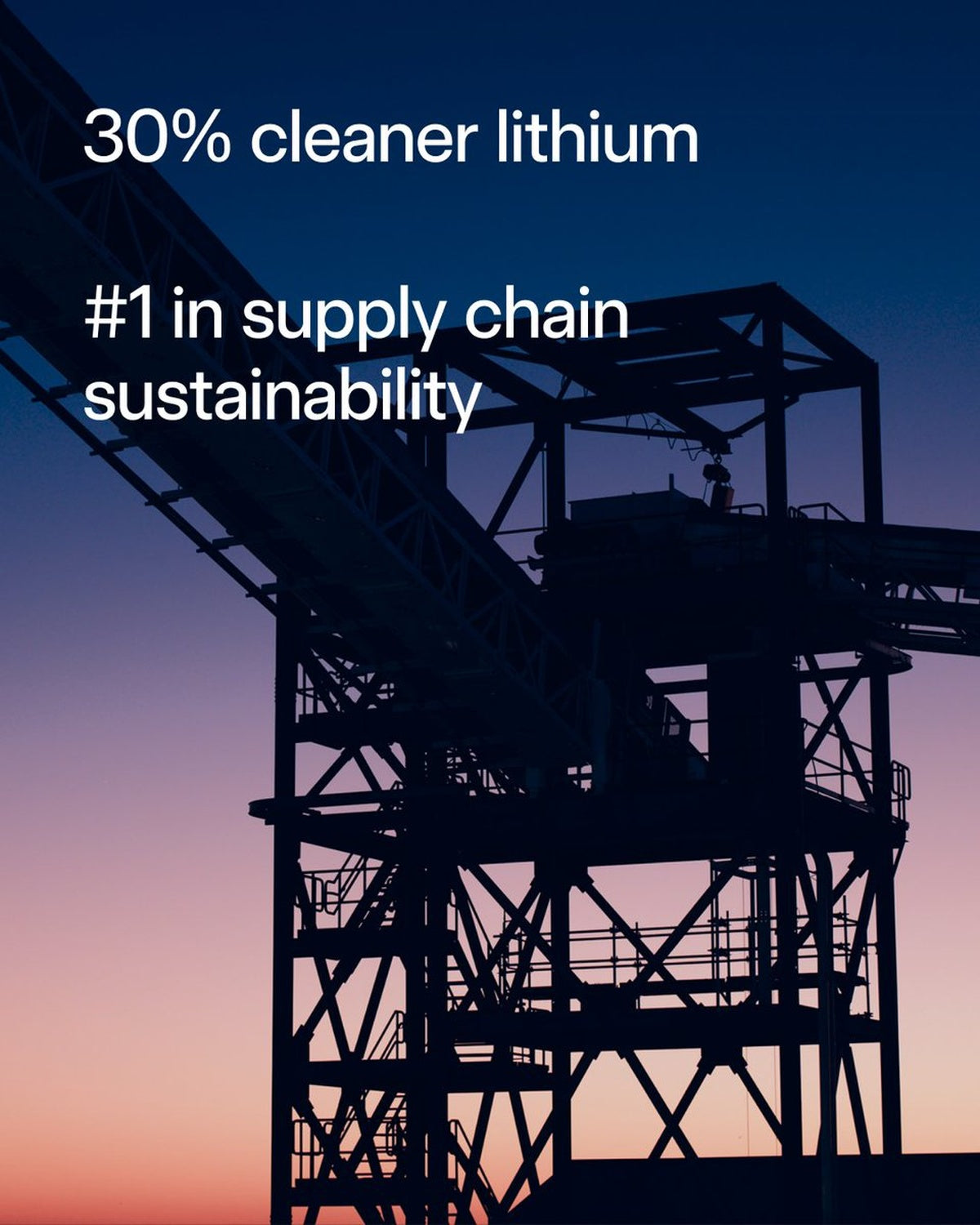
Tesla confirmed Monday that its Gulf Coast lithium refinery in Corpus Christi, Texas is now the largest facility of its kind in North America, producing battery-grade lithium hydroxide with over 30% lower emissions than traditional hard-rock refining methods. The company also announced it ranked first for the second consecutive year in Lead the Charge's 2025 automaker supply-chain ranking, placing ahead of Ford, Volvo, and Mercedes-Benz.

The announcement caps a multi-year push to bring critical battery-material processing onshore — a capability that, until recently, was almost entirely controlled by refiners in China. For Tesla owners and shareholders alike, this is the piece of the vertical-integration puzzle that most directly impacts the cost, availability, and carbon footprint of every future battery pack the company builds.
What Tesla Actually Built
Groundbreaking on the Corpus Christi facility took place in 2023, with integrated plant startup beginning in 2025. The refinery began initial production in December 2024 and remains in an early production ramp, per Tesla's Q4 2025 filing. Total capital investment exceeds US$1 billion.
The plant currently produces about 20,000 metric tons of battery-grade lithium hydroxide per year — enough for roughly 30 GWh of battery capacity — with a longer-term design target, announced in 2023, of 50,000 tonnes of lithium carbonate equivalent (LCE) annually, enough for roughly one million electric vehicles. Notably, it is the first spodumene-to-lithium-hydroxide refinery in North America, meaning it takes raw hard-rock ore concentrate and produces finished cathode-grade material in a single integrated flow.
Key Figures
| Metric | Value |
|---|---|
| Annual output | ~20,000 metric tons lithium hydroxide (~30 GWh) |
| EVs supplied per year | ~1 million (longer-term design target) |
| Capital investment | > US$1 billion |
| Emissions vs. traditional | 30%+ lower |
| Energy consumption | 20% less than conventional |
| Permanent jobs | 250+ |
| Operational since | December 2024 (in early production ramp) |
The Chemistry That Makes the 30% Claim Possible
The emissions figure isn't marketing spin — it stems from a fundamentally different refining process. Traditional lithium refineries rely on concentrated sulfuric acid to leach lithium out of spodumene ore, a step that is energy-intensive and produces sodium sulfate as a hazardous byproduct. Sodium sulfate has almost no commercial use at the volumes refineries generate, so it typically ends up in tailings ponds or landfills.
Tesla's facility uses what the company calls an "acid-free" or alkaline leach process, according to reporting from Supply Chain Digital and Electrek. The process eliminates sulfuric acid entirely and produces a non-hazardous co-product called anhydrite, which can be sold into the concrete industry as a construction additive. In other words, the biggest waste stream from traditional lithium refining becomes a saleable material.
Tesla claims the process also delivers 30% lower production costs and requires 60% less costly reagents than conventional methods, while operating closed-loop water systems to minimize freshwater draw. Those cost figures matter as much as the emissions figures — cheaper refining is one of the levers that can eventually pull down pack costs across Model 3, Model Y, Cybertruck, and Semi production.
Why the Lead the Charge Ranking Matters
The second announcement in Tesla's tweet — first place for the second year running in Lead the Charge's 2025 automaker supply-chain ranking — is easier to overlook but strategically significant. Lead the Charge, an industry watchdog coalition, scores automakers on how transparently and responsibly they source battery minerals, steel, aluminum, and other materials. Ranking ahead of Ford, Volvo, and Mercedes-Benz two years in a row suggests Tesla's traceability and sourcing disclosures — historically a soft spot for the entire EV industry — are now measurably stronger than legacy competitors.
Combined with the refinery, the ranking paints a coherent picture: Tesla is trying to make sustainable sourcing a competitive moat, not a compliance checkbox.
What It Means for Tesla Owners
For existing owners, the direct impact is limited in the short term — battery packs in cars on the road today were built with material sourced years ago. But three second-order effects are worth watching:
- Pack cost stability. Owning refining capacity insulates Tesla from lithium spot-price spikes, which have swung dramatically over the past three years. That should translate to more predictable pricing on new vehicles and Powerwall/Megapack units.
- Supply security for high-volume programs. Cybertruck ramp, next-gen Model 2/Q, Semi, and Megapack all compete for lithium. In-house refining reduces the risk of one program getting throttled by material shortages.
- Regulatory tailwinds. As IRA battery-sourcing requirements tighten each year, packs built with U.S.-refined lithium qualify more easily for full federal tax credits. That's a direct pricing advantage over competitors still relying on Chinese-refined material.
What to Watch Next
Three signals will tell us whether this facility is delivering on its promise:
- Q2 2026 earnings call. Watch for Tesla to break out lithium refining as a cost-of-goods contributor and confirm whether unit economics are matching the 30% cost-reduction claim.
- Feedstock announcements. The refinery needs spodumene concentrate to run. Any new offtake agreements — particularly with North American or allied-nation miners — will indicate how far Tesla can push regional supply-chain independence.
- A second refinery. Musk has previously hinted at additional processing capacity. If Tesla announces a second site, it's a strong signal the Corpus Christi economics are working.
For an industry that spent the last decade obsessing over cell chemistry and gigafactory floor space, the story is quietly shifting upstream. The company that controls the refinery controls the roadmap.
Related Gear
Gear up your Tesla with tested, custom-fit BASENOR accessories — shop Tesla accessories →
Sources & reporting notes
The links below identify the material source records used for this report.
- @Tesla on X (2026-07-07T17:11:14.000Z) — Direct source
Source links are preserved as published or accessed. See our editorial standards and corrections policy.
The BASENOR Editorial Desk covers Tesla, SpaceX, and related technology, curating reporting from primary sources — official accounts, regulatory filings, and software release data. Every article passes source-record and fact-checking review before publication. About the newsroom.
This report was curated by the BASENOR Editorial Desk from the sources listed above. Read our editorial standards or email editorial@basenor.com to report an error.