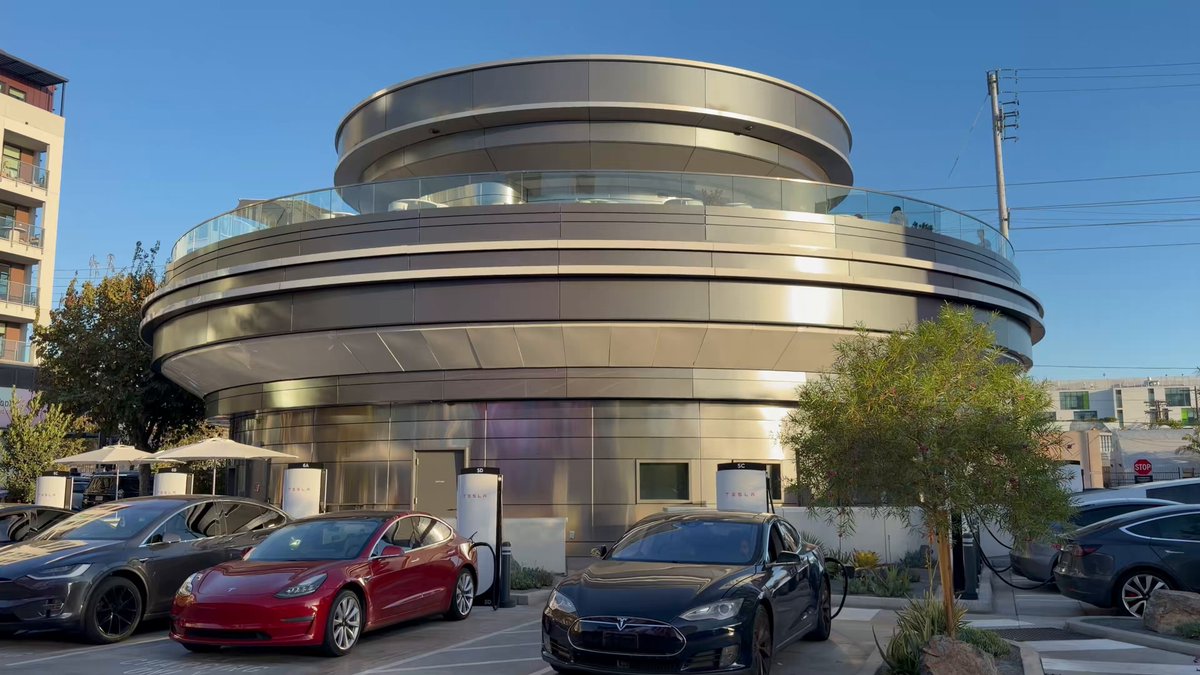
Elon Musk dropped a notable clarification on Wednesday night: the Tesla Diner isn't just a novelty — it's a visible piece of Tesla's broader push to power its global Supercharger network with renewable energy. The comment came in reply to Tesla watcher Sawyer Merritt, who was visiting the Hollywood location for the first time. Here's what the exchange reveals, and why it matters for the network every Tesla owner depends on.


1. Musk Explicitly Tied the Diner to a Renewable Energy Strategy
When Merritt posted his first impressions of the Tesla Diner, Musk's reply was direct: the location is part of Tesla's push to source renewable energy for the Supercharger network. That framing recontextualizes the Diner from a marketing stunt into an infrastructure node — one designed to demonstrate and potentially anchor clean energy supply at a high-visibility charging site. It's the clearest public statement yet connecting the experiential Supercharger concept to Tesla's energy sourcing goals.
2. Tesla Energy Just Signed Nearly 650 MW in New Power Purchase Agreements
The timing of Musk's comment isn't coincidental. According to background research, Tesla Energy signed two long-term power purchase agreements totaling nearly 650 MW of renewable capacity as of late July 2026. PPAs of this scale are how large energy consumers lock in clean electricity supply at predictable costs over years or decades. For the Supercharger network — which spans tens of thousands of stalls globally — securing renewable supply through PPAs is a more scalable approach than on-site solar alone.
3. The Diner Format Is Designed for On-Site Energy Integration
The Tesla Diner in Hollywood features a large solar canopy over its Supercharger stalls, a design that's purpose-built for on-site generation. Locations like this serve as proof-of-concept sites where Tesla can demonstrate renewable-powered charging at scale in a high-traffic urban environment. If the model proves operationally sound, it gives Tesla a replicable blueprint for future Supercharger Diner locations — each one potentially functioning as a small renewable energy hub rather than a simple grid draw.
4. What This Means for the Broader Supercharger Network
Most Supercharger stations today draw from the local utility grid, which varies widely in its renewable mix depending on region. Tesla's renewable energy push — combining on-site solar at flagship locations with large-scale PPAs — is aimed at shifting that equation across the entire network, not just the headline destinations. For owners, the practical near-term impact is limited: charging speed and availability won't change. But for Tesla's long-term sustainability positioning and its energy business, threading the Supercharger network into a renewable supply strategy is a significant structural move. Follow our charging news for updates as more details emerge on the PPA rollout and new Diner locations.
Related Gear
Gear up your Tesla with tested, custom-fit BASENOR accessories — shop Tesla accessories →
Sources & reporting notes
The links below identify the material source records used for this report.
- @SawyerMerritt on X (2026-07-30T02:20:22.000Z) — Direct source
- @elonmusk on X (2026-07-30T02:53:19.000Z) — Direct source
Source links are preserved as published or accessed. See our editorial standards and corrections policy.
The BASENOR Editorial Desk covers Tesla, SpaceX, and related technology, curating reporting from primary sources — official accounts, regulatory filings, and software release data. Every article passes source-record and fact-checking review before publication. About the newsroom.
This report was curated by the BASENOR Editorial Desk from the sources listed above. Read our editorial standards or email editorial@basenor.com to report an error.