When Whole Mars Catalog called Tesla's Texas operation 'insane vertical integration,' it wasn't hyperbole — it was a fairly accurate summary of what's been quietly assembled along the I-35 corridor. From raw lithium pulled out of the ground in Corpus Christi to the neural networks that teach a car to drive itself, Tesla has built a production chain in Texas that few manufacturers anywhere in the world can match. Here's what that actually looks like, layer by layer.

1. Raw Material Sourcing — Lithium Refining in Corpus Christi
Most automakers buy battery-grade lithium from a handful of global suppliers, inheriting every price swing and supply disruption that comes with that dependency. Tesla doesn't. The company's $1 billion lithium refinery in Corpus Christi became fully operational in February 2026, processing raw lithium into battery-grade lithium hydroxide at a scale designed to supply roughly one million EVs per year. With a ramp target of 50 GWh capacity, it's the first facility of its kind in North America at this scale — and it sits entirely within Tesla's own supply chain.
2. Cathode Production — A North American First
Cathodes are the most chemically complex and cost-sensitive component in a lithium-ion battery, and historically they've been dominated by Asian manufacturers. As of August 2026, Tesla's cathode production facility at Giga Texas is operating at scale — the first large-scale cathode plant in North America. Tesla uses its proprietary fully dry-electrode process for both anode and cathode manufacturing, with initial capacity around 10 GWh. Controlling cathode chemistry in-house gives Tesla direct leverage over energy density, cost, and supply continuity in ways a purchase order simply can't replicate.
3. 4680 Cell Manufacturing — 100 Million and Counting
The 4680 cylindrical cell was Tesla's bet that a bigger, structurally integrated cell could unlock both cost and range improvements simultaneously. Giga Texas has been producing them since 2022. By September 2024, Tesla had rolled its 100 millionth 4680 cell off the line, with weekly production approaching 1.4 million cells at its March 2024 peak. By the end of 2024, the in-house 4680 had become Tesla's lowest-cost cell on a per-kWh basis — a meaningful milestone for a technology that was still in early ramp just two years prior.
4. Vehicle Assembly — Model Y, Cybertruck, and Now Cybercab
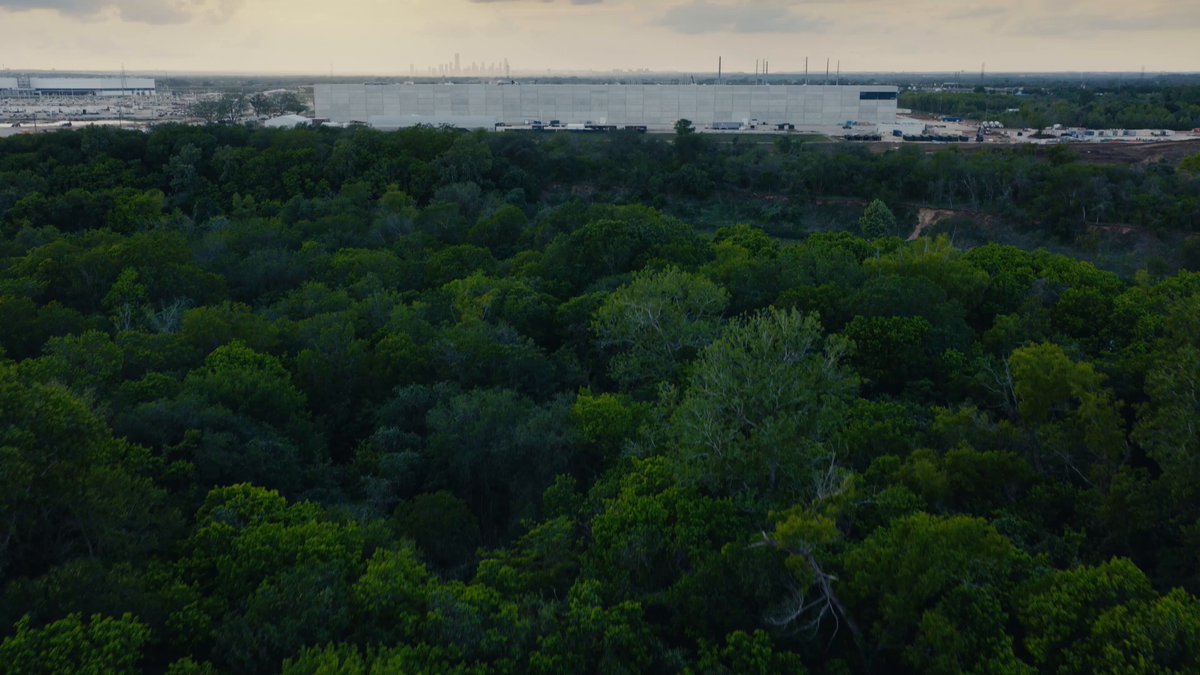
Giga Texas is Tesla's U.S. manufacturing anchor. Model Y production started there in April 2022; Cybertruck full-scale manufacturing followed in November 2023. The facility hit its 500,000th vehicle produced by October 2025. The newest addition to the line is the Cybercab — Tesla's first vehicle on its next-generation platform — which entered full production at Giga Texas in Q2 2026. Tesla has indicated robotaxi service could launch before the end of August 2026, meaning the vehicles being assembled in Austin today could be carrying passengers in weeks.
5. In-House Chip Design and AI Compute
Tesla designs its own AI training chips rather than relying entirely on third-party silicon — a decision that gives the company control over both the hardware roadmap and the economics of running large-scale neural network training. The company is expanding its onsite AI compute capacity at Giga Texas, targeting nearly 400 megawatts of capacity in the second half of 2026. That's not a data center bolted onto a factory — it's compute infrastructure built into the same campus where the vehicles are assembled, enabling a tighter feedback loop between production data and model iteration.
6. AI Model Training for Autonomous Driving
The final layer is arguably the most consequential. Tesla trains the neural networks that power FSD and the Cybercab's autonomous systems using data collected from its own fleet — processed on its own chips, at its own facility, in Texas. The entire loop from real-world driving data to updated model weights to over-the-air deployment runs inside Tesla's infrastructure. For most of the auto industry, autonomy is still a software stack purchased or licensed from a third party. For Tesla, it's a proprietary system trained on proprietary hardware using proprietary data — all within a few miles of where the cars are built.
Why This Matters
Vertical integration at this depth isn't just an operational preference — it's a structural moat. When lithium prices spike, Tesla's Corpus Christi refinery buffers the impact. When a competitor can't source cathode material, Tesla's in-house plant keeps running. When a new FSD behavior needs to be trained, Tesla doesn't wait on a vendor's roadmap. The concentration of all these capabilities within a single state — and increasingly, a single campus ecosystem — is what makes the Texas operation genuinely unusual, even by the standards of a company that has always pushed to own more of its own stack.
🚕 Following the Robotaxi rollout? See every operating city, launch date and announced market in our Tesla Robotaxi Tracker.
Related Gear
Gear up your Tesla with tested, custom-fit BASENOR accessories — shop Tesla accessories →
Sources & reporting notes
The links below identify the material source records used for this report.
- @wholemars on X (2026-08-21T23:40:20.000Z) — Direct source
Source links are preserved as published or accessed. See our editorial standards and corrections policy.
The BASENOR Editorial Desk covers Tesla, SpaceX, and related technology, curating reporting from primary sources — official accounts, regulatory filings, and software release data. Every article passes source-record and fact-checking review before publication. About the newsroom.
This report was curated by the BASENOR Editorial Desk from the sources listed above. Read our editorial standards or email editorial@basenor.com to report an error.