The Boring Company publicly thanked the Cybersecurity and Infrastructure Security Agency (CISA) on August 10 for an ongoing partnership aimed at strengthening safety and security across the Vegas Loop. The announcement is light on specifics, but it lands against a backdrop of genuine operational depth — the system has already earned federal recognition for its security posture, and it's actively expanding. Here's what the partnership context actually tells us.

1. CISA Is Not a Routine Partner
CISA — the Cybersecurity and Infrastructure Security Agency — sits under the Department of Homeland Security and focuses on protecting critical national infrastructure from both physical and cyber threats. Its involvement with the Vegas Loop signals that the system is being treated as serious transportation infrastructure, not just a novelty attraction. For a privately operated underground transit network still in expansion mode, that kind of federal engagement carries real weight with regulators and prospective municipal partners.
2. The System Already Holds the TSA's Highest Security Rating
Before this CISA announcement, the Vegas Loop's LVCC segment had already earned the Transportation Security Administration's Gold Standard Award — the highest possible rating in a review covering 17 categories, including security plans, staff training, emergency drills, public outreach, and background check programs. That baseline matters: the CISA partnership appears to build on an already-robust security foundation rather than respond to a deficiency.
3. The Physical Safety Infrastructure Is Extensive
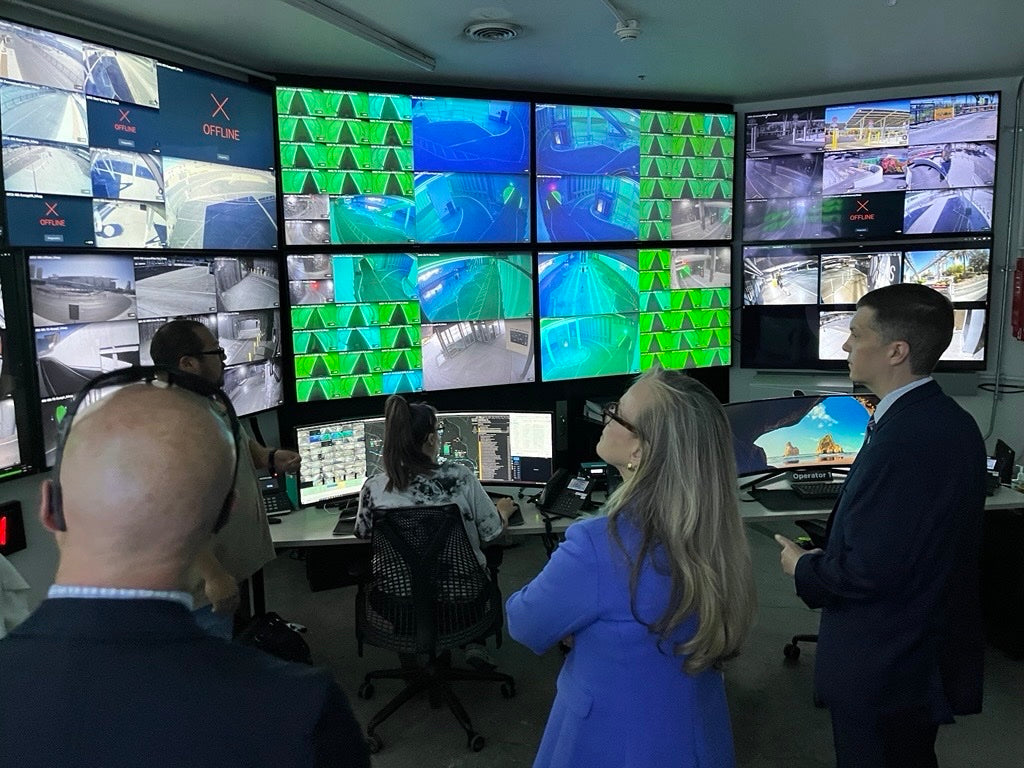
The tunnels are equipped with emergency exits, fire detection and suppression systems, and a fire-rated first responder communication network that is regularly tested with local police and fire departments. A redundant, bidirectional ventilation system is designed to clear smoke during an evacuation. Critically, the Loop has no internal touch hazards — there's no third rail — which simplifies safe evacuation and reduces fire risk. Every tunnel is fully illuminated with 100% camera coverage, and passengers have direct access to a 24/7 Operational Control Center via Blue Light Stations, LTE, and Wi-Fi.

4. The Timing Aligns With Active Expansion
The Vegas Loop has now transported over 4 million passengers across 11 stations. In January 2026, the City of Las Vegas issued the first permit for a privately funded tunnel connecting the Loop from the Las Vegas Convention Center to downtown — early construction work is underway, though full operational approval hasn't been granted yet. Clark County was also considering ordinance changes as of April 2026 to standardize safety and operational requirements for the expanding network. Formalizing a CISA relationship now, before that expansion is complete, is a smart move: it puts federal security frameworks in place while the system is still being built out, rather than retrofitting compliance later.
5. A $25M Maintenance Contract Backs the Long-Term Commitment
The Las Vegas Convention and Visitors Authority unanimously approved a $25 million, five-year maintenance agreement with The Boring Company running through June 2031, according to public records. That contract covers the convention center's underground transit system and signals that the LVCVA — the Loop's primary institutional partner — has confidence in the operator's long-term viability. Pairing that financial commitment with a CISA security partnership builds the kind of institutional credibility the company will need as it pitches the Loop model to other cities.

The CISA announcement is brief, but the context around it tells a more complete story: a system that has quietly assembled federal-level security credentials, a long-term maintenance contract, and active expansion permits is now formalizing its relationship with the agency responsible for protecting critical national infrastructure. Whether that translates into a replicable model for other cities remains the open question — and the downtown Las Vegas tunnel permit will be the first real test of whether the Loop can scale beyond the convention corridor.
Related Gear
Gear up your Tesla with tested, custom-fit BASENOR accessories — shop Tesla accessories →
Sources & reporting notes
The links below identify the material source records used for this report.
- @boringcompany on X (2026-08-10T13:26:31.000Z) — Direct source
Source links are preserved as published or accessed. See our editorial standards and corrections policy.
The BASENOR Editorial Desk covers Tesla, SpaceX, and related technology, curating reporting from primary sources — official accounts, regulatory filings, and software release data. Every article passes source-record and fact-checking review before publication. About the newsroom.
This report was curated by the BASENOR Editorial Desk from the sources listed above. Read our editorial standards or email editorial@basenor.com to report an error.