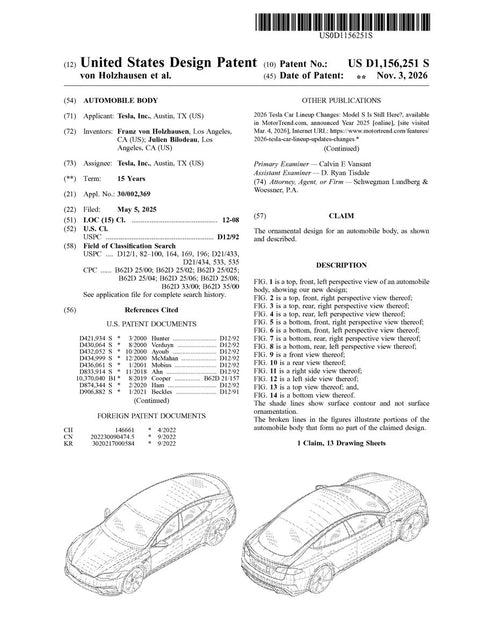
Tesla sold 626,498 vehicles in China in 2025 using exactly two models. No SUV lineup. No entry-level hatchback. No regional variant engineered specifically to chase local tastes. A podcast clip shared by Tesla commentator Ray on November 3 frames the question bluntly: why does that work, and what does it have in common with how Apple operates in the same market?

The Apple Parallel
The comparison to Apple is not accidental. Both companies sell premium-priced hardware in a market saturated with cheaper domestic alternatives, and both have cultivated a brand identity that functions almost independently of spec sheets. Chinese consumers who buy an iPhone are not always buying the best camera or the longest battery life available at that price point — they are buying into a signal, a status layer, a product ecosystem that feels globally validated.
Tesla operates similarly. The Model 3 and Model Y compete in a segment where domestic manufacturers like BYD, Xiaomi, and XPeng are releasing new models constantly, often at lower prices and with feature sets specifically tuned for Chinese preferences — larger screens, more karaoke integrations, more elaborate ambient lighting. Tesla's response has largely been to not compete on those terms at all.
The Numbers Behind the Strategy
| Metric | Figure | Context |
|---|---|---|
| 2025 China sales | 626,498 units | 4.8% market share, #4 automaker |
| 2026 domestic retail (Jan–Sep) | 381,088 units | –11.9% year-over-year |
| 2026 Gigafactory wholesale (Jan–Oct) | 810,889 units | +21.4% year-over-year |
| 2026 exports (Jan–Sep) | 361,972 units | Nearly doubled vs. same period 2025 |
| Export share of wholesale | ~49% | Up from 29% in 2025 |
Sources: CnEVPost, industry reports
The headline number — 626,000 units in 2025 — is real, but the 2026 picture is more complicated. Domestic retail sales in China are down nearly 12% through September. Tesla's Q3 2026 domestic decline of 16% outpaced the broader Chinese NEV market's 10% contraction, which itself was partly caused by Beijing reducing purchase tax exemptions. The brand appeal that drives the Apple comparison has limits when macro conditions tighten.
Shanghai as Export Engine
What the raw domestic sales figure obscures is that the Shanghai Gigafactory has quietly transformed into Tesla's primary global export hub. Through the first ten months of 2026, the factory shipped 810,889 vehicles in total — with exports now accounting for roughly half of that output, up from just 29% a year earlier. In other words, Tesla is increasingly using China's manufacturing cost base to serve markets in Europe, Asia-Pacific, and elsewhere, even as local demand softens.
That dual role — domestic brand play and global export platform — gives Shanghai a strategic resilience that pure domestic sales figures don't capture. A decline in Chinese consumer demand doesn't necessarily translate into a decline in Gigafactory utilization.
Where the Strategy Shows Strain
The brand-over-specs approach does come with a cost. Tesla introduced its "Tesla Ease" financing plan in October 2026 — low down payments, low monthly payments, zero interest on the Model 3 Rear-Wheel Drive (priced at 235,500 yuan). Industry analysts in China have characterized these moves as disguised price cuts, a signal that aspirational brand positioning alone isn't enough to hold volume when domestic competitors are releasing new models every quarter at aggressive price points.
BYD, Xiaomi, and XPeng are not standing still. Each is iterating faster on hardware and software features specifically calibrated for Chinese consumer preferences. Tesla's two-model lineup, which reads as disciplined focus in one light, can also read as limited optionality when a buyer wants a larger vehicle, a different form factor, or a feature set that Tesla simply doesn't offer.
The Apple analogy holds up most cleanly when the brand premium is strong enough to absorb that gap. The 2026 domestic sales data suggests that premium is under more pressure than it was a year ago — and that Tesla's China story is increasingly being written in export ledgers as much as domestic showrooms.
Related Gear
Gear up your Model Y with tested, custom-fit BASENOR accessories — shop Model Y accessories →
Sources & reporting notes
The links below identify the material source records used for this report.
- @ray4tesla on X (2026-11-03T21:32:37.000Z) — Direct source
Source links are preserved as published or accessed. See our editorial standards and corrections policy.
The BASENOR Editorial Desk covers Tesla, SpaceX, and related technology, curating reporting from primary sources — official accounts, regulatory filings, and software release data. Every article passes source-record and fact-checking review before publication. About the newsroom.
This report was curated by the BASENOR Editorial Desk from the sources listed above. Read our editorial standards or email editorial@basenor.com to report an error.