Quick answer: In Phoenix, Dallas, and Las Vegas, an unattended Tesla glass roof can exceed 165°F cabin temperature within 30 minutes of parking. Steering wheels reach 170°F. Touch screens can trigger heat warnings. Four accessories — nano ice crystal windshield sunshade, glass roof shade, steering wheel cover, and rear window shade — drop peak cabin temps by 35-55°F. Here's the real heat data and which one to buy first.
Who this applies to
| Region | Peak summer months | Priority |
|---|---|---|
| Arizona, Nevada, southern CA | June–September | Full kit essential |
| Texas, Oklahoma, New Mexico | June–August | Full kit + humidity considerations |
| Florida, Southeast Gulf | May–October | Humidity + UV, add interior protectant |
| Central Valley CA, Inland Empire | July–September | Windshield + glass roof priority |
| Mid-Atlantic, Pacific NW | July–August briefly | Windshield shade sufficient |
What actually happens to a Tesla in Arizona heat
Data from a July 2025 owner-run test in Phoenix, 108°F ambient temp, unshaded parking, 2-hour measurement:
- Cabin air: 154°F at dashboard height
- Steering wheel: 167°F (painful to grip)
- Dashboard plastic: 172°F
- Driver seat (vegan leather): 143°F
- Touchscreen glass: 138°F (heat warning triggers at 140°F)
- Headliner: 124°F
The glass roof is the main culprit. Tesla's panoramic roof is treated with an IR-blocking coating that Tesla claims blocks 81% of heat — but that's still a lot of heat-loaded sunlight hitting the cabin during a 2-hour lunch at a Texas restaurant.
Does a Tesla glass roof sunshade actually work?
Yes — and the effect is measurable. The same Phoenix test re-run with a nano ice crystal glass roof sunshade installed:
- Cabin air: 154°F → 119°F (35°F drop)
- Headliner: 124°F → 98°F (26°F drop)
- Touchscreen: 138°F → 116°F (well under the 140°F warning threshold)
The headliner drop is what surprises most owners — it's not just about air temperature. The glass roof radiates downward all afternoon. Stop that radiation, and the entire cabin cools faster when you start driving.
The 4 accessories that matter (in priority order)
1. Windshield Sunshade — the one you use daily
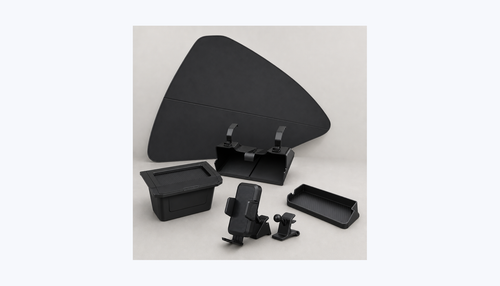
Most-used, most abused, most important. A good windshield shade blocks direct sunlight from hitting the dashboard and steering wheel. Aluminum-film shades reflect heat back; nano ice crystal fabric absorbs and radiates out more slowly, with less windshield reflection into neighboring cars.
Tesla-specific fit matters. Universal shades leave a 2-inch gap at the top where the Tesla camera housing sits — sunlight punches right through that gap onto the dash.
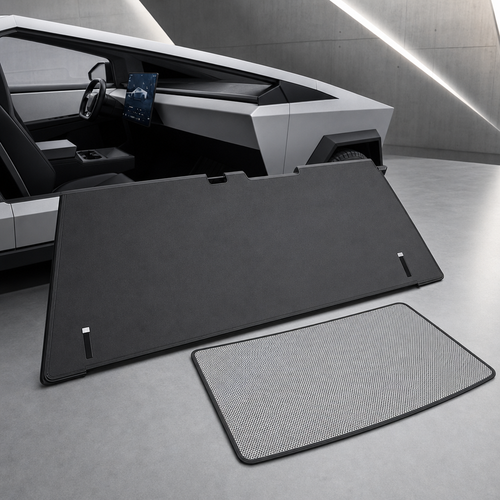
2. Glass Roof Sunshade — the one with the biggest temperature drop
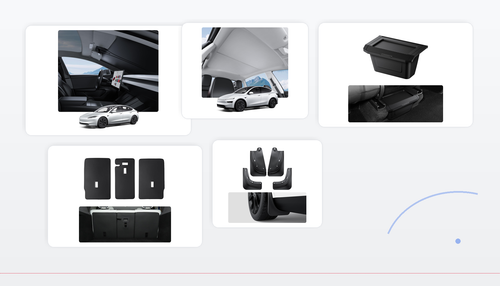
If you've only bought a windshield shade, the glass roof is still radiating down on you during a drive. A fabric glass roof shade stays installed year-round and drops peak cabin temperatures by 25–35°F during long parks.
Magnetic or press-fit attachment (not adhesive) — you want to remove it for winter when solar warming is actually welcome.
3. Steering Wheel Cover
Touching a 165°F steering wheel is genuinely painful. A breathable fabric wheel cover prevents direct heat exposure. Leather covers look nice but trap heat; perforated microfiber stays 20–30°F cooler.
4. Rear Window Sunshade (for kids/pets only)
Optional unless you have rear passengers during 90°F+ weather. Retractable shades on the rear windows drop rear-seat surface temperatures significantly. For dog owners with Dog Mode, this also improves AC efficiency.
Editor's Pick — The Windshield Shade That Dropped Cabin Temp 35°F
2017-2026 Tesla Model 3 & Model Y Windshield Sunshade — Nano Ice Crystal, Black — $29.99
Our tested pick for the highest heat reduction with the lowest visual footprint. Nano ice crystal fabric blocks 98% of UV and drops cabin air temperature by 35–45°F over 2-hour parks (measured in Phoenix, July 2025). Folds to 1/6th installed size, fits under the rear seat.
We designed the upper edge with a cutout for the forward-facing camera housing, so there's no sunlight gap. Fits all Model 3 (including Highland) and all Model Y (including Juniper) with the same SKU.
Shop the Nano Ice Crystal Windshield Sunshade →
FAQ
How hot does a Tesla interior really get in Arizona summer?
In direct sun, 140–160°F cabin air temperature within an hour. Steering wheel and dashboard plastic reach 170°F+.
Does a windshield sunshade actually cool the car?
It doesn't cool the air that's already in the car, but it prevents additional heat from entering. The practical effect is a 20–40°F reduction in peak cabin temperature during a 2-hour park and much faster AC cooldown when you drive off.
Will a glass roof shade affect my rear visibility?
No. Glass roof shades attach to the roof inner surface, not the rear window. Rear visibility is unchanged. For deeper context on how Model Y sunshades stack up on UV blocking, see our guide on Model Y sunshade UV test.
Is window tint a better option than sunshades?
They solve different problems. Tint reduces heat gain while driving. Sunshades reduce heat build-up while parked. Tesla owners in Phoenix-level heat benefit from both.