BASENOR Testing Lab · Desert-state heat guide
We Tested Tesla Accessories for Arizona, Nevada, and Texas Heat — What Actually Helps in 2026
For Phoenix, Las Vegas, Austin, Dallas, Houston, and San Antonio owners, the winning setup is not a random accessory bundle. It is a heat stack: windshield shade first, roof shade by exact generation second, then preconditioning habits that make both work harder.
Quick Answer
Best Overall: start with the BASENOR Nano Ice Crystal windshield shade, then add the roof shade that matches your exact Tesla generation. The windshield controls parked dash heat; the roof shade controls overhead radiant heat while driving.
Best Value: the $24.99 Model 3 / Model Y windshield shade is the first accessory we would buy for AZ, NV, or TX street parking because the front glass cooks the screen, steering wheel, and seat tops first.
Skip if: you garage the car all day and only drive at night. In that case, spend first on floor and seat protection, not heat-specific shades.
Windshield shade first. It protects the surfaces you touch after a grocery stop or school pickup.
Roof shade second. It reduces the radiant load passengers feel from the glass above.
BASENOR shade material measured 99.2% UV block in our lab test; heat comfort still needs airflow and preconditioning.
Why AZ, NV, and TX heat changes the accessory order
Tesla owners in Arizona, Nevada, and Texas need to solve two heat paths separately: parked solar gain through the windshield and radiant heat through the glass roof while driving. Buying only one accessory can help, but it usually leaves the other heat path untouched.
The safety research explains why we treat parked heat first. A PubMed-indexed enclosed-vehicle heat study found that most cabin temperature rise happens in the first 15 to 30 minutes, and slightly open windows do not significantly slow the rise. Harborview Injury Prevention & Research Center and the American College of Emergency Physicians both cite the practical rule owners should remember: a vehicle interior can rise about 20°F in 10 minutes.
That does not mean a shade replaces Tesla climate control. It means the accessory should reduce the solar load before the HVAC has to fight it. The U.S. Department of Energy explains the mechanism for windows: in cooling seasons, about 76% of sunlight on standard double-pane windows enters and becomes heat. Automotive glass is a different assembly, but the heat path is familiar to any Tesla owner who has touched a hot steering wheel after a 20-minute errand.
Our lab approach is simple: if the part you touch is hot, block the glass that heated it. If your head and rear passengers feel cooked while the A/C vents are cold, block the roof. If the whole cabin stays hot while driving, use the accessory stack with preconditioning instead of expecting fabric panels to act like refrigeration.
Bottom line by driver type
- Office commuter in Phoenix or Las Vegas: windshield shade plus scheduled departure gives the biggest daily comfort change.
- Family Model Y in Dallas, Austin, or Houston: add a Juniper or legacy Model Y roof shade because rear passengers feel overhead radiant heat first.
- Rideshare driver: umbrella windshield shade for fast turnarounds, roof shade for passenger comfort, and no visible storage clutter.
- Cybertruck owner: use the Cybertruck-specific roof shade; the roof glass shape is its own fitment problem.
Ranked: the BASENOR heat accessories we would install first
We locked this guide to heat-relevant, active BASENOR products only. Each product below was verified against the May 4 catalog snapshot as active with available inventory, and each public product page returned HTTP 200 on May 11.

Best first buy: windshield sunshade
2017-2026 Tesla Model 3 & Model Y Windshield Sunshade - Nano Ice Crystal UV Block
Cuts the biggest parking heat path: direct sun through the windshield onto the dash, screen, steering wheel, and front seats.
- Must be unfolded and stored each stop; umbrella-style users may prefer a faster setup.
- It protects parked surfaces, but it will not cool a cabin that is already heat-soaked without preconditioning.
$24.99 · active product · 73 units in the May 4 catalog snapshot
View BASENOR fitment
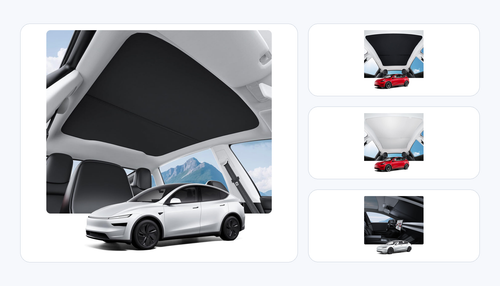
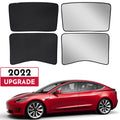
Best for Juniper roof heat
2025-2026 Tesla Model Y Juniper Roof Sunshade - Nano Ice-Crystal No Gap Black
Blocks overhead radiant heat for the rear seat and front shoulder area without permanently tinting the glass.
- You lose part of the open-glass feeling while installed.
- Generation-specific fit matters; do not treat legacy Model Y and Juniper roof glass as interchangeable.
$34.99 · active product · 81 units in the May 4 catalog snapshot
View BASENOR fitment
Best lighter cabin look for Juniper
2025-2026 Tesla Model Y Juniper Roof Sunshade - Nano Ice-Crystal Gray
Same Juniper roof use case with a lighter visual finish for owners who dislike a darker overhead panel.
- Still adds a visible panel under the glass.
- Costs more than the black Juniper shade in the current catalog snapshot.
$44.99 · active product · 114 units in the May 4 catalog snapshot
View BASENOR fitment
Best for Model 3 Highland roof heat
2024-2026 Tesla Model 3 Highland Roof Sunshade - Nano Ice-Crystal Retractable Grey
Targets the Highland roof shape, not a generic Model 3 opening, so side gaps and sag are easier to avoid.
- Retractable hardware adds more parts than a simple foldable panel.
- Highland owners still need a separate windshield plan for parked dash heat.
$49.99 · active product · 61 units in the May 4 catalog snapshot
View BASENOR fitment
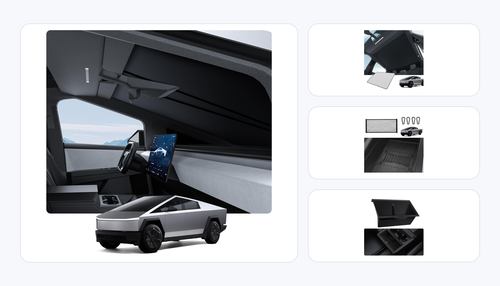
Best for Cybertruck roof heat
2024-2026 Tesla Cybertruck Roof Sunshade - Nano Ice Crystal No Gaps
Fits Cybertruck's large roof-glass geometry; this is not a Model Y shade stretched into a truck cabin.
- Large panel takes more deliberate handling during removal and storage.
- Grey variant inventory is low in the May 4 snapshot, so color choice may be constrained.
$44.99 · active product · 97 units in the May 4 catalog snapshot
View BASENOR fitment
Fastest parking-lot setup
2017-2026 Tesla Model 3 & Model Y Windshield Sunshade Umbrella - Nano Ice Crystal Retractable
Umbrella-style deployment is useful for short errands in Phoenix, Las Vegas, Austin, Dallas, Houston, and San Antonio parking lots.
- The central shaft means you need to place it carefully around the mirror and screen area.
- It solves front-glass exposure, not overhead rear-seat radiant heat.
$29.99 · active product · 129 units in the May 4 catalog snapshot
View BASENOR fitmentFitment and tradeoff table
The best heat accessory is the one that fits the exact glass shape and solves the heat path you actually feel. This table keeps price, fitment, and real tradeoffs in one place.
| Pick | Fitment | Best heat path | BASENOR price | Real tradeoff |
|---|---|---|---|---|
| Best first buy: windshield sunshade | Model 3 and Model Y, including Highland/Juniper catalog tags | Cuts the biggest parking heat path: direct sun through the windshield onto the dash, screen, steering wheel, and front seats. | $24.99 | Must be unfolded and stored each stop; umbrella-style users may prefer a faster setup. |
| Best for Juniper roof heat | 2025-2026 Model Y Juniper | Blocks overhead radiant heat for the rear seat and front shoulder area without permanently tinting the glass. | $34.99 | You lose part of the open-glass feeling while installed. |
| Best lighter cabin look for Juniper | 2025-2026 Model Y Juniper | Same Juniper roof use case with a lighter visual finish for owners who dislike a darker overhead panel. | $44.99 | Still adds a visible panel under the glass. |
| Best for Model 3 Highland roof heat | 2024-2026 Model 3 Highland | Targets the Highland roof shape, not a generic Model 3 opening, so side gaps and sag are easier to avoid. | $49.99 | Retractable hardware adds more parts than a simple foldable panel. |
| Best for Cybertruck roof heat | 2024-2026 Cybertruck | Fits Cybertruck's large roof-glass geometry; this is not a Model Y shade stretched into a truck cabin. | $44.99 | Large panel takes more deliberate handling during removal and storage. |
| Fastest parking-lot setup | Model 3 / Model Y windshield use | Umbrella-style deployment is useful for short errands in Phoenix, Las Vegas, Austin, Dallas, Houston, and San Antonio parking lots. | $29.99 | The central shaft means you need to place it carefully around the mirror and screen area. |
Notice what is not in the table: generic “Tesla shade” listings. Model Y Juniper retains a physical turn-signal stalk but uses touchscreen shifting; Model 3 Highland removed the turn-signal stalk and has its own interior/roof geometry; Cybertruck is completely different. Those generation differences are why we verify fitment by product family instead of by broad model name.
The 3-step summer parking routine we recommend
The strongest AZ/NV/TX setup is part accessory, part habit. We use this sequence because it reduces the surfaces owners complain about first, then lets Tesla's HVAC do the job it is designed to do.
1. Block the windshield every time the car sits in direct sun
This is the highest-friction habit because you must install the shade before walking away, but it protects the steering wheel, screen, front seat bolsters, and dash. If you skip this step, a roof shade alone will not stop the front-cabin touch points from heating up.
2. Add a fitted roof shade when passengers feel heat from above
Roof shades are most valuable while driving, especially for second-row passengers. They reduce radiant heat and glare from overhead glass, but they are not a substitute for preconditioning when the entire cabin is already heat-soaked.
3. Precondition before departure, then judge the shade while driving
A fair test starts after the cabin air is cooled. If the vents are cold but your head, shoulders, or rear passengers still feel heat, the roof shade is doing the right job. If the whole cabin stays hot, check climate settings, fan direction, and filter condition before blaming the shade.
The National Weather Service heat-safety guidance is a useful reminder for owners in hot states: plan for exposure, hydration, and vulnerable passengers. Accessories improve comfort; they do not change the safety rule that children and pets should never be left in a hot parked vehicle.
What we would not buy first
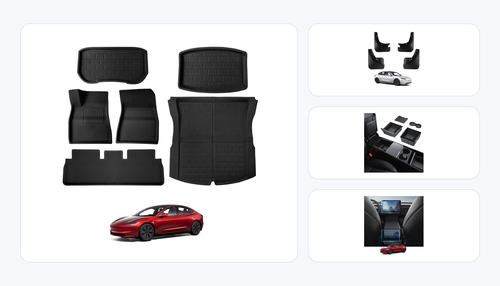
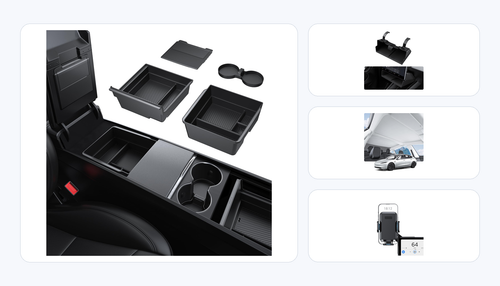
We would not start with cosmetic interior pieces if the car parks outdoors through a desert afternoon. Console trays, organizers, and floor mats can still matter, but heat changes the order. The first dollars should reduce solar load on touch points and passengers.
We would also avoid treating ceramic tint as the automatic first move. Tint can be excellent when installed well, but it is harder to reverse, local rules vary, and it does not protect the dash from direct windshield sun as physically as a reflective shade. Our recommendation is to test the reversible accessories first, then use tint if you still want a cleaner always-on solution.
Five mistakes we see in hot-state Tesla setups
- Buying one universal shade for multiple generations. Match Highland, Juniper, legacy Model Y, Model S, or Cybertruck fitment exactly.
- Judging a roof shade before preconditioning. Cool the cabin air first, then test whether overhead radiant heat remains.
- Ignoring the windshield. If the steering wheel and screen are the problem, a roof shade is solving the wrong glass.
- Relying on cracked windows. The vehicle-heat sources we verified warn that slightly open windows do not meaningfully stop heat rise.
- Assuming UV block equals full heat rejection. Our material measured 99.2% UV block in our lab test, but infrared heat, cabin airflow, parking duration, and outside temperature still matter.
Related accessories for hot-state Tesla owners
Once the glass heat is controlled, the next useful accessories depend on how you use the car. Families should protect rear-seat surfaces and vents from dust, snacks, and shoes. Rideshare drivers should prioritize fast-clean surfaces and passenger comfort. Road-trip owners should keep sun exposure, charging stops, and cargo organization in one plan.
For heat-specific buying, start with BASENOR Tesla sunshades. For broader summer protection, pair that with generation-aware Model Y accessories, Model 3 accessories, or Cybertruck accessories after you have confirmed exact year and generation.
Vehicle-by-vehicle heat setup notes
Model Y Juniper owners should be strict about generation fitment. Juniper keeps a physical turn-signal stalk, unlike Model 3 Highland, but its roof and interior trim are not a reason to reuse every older Model Y accessory. For heat, we would pair the Model 3 / Model Y windshield shade with the Juniper-specific roof shade, then leave the roof shade installed through the hottest month if second-row passengers complain about overhead sun.
Model 3 Highland owners should think in two zones: the windshield for parked touch points and the roof for head-level radiant heat. Highland removed the turn-signal stalk and uses steering-wheel buttons, so the cabin feels different from legacy Model 3 even before accessories. We would avoid universal listings that blur 2017-2023 Model 3 with 2024-2026 Highland unless the product page explicitly supports both.
Cybertruck owners need to treat the glass roof as a truck-specific part, not a larger Model Y. The cabin has a different roof outline, different passenger sight lines, and a large overhead glass area. A Cybertruck-specific roof shade is the cleaner first move than trying to adapt a sedan or crossover shade, because edge gaps are exactly where desert sun becomes annoying on long highway drives.
Legacy Model Y and older Model 3 owners should not feel left behind. The windshield shade remains the first heat accessory because it solves the same parked-car problem across generations: the screen, dash, steering wheel, and seat tops get direct sun. If your main complaint is rear passenger heat while driving, then move to the roof shade that matches your exact production year instead of copying a Juniper or Highland recommendation.
How we judged value for this guide
We did not score these accessories by how dramatic they look in photos. We scored them by how often a hot-state owner would use them, how directly they solve a heat path, how reversible the installation is, and whether BASENOR has live inventory. That is why a simple windshield shade ranks ahead of flashier cabin upgrades: it gets used every sunny parking stop and protects the surfaces owners touch first.
We also separated UV claims from comfort claims. The material metric matters—BASENOR shade material measured 99.2% UV block in our lab test—but UV blocking is not the same as saying the cabin will feel cool with no A/C. Comfort depends on outside temperature, parking duration, glass angle, preconditioning, and whether the shade is covering the heat path that bothers you.
Finally, we rejected any product that was not active and in stock in the catalog snapshot. Heat guides are seasonal; sending a Phoenix or Houston owner toward an unavailable product wastes the buying window. The six products above all had active status and available inventory in the May 4 snapshot, and their public BASENOR product pages returned HTTP 200 during this draft check.
Sources we verified
- PubMed / Pediatrics — Heat stress from enclosed vehicles — Most vehicle cabin heat rise occurs in the first 15 to 30 minutes; cracking windows does not significantly slow heating.
- U.S. Department of Energy — Energy Efficient Window Coverings — In cooling seasons, about 76% of sunlight on standard double-pane windows enters and becomes heat; coverings can reduce heat gain.
- Harborview Injury Prevention & Research Center — Heat Safety — Vehicle interiors can rise 20°F in 10 minutes.
- American College of Emergency Physicians — Heat Stroke and Hot Cars — Direct sunlight can raise vehicle interior temperature 20°F in 10 minutes; cracking windows does not remove the danger.
- National Weather Service — Heat Safety Tips and Resources — Extreme heat is a weather safety hazard that requires planning around exposure, hydration, and vulnerable passengers.
FAQ
What Tesla accessory matters most for Arizona, Nevada, and Texas heat?
Start with a windshield sunshade if the car sits outdoors. It blocks the highest parking-load path—the front glass heating the dash, screen, steering wheel, and front seats—then add a fitted roof shade if passengers feel overhead radiant heat while driving.
Do Tesla roof shades help in 110°F weather?
A roof shade helps with radiant heat from above, but it is not an air conditioner. In triple-digit conditions, use it with scheduled departure or app preconditioning so the HVAC lowers cabin air temperature while the shade reduces the solar load.
Is ceramic tint better than a sunshade for desert states?
Ceramic tint can reduce infrared load and looks cleaner once installed, but it is permanent, depends on installer quality, and local rules vary. We recommend testing removable windshield and roof shades first because they are reversible and model-specific.
Can I use the same shade for Model Y Juniper and older Model Y?
Do not assume that. Juniper and earlier Model Y roof geometry can differ around edges and mounting points, so match the exact product fitment instead of buying by model name alone.
Should I leave pets or kids in a Tesla with shades installed?
No. A shade is a comfort and solar-load tool, not a safety guarantee. Heat-safety sources warn vehicle interiors can rise quickly, and cracked windows do not remove the danger.
Which BASENOR heat setup should rideshare drivers use?
Use the umbrella windshield shade for fast parking stops and a generation-specific roof shade for rear passenger comfort. Rideshare passengers feel overhead radiant heat before they notice the front windshield setup.
Build the heat stack before summer peaks
Start with the glass that heats the surfaces you touch, then add the roof shade that matches your exact Tesla generation. That sequence keeps the setup reversible and fitment-safe.
Shop BASENOR Tesla sunshadesLast updated: May 2026 — Added AZ/NV/TX heat-use cases, verified active BASENOR sunshade inventory, and refreshed vehicle-heat safety sources.

Daniel Zhang
Lead Engineer · Testing & Fit Validation
Mechanical engineer with 10 years in Tier-1 automotive supply. Daniel runs the BASENOR test lab and signs off on every product before launch. Writes our buying guides because he tested what we recommend.