Quick answer: You'll sign the final Tesla tablet around the 45-minute mark of your delivery appointment. The next 30 minutes are the most consequential of your first year of ownership — not because anything typically goes wrong, but because this is the only window where Tesla will fix issues without an argument. Here's the inspection your salesperson won't run with you, organized by the exact sequence of delivery.
Who this applies to
| Tesla Model | Current delivery location type | Inspection time needed |
|---|---|---|
| Model Y (including Juniper) | Tesla delivery center or home delivery | 30–40 minutes minimum |
| Model 3 (including Highland) | Delivery center, fewer home deliveries | 25–35 minutes |
| Model S / Model X | Premium delivery, longer default window | 40–50 minutes |
| Cybertruck | Tesla center only, white-glove walkthrough | 45–60 minutes (more body panels to inspect) |
Before you arrive: the three things most owners forget
1. Charge your phone to 100%. The Tesla app is central to delivery. It's also a battery vampire during the pairing process. A dead phone during delivery will not cancel your appointment, but it will make Tesla's specialist reschedule part of it — often to a later time that conflicts with your drive home window.
2. Bring a real camera or second phone, not just your primary. You will photograph the car from 20+ angles. Doing this on your only phone while Tesla wants you to tap through the app is chaos. A second device — any device with a camera — solves this.
3. Read the VIN on your purchase agreement. Tesla occasionally swaps cars between the contract signing date and delivery day. This is legal (VIN assignment can change before delivery), but any color, wheel size, or interior choice that differs from your order page needs to be caught before you sign. Compare the VIN on your contract against the VIN on the driver-side windshield the moment you meet the car.
The delivery center workflow (what's actually about to happen)
Tesla's delivery process runs on a schedule optimized for throughput, not for your inspection. A typical delivery appointment is 60 minutes allocated end-to-end. If everything is perfect, you'll spend 30 of those signing and 30 in the car. If anything needs attention, you'll need to have already raised it by minute 45.
Here's the sequence:
- Check-in (0–5 min): ID verification, delivery associate assignment.
- Tablet paperwork (5–20 min): Final purchase agreement, insurance verification, Tesla financing (if used), arbitration acknowledgments.
- First sight of the car (20–25 min): Tesla moves it to a designated inspection spot.
- Walkthrough with specialist (25–45 min): This is where you must inspect, not listen.
- App pairing and key setup (45–55 min): Phone key configuration.
- Drive off (55–60 min).
The inspection must happen during minutes 20–45. What the Tesla specialist says during minutes 25–45 is usually feature walkthrough — which you can Google later. What you see about the car during those same minutes can only happen there, in natural light, on delivery day.
Exterior inspection: the 15 specific spots that matter
In daylight, walk around the car clockwise starting at the driver door. Pause at each of these points:
Paint and panel gaps
- Driver door to front fender gap. Should be 3.0–4.0mm and visually even top to bottom. A tapered gap (wider at top) is a common factory issue.
- Hood to fender gap, both sides. Tesla spec: 3.5mm ±1mm. Asymmetry between the two sides is worth flagging.
- Front bumper to fender. Common spot for tiny paint chips from handling in transit.
- Windshield top edge. Look for molding gaps or lifted trim.
- Glass roof seals. Run a finger along the perimeter — it should be flush, no raised edges.
- Rear spoiler alignment. Model Y and Model 3 Performance have factory-installed spoilers; check that both ends meet the trunk lid at the same height.
- Trunk gap to rear fenders. Open and close it once. Close should be smooth, not requiring two attempts.
- Door-to-rear-fender gap. Often asymmetric between driver and passenger sides.
Wheels and tires
- Wheel condition on all four corners. Look specifically at the outer rim face. Any curb rash from transport is Tesla's responsibility to fix, but only if noted at delivery.
- Tire brand and size match what you ordered. The build sheet will list a specific tire model. Tesla occasionally ships with alternatives during supply constraints — that's fine, but note it.
- Valve stem caps. All four present. These get lost during shipping.
Lights and cameras
- All lights functional. Ask the specialist to turn on headlights, blinkers, brake lights, and reverse lights while you stand at the appropriate end.
- Front camera lens (behind the windshield). Look for fingerprint smudges or factory protective film that wasn't removed. This affects Autopilot performance on the drive home.
- Side repeater cameras (just forward of the front doors). These get chipped from road debris in transit.
- Rear camera. Ask to see the reverse feed on the touchscreen while you check it physically.
Interior inspection: what most new owners miss
Get in the driver's seat. Spend two minutes just looking before touching anything.
- Steering wheel alignment. With wheels straight, the steering wheel logo should be level. A tilted wheel indicates alignment out of spec.
- Dashboard-to-touchscreen gap. Should be consistent on both sides. Tesla's dash trim has been a common quality concern for 2020–2023 Model Y.
- Seat bolsters for wear or unexpected creasing. White interior is the most likely to show pre-delivery handling marks.
- Headliner for staples, scuffs, or discoloration. Often missed; hard to fix post-delivery.
- Trunk liner alignment. Pull up the cargo floor. Check that the liner underneath is flat and the spare equipment bag (if included) is secure.
- Frunk. Open, inspect for paint chips in the opening lip, check that the rubber seal is fully seated.
- All door panels. Close each door from the outside. Listen for a clean single "thunk" — not a hollow one or a two-stage close.
The paint test most people skip
After sunset or in shaded lighting, run your palm slowly over the front fender, hood, and driver door. What you're feeling for is "fish-eye" texture or rough spots — paint contamination that Tesla's prep crew missed. This is both a cosmetic issue and a long-term paint protection issue. It's polish-correctable within the first 30 days, but Tesla has to be the one to do it.
Technology and app pairing: what must work before you leave
Your delivery specialist will help you set up phone key. Three things to verify before driving off:
- Phone key locks and unlocks as you approach and walk away. Do this twice. Walk away from the car, wait for it to lock (you'll see a brief animation on the door handles), then walk back and verify the handles extend (older models) or the car unlocks silently (Juniper / Highland).
- The physical keycards work. Tap a keycard on the B-pillar (between driver and rear doors). Door should unlock. Then tap it on the center console to enable drive. This is the backup; make sure both cards function.
- The Tesla app shows the correct charge percentage and location. Sometimes the app takes 5–10 minutes post-delivery to sync; if after 10 minutes it still shows a stale state, flag it.
When to reject delivery vs accept with documented notes
Rejection is a nuclear option. It resets your delivery to an unknown future date and puts you back in the allocation pool for a different VIN. Reject only for:
- Wrong color, wrong interior, wrong wheel configuration
- Visible structural damage (bent panels, cracked glass)
- Active fault codes on delivery
- Salvage or accident history discovered on VIN lookup
For everything else — minor paint issues, minor panel gap inconsistencies, loose trim, missing floor mats, incorrect tire model — accept delivery with written documentation of every issue on the delivery checklist Tesla hands you to sign. Those notes become the basis for warranty service within 100 miles or 48 hours, whichever comes first. An email confirmation to your delivery advisor the same evening locks the issues in.
The BASENOR Same-Day Protection Kit
Three things worth having ready to install the afternoon you take delivery:
Screen Protector (Matte, Highland/Juniper) — $29.99. Tesla's touchscreen picks up fingerprints and develops micro-scratches from detail fibers within the first month. A matte screen protector installed on day one is vastly easier than trying to install one over an already-smudged screen.
Shop Screen Protector →
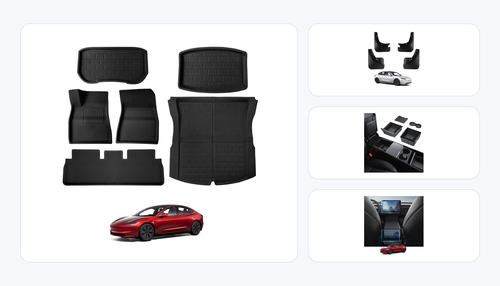
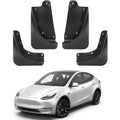
All-Weather Floor Mats. Tesla ships with thin carpet mats that stain within the first rainstorm. Replace before the first drive if possible; your delivery-day shoes will not be last pair that enters the car.
Find the right mats for your model and year →
Phone Mount — $14.99. Tesla's touchscreen handles navigation, but you'll want your phone visible for CarPlay alternatives, maps with rich traffic, or rideshare apps. Install once, never fidget with windshield suction again.
Shop Phone Mount →
The printable delivery day checklist
The 32-point inspection above, formatted for print:
- □ VIN matches purchase agreement
- □ Exterior color and wheels match order
- □ All panel gaps visually even (8 points)
- □ Paint smooth to palm test (hood, fenders, doors)
- □ No paint chips around door handles or frunk edge
- □ Wheels undamaged, correct spec
- □ All four valve stem caps present
- □ Cameras unobstructed (front, sides, rear)
- □ All lights functional (headlight, blinker, brake, reverse)
- □ Doors close cleanly single-stage
- □ Frunk and trunk open/close smoothly
- □ Steering wheel level when wheels straight
- □ Dashboard gaps consistent
- □ Seats free of wear marks or creases
- □ Headliner undamaged
- □ Phone key pairs, locks on walk-away, unlocks on approach
- □ Both keycards functional
- □ Tesla app shows current charge and location
- □ No active fault codes on touchscreen
- □ Charge port opens via app and via tap-to-open
- □ Windshield wipers both work
- □ All window switches functional
- □ Seat adjustment (all positions) works
- □ Mirrors adjust correctly, auto-fold (if equipped) tested
- □ HVAC blows cold and hot; no unusual noise
- □ Touchscreen responsive, no dead zones
- □ Regenerative braking engages (brief test drive)
- □ Autopilot enabled on test drive (if purchased)
- □ Sound system in all positions (front, rear speakers)
- □ Charging cable and both keycards in glovebox
- □ Floor mats present (if included with order)
- □ First Aid / emergency kit (if included with order)
FAQ
Can I bring someone with me to delivery?
Yes. Tesla allows one accompanying person. Bring a friend who knows cars if you're a first-time buyer — a second pair of eyes on the paint inspection catches twice as many issues.
How long do I have to report issues after delivery?
Tesla's delivery acceptance agreement includes a 100-mile / 48-hour window for "noted at delivery" issues. After that, items become warranty repairs with varying coverage. Always document before leaving the lot.
Will Tesla refuse delivery if I take too long inspecting?
No. The 60-minute delivery window is Tesla's target, not a hard limit. Specialists may nudge you toward signing, but you have the right to a thorough inspection. Push back if you need 90 minutes — they'll accommodate.
Should I use a third-party pre-delivery inspection service?
For Model S, Model X, or high-trim Cybertruck purchases over $80K, yes — services like Lemon Squad run $200–$300 and will catch issues you wouldn't. For Model 3 or Model Y standard trims, most owners skip this and use the checklist above.
What if I discover a major issue after driving home?
Contact your delivery advisor by email (not phone) the same day, with photos. Create a Service appointment via the Tesla app immediately. Document the date of discovery. Tesla's resolution for post-delivery discoveries depends heavily on documentation quality and speed.