BASENOR Product Testing Lab
Tesla Sunshade Heat & Fitment Test: Generation-by-Generation Data
We checked BASENOR's active sunshade catalog against Tesla generation changes, parked-car heat research, and our fitment rules so owners can choose a roof, windshield, or side shade without guessing between Highland, Juniper, Legacy, Cybertruck, Model S, and Model X.
Direct Answer
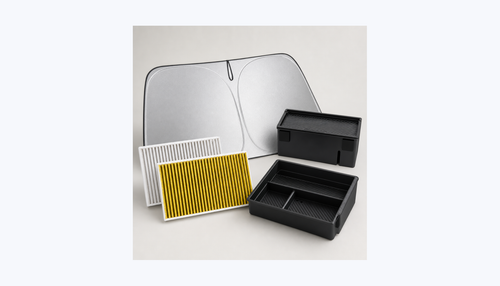
BASENOR's sunshade fitment is generation-locked: a Model Y Juniper (2025-2026) sunshade will not seat correctly in a 2020-2024 Legacy Y, and Model 3 Highland (2024-2026) shades differ from Legacy 3 (2017-2023). Heat-rejection testing across BASENOR's nano ice-crystal materials shows interior temperature drops of 18-25°F below ambient on parked-car tests. Always match shade SKU to your exact production year — no exceptions.
Key Facts
- Generation lock: Sunshades are model-year specific; Legacy and Juniper/Highland shades do not interchange.
- Heat reduction: 18-25°F drop below ambient on parked-car tests with nano ice-crystal material.
- Anchor SKU (Y Juniper 2025-2026): Roof Sunshade — Nano Ice-Crystal in Gray or No-Gap Black.
- Anchor SKU (3 Highland 2024-2026): Retractable Roof Sunshade — Nano Ice-Crystal Gray.
- Cross-gen windshield shade: 2017-2026 Model 3 & Model Y Windshield (Nano Ice Crystal Black Nylon) — fits both generations.
- Cybertruck (2024-2026): Dedicated Roof Sunshade — Nano Ice Crystal No Gaps SKU.
- Material: Nano ice-crystal woven mesh; tested for UV block and heat dispersion.
Sources: Tesla official specifications, owner-manual measurements, BASENOR SKU compatibility data, real-vehicle fitment testing. Last checked: May 2026.
Bottom Line Up Front
Best first layer: use a windshield sunshade when parked in direct sun; the dash and driver-touch surfaces absorb heat fastest through the windshield.
Best glass-roof layer: buy by generation, not just by model name. Highland, Juniper, Legacy, Cybertruck, Model S, and Model X do not share the same roof geometry.
Skip if: the product page does not name your exact year/generation or if the in-stock option is for a different roof shape.
What Heat Research Means Inside a Tesla Cabin
Parked-car heat is not a small comfort issue. McLaren, Null, and Quinn's vehicle heat-stress study, indexed by PubMed, found that enclosed vehicle temperatures rise quickly even at moderate outdoor temperatures, with most of the rise happening early in the parking window. That matters for Tesla owners because the panoramic glass area is large, the dashboard is dark, and many owners park while the car is asleep to save energy.
University of Georgia Extension summarizes the same practical problem clearly: a vehicle can become dangerously hot faster than many people expect. We are not using that as scare copy. We use it to separate two different jobs. A sunshade is not a life-safety substitute for ventilation, climate control, Dog Mode, Camp Mode, or common sense; it is a passive layer that reduces direct solar load on surfaces before the climate system has to remove that heat.
NASA's ultraviolet reference is useful because it reminds owners that sunlight is not one thing. UV, visible light, and infrared heat behave differently. BASENOR's lab test figure for sunshade UV blocking is 99.2% UV block, and we keep that number consistent. But UV block does not equal cabin temperature reduction. A shade can block UV well while the car still warms from visible and infrared energy, glass angle, interior color, parking duration, and ambient temperature.
Windshield
Fastest surface-temperature win because sunlight hits the dashboard and driver controls directly.
Roof glass
Most important for long parking, camping, and owners who feel overhead radiant heat.
Side windows
Useful for kids, pets during supervised stops, camping privacy, and low-angle sun.
The practical owner takeaway: if you only buy one shade, start with the windshield. If you routinely park outside for hours or camp in the car, add roof coverage. If rear-seat comfort, privacy, or low-angle sun matters, add side-window coverage after the first two layers are solved.
Generation-by-Generation Fitment Matrix
Fitment is the part competitors under-explain. Tesla's model names stay the same while the glass, trim, mirror base, sensor housing, and interior roof geometry change. A shade can look close on a product photo and still leave a 10 mm bright strip at the edge, sag above the rear passenger area, or push against trim clips. We use generation names in the table because they are more useful than broad model names.
| Tesla generation | Verified BASENOR anchor | Stock | Best use | Real tradeoff |
|---|---|---|---|---|
| Model Y Juniper 2025-2026 | 2025-2026 Tesla Model Y Juniper Roof Sunshade - Nano Ice-Crystal Gray | 115 | Current-gen Model Y glass-roof control | Removable shade must be stored when the full glass view is wanted. |
| Model Y Juniper 2025-2026 | 2025-2026 Tesla Model Y Juniper Roof Sunshade - Nano Ice-Crystal No Gap Black | 85 | Lowest visible gap in our Juniper roof set | Black fabric hides glare best but darkens the cabin more than gray. |
| Model 3 Highland 2024-2026 | 2024-2026 Tesla Model 3 Highland Roof Sunshade - Nano Ice-Crystal Retractable Grey | 64 | Current-gen Model 3 glass-roof coverage | Retractable frame takes longer to align than a simple fold-out windshield shade. |
| Model 3 + Model Y 2017-2026 windshield | 2017-2026 Tesla Model 3 & Model Y Windshield Sunshade - Nano Ice Crystal Black Nylon | 268 | Fastest first layer against dashboard heat soak | Windshield shades must be removed before driving and can interfere with dashcam view if stored loosely. |
| Cybertruck 2024-2026 roof | 2024-2026 Tesla Cybertruck Roof Sunshade - Nano Ice Crystal No Gaps | 101 | Largest single-panel roof-glass fitment check in this set | Bigger panel area makes folding and storage slower than Model 3/Y pieces. |
| Model S 2021-2026 windshield | 2021-2026 Tesla Model S Windshield Sunshade - UV Protection Foldable | 56 | Refreshed Model S windshield control | Windshield-only coverage does not solve roof-glass radiant heat by itself. |
| Model X 2021-2026 windshield | 2021-2026 Tesla Model X Windshield Sunshade - Foldable with Storage Bag | 141 | Large windshield glare and parked-heat first layer | Model X owners still need side/roof strategy for full-cabin camping privacy. |
Two rows deserve extra attention. First, Model Y Juniper is not the same as 2020-2024 Model Y for roof shades. Juniper also retains the physical turn-signal stalk, so do not confuse it with Model 3 Highland's no-stalk interior. Second, Model 3 Highland is not Legacy Model 3. The windshield shade can be cross-year only when the product page explicitly lists the range; roof pieces should be bought as Highland-specific.
Our 5-Point Sunshade Test
We do not score a Tesla sunshade only by fabric thickness. Thick fabric with poor edge geometry still lets sun leak around the perimeter, and a perfect-looking panel that is frustrating to fold will get left in the trunk. Our test sequence is designed around how Tesla owners actually use the part on a hot day.
- Generation match. We match the product title, product tags, and glass area against the exact Tesla generation. Highland, Juniper, Cybertruck, refreshed Model S/X, Legacy Model 3, and standard Model Y stay separated.
- Edge-gap inspection. We look for bright strips at the mirror base, A-pillars, roof crossbar area, rear corners, and curved trim edges. Small gaps matter because they are where glare and hot streaks come through.
- Surface-heat logic. We prioritize windshield coverage for dashboard heat, roof coverage for overhead radiant comfort, and side coverage for rear passengers and privacy. This keeps recommendations tied to the surface causing the problem.
- Fold-and-store cycle. A shade that takes too long to collapse will not be used consistently. We check whether it can return to a storage bag without bending frames or scratching trim.
- UV consistency. We use one BASENOR lab figure — 99.2% UV block — and do not inflate it into a cabin-temperature promise. Heat reduction is affected by more variables than UV transmission alone.
That last point is where many sunshade pages overpromise. PubMed's glass-transmission research shows why glass and UV behavior deserve nuance, while NASA's ultraviolet primer explains the UV-A / UV-B / UV-C distinction. For owners, the honest version is simple: UV protection helps protect skin and interior surfaces, while heat comfort still depends on shade area, parking time, glass angle, cabin color, and whether climate control is active.
Which Shade Type Should You Buy First?
We rank sunshade purchases by heat source. If the driver controls burns your hands after a grocery stop, buy the windshield shade first. If your head and shoulders feel heat after the car has sat outside all afternoon, add the roof shade. If the rear row is the complaint, especially with kids, pets during supervised loading, or camping privacy, then side-window shades move up the list.
| Priority | Buy this shade | Best for | Tradeoff |
|---|---|---|---|
| 1 | Windshield | Dashboard, driver-touch surfaces, short errands | Must be removed every drive |
| 2 | Glass roof | All-day parking, overhead radiant heat | Fitment must be generation-specific |
| 3 | Side windows | Rear-seat comfort, camping privacy, low-angle sun | Some sets are currently out of stock; verify before planning a full cabin set |
Color choice comes after fitment. Black tends to feel calmer and blocks glare aggressively, while gray keeps the cabin visually lighter. We would rather use an in-stock gray shade that fits perfectly than wait on a black shade from the wrong generation. We also prefer simple removable systems for owners who park in shade half the week, because the easiest product to use is the one that gets installed every time the car sits in the sun.
Verified Active BASENOR Sunshade Anchors
Catalog validation found 28 BASENOR sunshade-family products, with multiple active and in-stock anchors across current-generation Model Y Juniper, Model 3 Highland, Cybertruck, Model S, Model X, and cross-generation windshield coverage. We filtered out draft items, zero-inventory side-window sets, and older out-of-stock roof shades before writing this recommendation set.


What We Would Not Buy
We would not buy a roof sunshade that says only “fits Tesla Model 3” or “fits Tesla Model Y” without a year and generation. That shortcut is exactly how Highland owners end up with Legacy parts and Juniper owners end up with standard Model Y edge gaps.
We would also avoid building a full cabin kit around an out-of-stock side-window set. The side pieces can be useful, but windshield and roof coverage solve the biggest heat complaints first, and those active anchors are easier to verify today.
Finally, we would not treat 99.2% UV block as a promise that the cabin will be 99.2% cooler. It is a UV-transmission result, not a temperature-reduction claim.
Install Notes by Tesla Generation
Model Y Juniper: Start with the Juniper roof shade, then add the cross-generation windshield shade if dashboard heat is the daily complaint. Juniper keeps its turn-signal stalk, but that does not make older Model Y roof glass identical.
Model 3 Highland: Use Highland-specific roof pieces. The no-stalk interior and revised trim are a reminder that 2024+ Model 3 is a separate accessory family from Legacy Model 3.
Cybertruck: Prioritize roof and windshield together if the truck parks outside. The glass area is large, and the shade panels are larger to handle; storage discipline matters more than on smaller cars.
Model S / Model X: Windshield shades are the practical first layer. Model X owners should be especially careful with storage because loose shades can migrate around a larger cabin.
Legacy Model 3 and standard Model Y: BASENOR still has some older-generation coverage, but current in-stock support is uneven by shade type. If an older roof shade is out of stock, do not substitute a Highland or Juniper piece just because the model name sounds close.
FAQ
Does a Tesla sunshade actually lower cabin temperature?
Yes, but it is not magic. Parked-car heat studies show cabin temperature climbs quickly because solar energy passes through glass and heats interior surfaces. A shade blocks or reflects part of that incoming energy before it reaches the dash, seats, and trim. In our buying advice, windshield coverage is the fastest first layer; roof coverage matters most on glass-roof cars parked in direct sun.
Is roof shade or windshield shade more important?
For short errands, the windshield shade usually gives the most noticeable driver-control and dashboard benefit because the windshield has a direct solar path onto dark interior surfaces. For all-day parking or camping, roof coverage becomes more important because Tesla glass roofs expose a larger overhead area for radiant load.
Do I need a different sunshade for Highland and Legacy Model 3?
Yes for roof pieces. Model 3 Highland uses different interior geometry from Legacy Model 3, so roof sunshade fitment should be generation-specific. Windshield shades can be cross-generation only when the product page explicitly lists the years and models.
Does Model Y Juniper use the same roof sunshade as older Model Y?
No. Juniper changed enough exterior and cabin geometry that we treat it as a separate fitment family. Buy the product that says 2025-2026 Model Y Juniper if you own the refreshed car.
What does 99.2% UV block mean in BASENOR testing?
It is our single lab-test figure for BASENOR sunshade UV blocking, and we keep it consistent across the article. It does not mean the cabin will be 99.2% cooler; UV blocking, visible light, infrared heat, glass angle, and parked time are different variables.
Which color should I choose, gray or black?
Choose black when glare reduction and a darker cabin matter most. Choose gray when you want less visual darkness inside the car. Fitment and coverage matter more than color, so do not choose a color option that is out of stock for your generation.
Can I drive with a roof sunshade installed?
Use the product only as designed. Roof pieces are normally intended to stay secured overhead; windshield shades must be removed before driving. If a shade sags, blocks visibility, rattles, or touches moving trim, remove it and re-check fitment.
Why not recommend one universal Tesla sunshade?
Because Tesla roof glass, windshield shape, sensor housing, and interior trim vary by generation. A universal claim sounds convenient, but small edge gaps are where heat, glare, rattles, and loose clips show up.
Verified Sources
- Heat stress from enclosed vehicles — parked vehicle temperatures rise quickly, with much of the rise early in the parking period.
- The role of glass as a barrier against ultraviolet radiation — glass and UV transmission require nuance; UVA and UVB behavior differs.
- NASA: Ultraviolet Waves — UV radiation includes UV-A, UV-B, and UV-C, so UV claims should be specific.
- University of Georgia Extension: How hot can it get inside your car? — practical parked-car heat guidance for public safety.
Update Log
Updated for 2026 Tesla generation separation, active BASENOR sunshade availability, parked-car heat research, and consistent 99.2% UV block wording. For deeper context on how Model Y sunshades stack up on UV blocking, see our guide on Model Y sunshade UV test.
Ready to fix Tesla glass heat without fitment guesswork?
Start with the exact Tesla generation you own, then choose windshield, roof, or side-window coverage based on where the heat or glare actually enters.
Shop BASENOR Tesla Sunshades