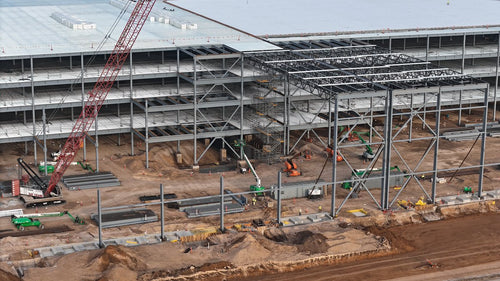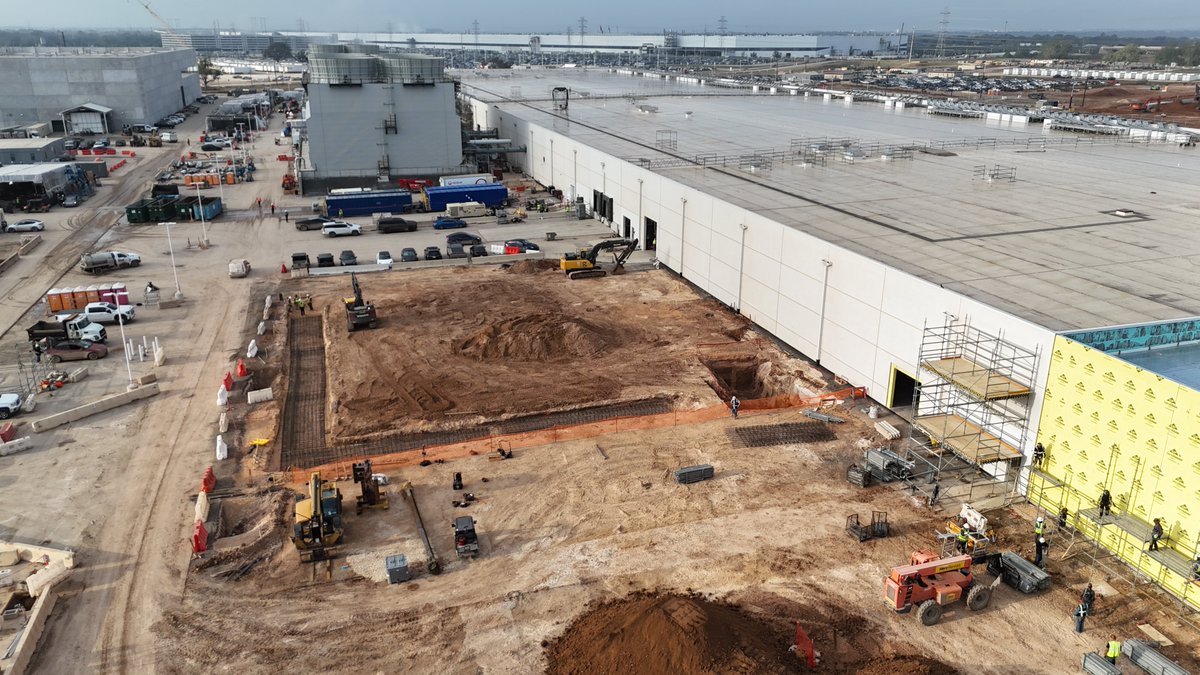
Tesla's Cortex 2 AI compute facility at Giga Texas is expanding on multiple fronts simultaneously. Aerial observations shared by drone journalist Joe Tegtmeyer on November 2 show the structure being stretched northward, new compute hardware coming online inside, and what appears to be a third cooling plant breaking ground on the east side of the complex. Taken together, the changes point to a facility that is outgrowing its original footprint faster than anyone publicly anticipated.

1. The structure is getting 25% longer
The most visible change is a northward extension of the Cortex 2 building itself — roughly 25% added to its existing length, according to Tegtmeyer's aerial footage. That is not a minor annex; it is a meaningful increase in gross floor area for what is already a large-scale compute facility. More floor space almost certainly means more rack density, more power draw, and more cooling demand — which explains why the other two items on this list are happening at the same time.

2. Compute is actively coming online inside
Tegtmeyer notes that progress is happening on the interior as well, with more compute being brought online. Tesla confirmed earlier in 2026 that it more than doubled its onsite AI compute capacity in Texas — measured in megawatts — during the first half of the year alone. The activity visible now suggests that ramp has not slowed. This is the hardware backbone for training both vehicle autonomy (FSD) and Optimus robot autonomy software, so the pace of expansion here has a direct read-through to how quickly Tesla can iterate on both products.
3. A third cooling plant appears to be under construction
High-density AI compute generates enormous heat. Tegtmeyer's footage shows what appears to be a third cooling plant taking shape on the east side of the Cortex 2 complex. Two cooling plants were already in place; adding a third in parallel with a 25% building extension and new compute hardware suggests Tesla is engineering for headroom — building cooling capacity ahead of the load rather than scrambling to catch up after the fact. That kind of infrastructure sequencing is a sign of deliberate, planned scaling rather than reactive patchwork.

4. All three changes are happening concurrently
The detail worth sitting with is the simultaneity. Structure extension, interior compute deployment, and new cooling infrastructure are all active at the same time. That is not how you expand a facility when you have the luxury of a relaxed timeline. Running these workstreams in parallel costs more and requires tighter coordination — it is what you do when compute demand is outpacing supply and every week of delay has a real cost to training throughput. For Tesla owners watching FSD and Optimus development, Cortex 2's current construction pace is arguably the most concrete indicator of how seriously the company is treating its AI infrastructure investment.

The next milestone to watch is when the northern extension is enclosed and whether a fourth cooling plant appears — at the current pace of expansion, neither would be surprising before Q1 2027.
Related Gear
Gear up your Tesla with tested, custom-fit BASENOR accessories — shop Tesla accessories →
Sources & reporting notes
The links below identify the material source records used for this report.
- @JoeTegtmeyer on X (2026-11-02T15:56:09.000Z) — Direct source
Source links are preserved as published or accessed. See our editorial standards and corrections policy.
The BASENOR Editorial Desk covers Tesla, SpaceX, and related technology, curating reporting from primary sources — official accounts, regulatory filings, and software release data. Every article passes source-record and fact-checking review before publication. About the newsroom.
This report was curated by the BASENOR Editorial Desk from the sources listed above. Read our editorial standards or email editorial@basenor.com to report an error.