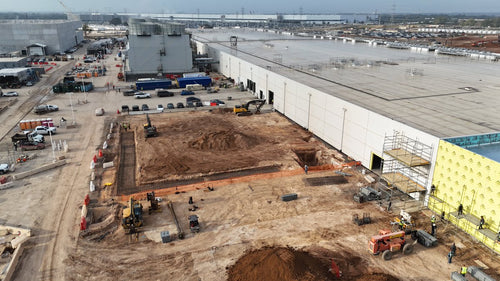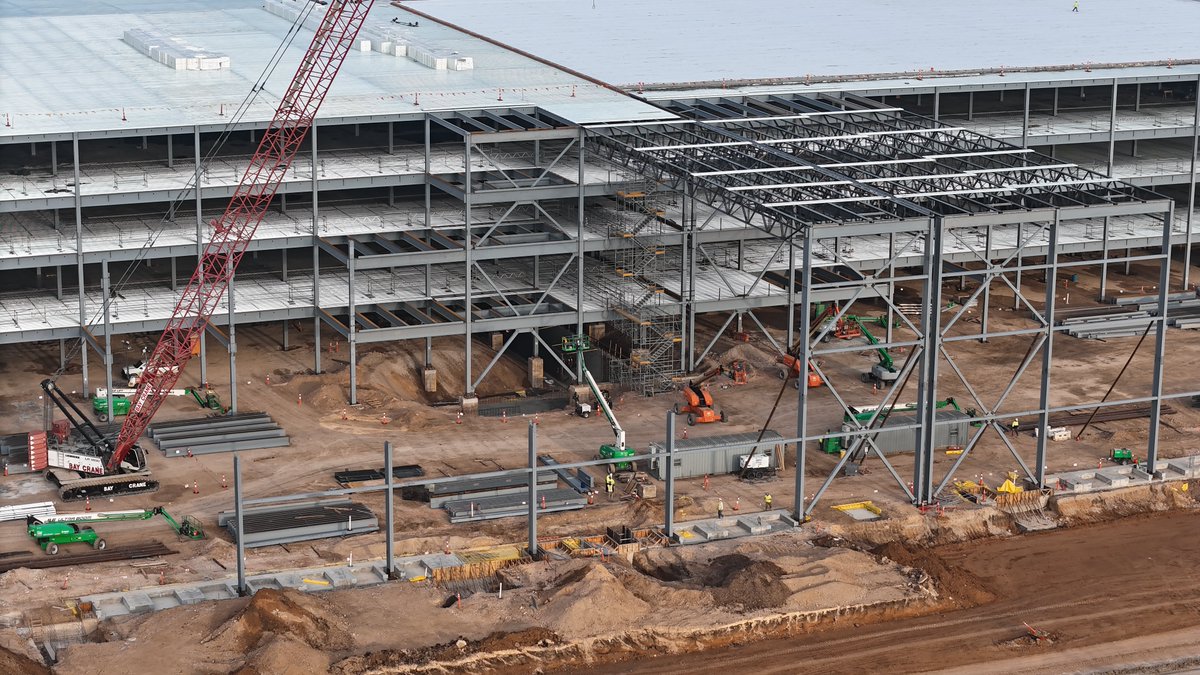
Tesla's purpose-built Optimus robot factory at Giga Texas is no longer a blueprint — it's a steel frame rising out of the North Campus ground at a pace that signals just how serious Tesla is about hitting its humanoid robot production targets. Aerial footage shared by Joe Tegtmeyer on November 2 offers the clearest look yet at how far construction has come since breaking ground just over seven months ago.

1. Groundbreaking to Steel Frame in Under Eight Months
Tesla broke ground on the North Campus Optimus site on March 23, 2026. The first structural steel went up on May 27 — just nine weeks later. By October 1, the main steel frame was nearing completion with concrete being actively poured on upper floors. That's a construction pace that rivals the original Giga Texas vehicle factory build, and it suggests Tesla has learned hard lessons from previous megaproject timelines.
2. The Scale Is Almost Incomprehensible
At full build-out, the Optimus factory is planned to span approximately 7 million square feet of manufacturing space — part of a broader 5.2 million square foot North Campus expansion. The building's footprint will stretch nearly 4,000 feet in length, comparable to the main Giga Texas vehicle factory, though narrower. To put that in perspective: the entire Fremont vehicle factory, one of the largest buildings in California, would fit inside it with room to spare.
3. The Target: 10 Million Robots Per Year
This facility is designed for one number: 10 million Optimus Gen 4 robots annually. That works out to roughly 27,000 units every single day. For context, Tesla's entire global vehicle production across all factories runs in the low millions per year. The Optimus factory, if it hits its targets, would dwarf that output by a significant margin — and it's being built specifically for the next-generation Gen 4 platform, not the Gen 3 units currently in early production at Fremont.
4. Fremont Is the Learning Lab; Texas Is the Scaled Factory
Tesla's Fremont factory is currently running an early Optimus Gen 3 production line, according to previous reports — sized at roughly 1 million units per year and focused primarily on internal deployment, algorithm training, and R&D. The Giga Texas facility is the step-change: a clean-sheet, purpose-built plant designed from day one for mass-market volume. Think of Fremont as the pilot program and Austin as the commercial launch.
5. The Shell Should Be Complete Before Year-End
Based on the October construction pace — upper-floor concrete pours already underway — the structural shell of the factory is projected to be completed before the end of 2026, according to construction progress tracking. That would leave roughly six months for interior fit-out, equipment installation, and line commissioning before Tesla's stated target of high-volume production starting in Summer 2027.
6. The Investment Behind It: Up to $10 Billion
The overall North Campus expansion, which encompasses the Optimus factory, carries an estimated price tag of between $5 billion and $10 billion. That range reflects the phased nature of the build — Tesla is not committing the full capital upfront but scaling investment alongside construction milestones. First customer deliveries of Optimus robots are anticipated around the end of 2027, meaning the factory has roughly 12 months from shell completion to ship a product to paying customers.
The construction timeline is aggressive by any industrial standard. Whether Tesla can convert a completed shell into a functioning 27,000-robots-per-day operation within the stated window is the question the industry will be watching closely as 2027 approaches.
🤖 Tracking Tesla's humanoid robot? See every Optimus production milestone and appearance in our Tesla Optimus Tracker.
Related Gear
Gear up your Tesla with tested, custom-fit BASENOR accessories — shop Tesla accessories →
Sources & reporting notes
The links below identify the material source records used for this report.
- @JoeTegtmeyer on X (2026-11-02T15:51:19.000Z) — Direct source
Source links are preserved as published or accessed. See our editorial standards and corrections policy.
The BASENOR Editorial Desk covers Tesla, SpaceX, and related technology, curating reporting from primary sources — official accounts, regulatory filings, and software release data. Every article passes source-record and fact-checking review before publication. About the newsroom.
This report was curated by the BASENOR Editorial Desk from the sources listed above. Read our editorial standards or email editorial@basenor.com to report an error.