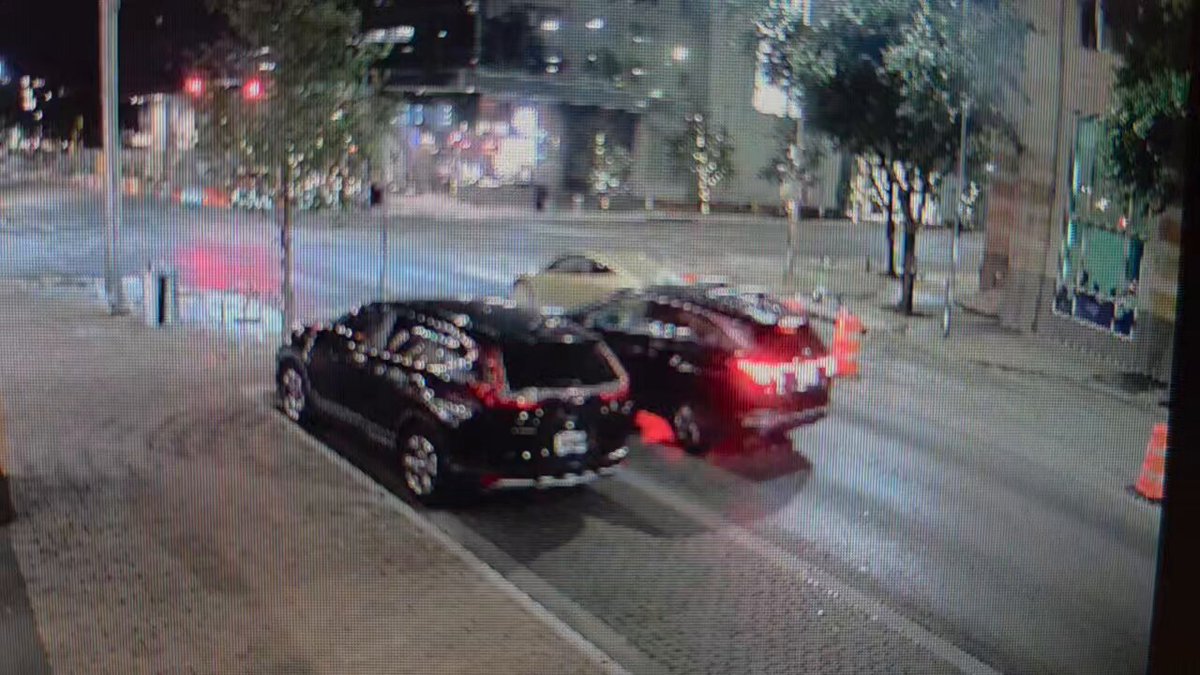
A video circulating on X this weekend captures something that safety advocates have been arguing in spreadsheets for years — rendered in a single, unambiguous clip. A Tesla Cybercab detects an incoming collision and maneuvers clear. The human driver in the adjacent vehicle, not paying attention, takes the hit. The contrast is hard to dismiss.

What the Video Shows
The clip, shared by Tesla commentator Sawyer Merritt, shows the Cybercab operating in what appears to be a standard urban traffic scenario. As a collision develops nearby, the Cybercab reacts and clears the danger zone. The human-driven vehicle alongside it does not. Merritt's framing is pointed: Tesla's camera suite gives the car 360-degree situational awareness at all times — something a distracted human driver simply cannot replicate.
It is worth noting the clip originates from a social media post rather than an official Tesla safety report, so it should be treated as illustrative rather than statistically definitive. That said, it is consistent with a growing body of verified data on autonomous and semi-autonomous driving performance.
The Numbers Behind the Narrative
The video lands at a moment when Tesla's safety data is unusually strong. According to Tesla's most recent FSD (Supervised) safety report, updated in late October 2026, the system recorded 6,006,200 miles between major collisions (defined as airbag deployment) in North America over the prior 12 months — approximately nine times the estimated US average for human drivers. Even compared to Teslas driven manually with active safety features engaged, FSD (Supervised) went nearly three times farther between major incidents: 2,031,221 miles per collision versus the manual baseline.
European data tells a similar story. Tesla reported in July 2026 that FSD (Supervised) was involved in 5.2 times fewer collisions than manual driving across 65 million kilometers driven in five EU countries since April 2026.
The cumulative FSD mileage counter has now surpassed 16.8 billion miles since 2020 — a dataset that no other autonomous vehicle program comes close to matching in scale.
Context: Cybercab Is Already on Public Roads
This footage arrives just days after Tesla officially launched its Cybercab robotaxi service in Dallas, Texas on November 19, 2026, using the updated Cybercab V1.5 hardware. That variant includes an integrated Starlink antenna on the trunk lid for more reliable connectivity and a new rear trunk-lid camera, believed to help the vehicle confirm passengers have collected their belongings before departure.
Tesla's updated first-responder guides, dated November 20, indicate that both Cybercab and Model Y robotaxi variants are designed for public roads with posted speed limits up to 85 mph — suggesting the operational envelope is already wider than the geo-fenced, low-speed urban corridors where the service launched.
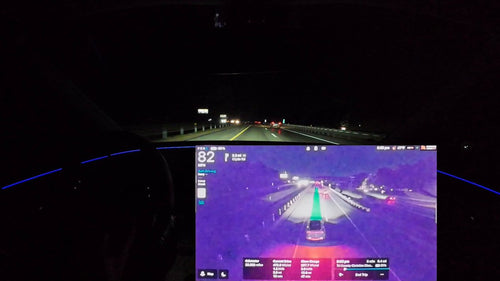
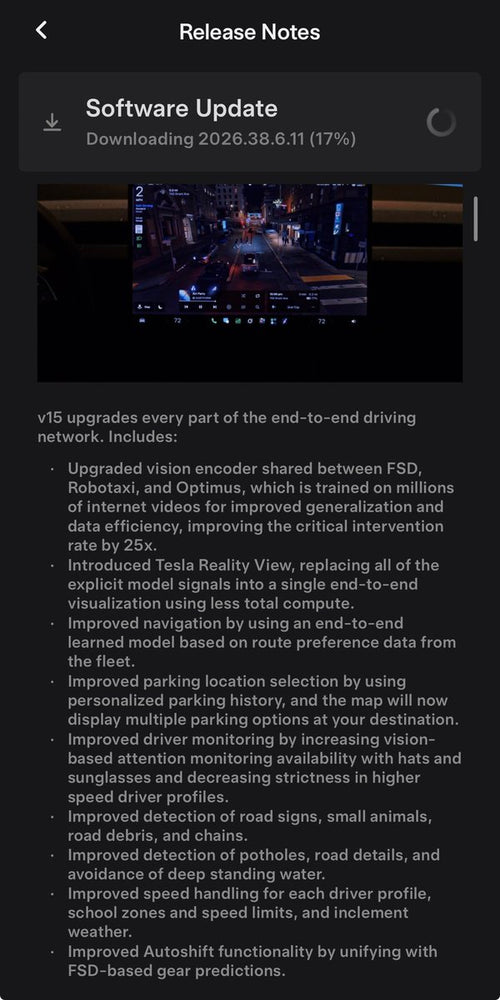
FSD version 15, which began rolling out to early-access customers on November 21, is also part of this picture. Tesla claims the updated vision encoder in v15 improves handling of safety-critical edge cases by 25 times compared to its predecessor, with a broader release planned for December 2026.
Regulatory Scrutiny Remains Real
The safety case for robotaxis is not without complications. NHTSA updated its crash data in mid-November to include eight reported Cybercab incidents from August and September 2026. Four involved fully driverless operation in Austin at 5 mph or less, with no injuries reported. Four others occurred with a human test driver on board and Tesla's Level 2 system engaged, including a highway collision near Philadelphia at approximately 53 mph where injury status was listed as unknown. Tesla has redacted the narratives for the supervised incidents from public records.
NHTSA also opened a separate audit in September 2026 into how Tesla certified the Cybercab for road use without traditional manual controls. Tesla responded to the agency's questions by October 30 but marked the entirety of its filing as confidential business information.
None of that erases what the video shows. But it does underscore that the path from compelling footage to regulatory confidence is longer than a single clip — however striking — can cover on its own. The Cybercab's real safety argument will ultimately be written in millions of miles of public data, not individual moments. The data so far is moving in the right direction; the question is how fast regulators and the public move with it.
🚕 Following the Robotaxi rollout? See every operating city, launch date and announced market in our Tesla Robotaxi Tracker.
Related Gear
Gear up your Tesla with tested, custom-fit BASENOR accessories — shop Tesla accessories →
Sources & reporting notes
The links below identify the material source records used for this report.
- @SawyerMerritt on X (2026-11-22T05:17:03.000Z) — Direct source
Source links are preserved as published or accessed. See our editorial standards and corrections policy.
The BASENOR Editorial Desk covers Tesla, SpaceX, and related technology, curating reporting from primary sources — official accounts, regulatory filings, and software release data. Every article passes source-record and fact-checking review before publication. About the newsroom.
This report was curated by the BASENOR Editorial Desk from the sources listed above. Read our editorial standards or email editorial@basenor.com to report an error.