Tesla's next vehicle isn't a refresh or a new trim level — it's a two-seat, steering-wheel-free robotaxi built from the ground up for autonomous operation. With production already underway at Giga Texas, the Cybercab is moving from concept to reality faster than many expected. Here's what the numbers and confirmed details actually tell us.

1. Production Is Already Running
The first Cybercab rolled off the Giga Texas line in February 2026. Elon Musk confirmed during the Q1 2026 earnings call on April 23 that continuous production had officially begun. Tesla's stated ramp target is several hundred units per week in the near term, scaling toward an ambitious long-term goal of 2 million units per year across multiple factories. This isn't a prototype program — it's a live production vehicle.
2. No Steering Wheel, No Pedals — and It's Legal
The Cybercab is designed without a steering wheel or pedals, making it one of the first mass-production vehicles of its kind. Critically, Tesla engineered it to comply with existing Federal Motor Vehicle Safety Standards (FMVSS), which means it sidesteps the NHTSA's 2,500-unit annual cap that applies to vehicles seeking exemptions from those standards. That regulatory positioning matters enormously for Tesla's ability to scale the fleet.
3. The Specs Are Modest by Design
This isn't a performance car — it's optimized for efficiency and cost. According to EPA certification documents, the Cybercab carries a 47.6 kWh battery, a single 163 kW (219 HP) front-wheel-drive motor, and an unadjusted combined range of 418.2 miles, translating to an estimated adjusted EPA range of roughly 292–293 miles. Efficiency is rated at 5.5 mi/kWh. Curb weight sits at 3,113 lbs. For a robotaxi doing urban and suburban cycles, those numbers make sense.
4. It Charges Wirelessly
A vehicle without a driver needs to charge without one too. The Cybercab supports inductive (wireless) charging, with Tesla targeting efficiency above 90%. That's a meaningful infrastructure detail: a fully autonomous fleet that can recharge between rides without human intervention closes the loop on the robotaxi business model. Tesla hasn't yet detailed the full rollout of inductive charging infrastructure, but it's a confirmed feature of the vehicle itself.
5. Starlink V5 Is Integrated
Tesla has confirmed that Cybercab robotaxi vehicles will integrate Starlink V5 connectivity. For a vehicle operating autonomously — potentially in areas with patchy cellular coverage — having a direct satellite link adds a layer of redundancy for telemetry, over-the-air updates, and fleet management. It also signals how tightly Tesla's hardware ecosystem is converging around this platform.
6. The Robotaxi Service Is Already Running — Just Not on Cybercabs Yet
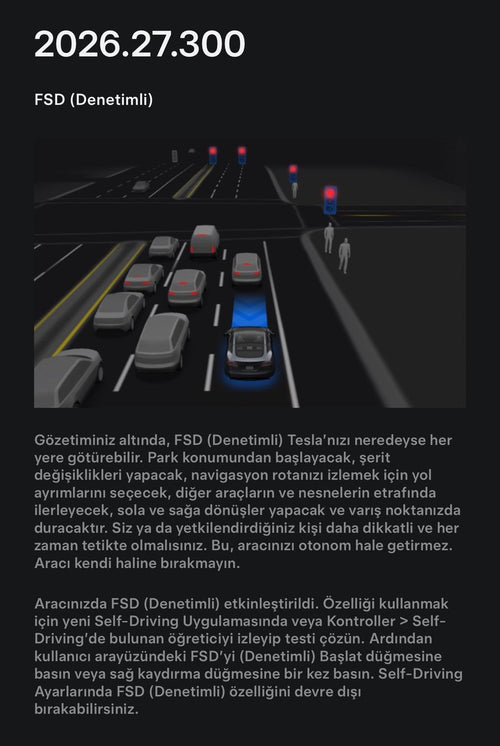
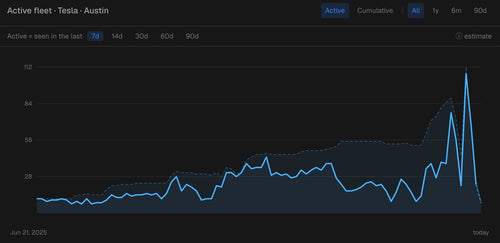
Tesla's robotaxi service is currently operational in Austin, Dallas, Houston, Miami, Orlando, and Tampa, using modified Model Y vehicles. The Cybercab is expected to integrate into that network as production volume scales, with large-scale deployment contingent on the advancement of FSD software. Musk has indicated the Cybercab could be priced under $30,000, which — combined with the autonomous ride-hailing revenue model — positions it as the economic engine of Tesla's next chapter. For current Tesla owners watching the robotaxi rollout, the Cybercab is the hardware the whole strategy was built around.
🚕 Following the Robotaxi rollout? See every operating city, launch date and announced market in our Tesla Robotaxi Tracker.
Related Gear
Gear up your Tesla with tested, custom-fit BASENOR accessories — shop Tesla accessories →
Sources & reporting notes
The links below identify the material source records used for this report.
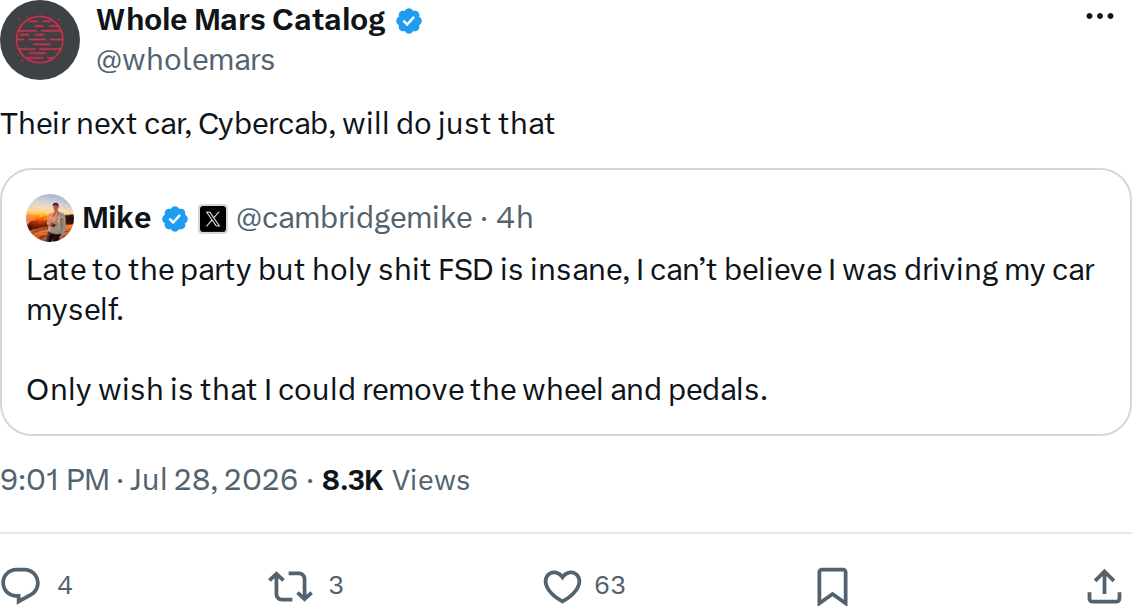
- @wholemars on X (2026-07-28T21:01:43.000Z) — Direct source
Source links are preserved as published or accessed. See our editorial standards and corrections policy.
The BASENOR Editorial Desk covers Tesla, SpaceX, and related technology, curating reporting from primary sources — official accounts, regulatory filings, and software release data. Every article passes source-record and fact-checking review before publication. About the newsroom.
This report was curated by the BASENOR Editorial Desk from the sources listed above. Read our editorial standards or email editorial@basenor.com to report an error.