Sawyer Merritt is anticipating what he calls the first true on-screen look at the Tesla Cybercab production line — and given how much has happened behind the scenes since formal production began in April 2026, the timing makes sense. Here's everything worth knowing about where the Cybercab manufacturing story stands right now.

1. The production line footage already exists — and it's substantial
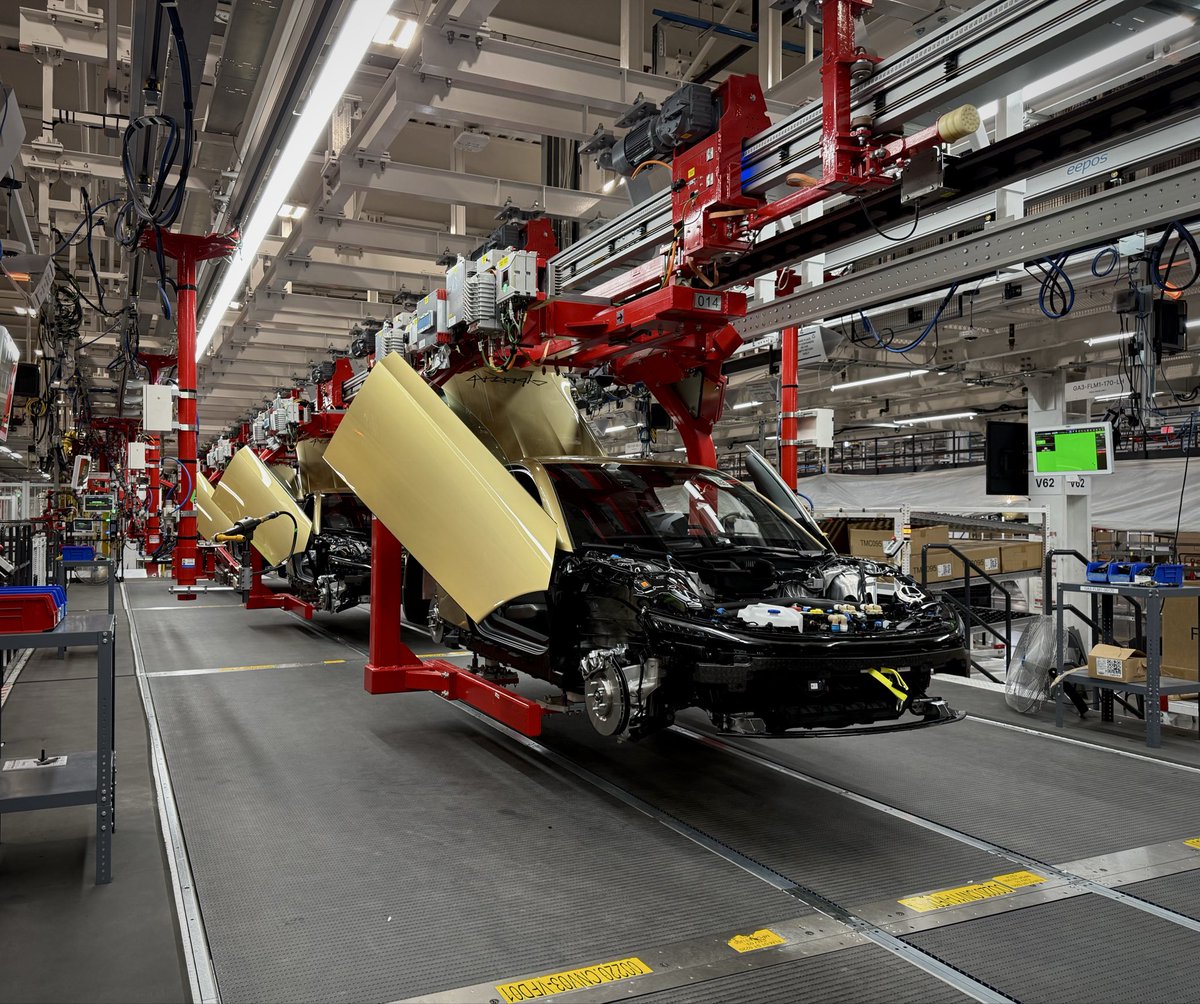
In September 2026, Tesla released what was described as the first extended footage of its unboxed manufacturing process for the Cybercab. The footage shows vehicle modules being assembled in parallel rather than sequentially along a traditional line. Tesla claims this approach cuts the physical factory footprint by roughly half while significantly boosting throughput. Merritt's post suggests an even more comprehensive on-screen preview is now incoming.
2. The unboxed process is the real story here
The Cybercab is the first Tesla vehicle designed from the ground up specifically for the unboxed manufacturing method — first unveiled at Tesla's Investor Day in March 2023. Instead of a car moving down a single assembly line, major sub-assemblies are built in parallel and then joined. Elon Musk has said the redesigned process targets output more than five times faster than conventional automotive manufacturing. Whether that target is being hit in practice is exactly what production line footage would reveal.
3. The ramp has been deliberately slow — by design
The first Cybercab production vehicle rolled out of Gigafactory Texas in February 2026, but Musk was clear in December 2025 that early activity was about testing the production system, not volume output. Formal production ramp began in April 2026. Musk has publicly acknowledged the initial rate would be "agonizingly slow" given the novelty of both the vehicle and its manufacturing process, with the long-term ambition of producing one vehicle every 10 seconds. A production line preview would give the clearest public signal yet of how far along that ramp Tesla actually is.
4. Paid rides are already running — production is the bottleneck
Tesla commenced paid public Cybercab rides in Austin, Texas in September 2026, following an invitation-only launch event on September 3. The commercial service is live. What's constraining expansion isn't the software or the regulatory picture in Austin — it's vehicle supply. That makes any visibility into production throughput directly relevant to how quickly the robotaxi service can scale beyond its current footprint.
5. The vehicle itself is unlike anything Tesla has built before
The production Cybercab carries no steering wheel and no pedals — a two-passenger vehicle built entirely around autonomous operation. Its interior includes a 21-inch touchscreen, USB-C ports, and physical door-release and emergency stop buttons with Braille lettering. Under the hood: a 163 kW front-wheel drive motor, a 47.6 kWh battery pack, and an unadjusted range figure of 418 miles (EPA-adjusted estimate in the 290–300 mile range). Manufacturing a purpose-built autonomous vehicle at scale is a fundamentally different challenge than adapting an existing platform — which is part of why the production line footage carries more weight than a typical factory tour.
The Cybercab has moved from concept to commercial service faster than most expected, but the production ramp remains the open question. An on-screen look at the Gigafactory Texas line won't answer everything — but it will be the clearest window yet into whether Tesla's unboxed manufacturing bet is paying off at volume.
🚕 Following the Robotaxi rollout? See every operating city, launch date and announced market in our Tesla Robotaxi Tracker.
Related Gear
Gear up your Tesla with tested, custom-fit BASENOR accessories — shop Tesla accessories →
Sources & reporting notes
The links below identify the material source records used for this report.
- @SawyerMerritt on X (2026-10-17T03:22:04.000Z) — Direct source
Source links are preserved as published or accessed. See our editorial standards and corrections policy.
The BASENOR Editorial Desk covers Tesla, SpaceX, and related technology, curating reporting from primary sources — official accounts, regulatory filings, and software release data. Every article passes source-record and fact-checking review before publication. About the newsroom.
This report was curated by the BASENOR Editorial Desk from the sources listed above. Read our editorial standards or email editorial@basenor.com to report an error.