Tesla VP of Vehicle Engineering Lars Moravy recently confirmed something that raised immediate eyebrows: the Cybercab production line at Gigafactory Texas runs faster than Tesla can actually put the vehicles to work. The line doesn't operate every day — not because of manufacturing constraints, but because there aren't enough deployment slots to absorb the output. Dirty Tesla put the obvious question into words: if you have spare capacity, why not just sell them to customers?
It's a fair question, and the answer involves strategy, regulation, and a deliberate bet on Tesla's robotaxi business model. Here's what you need to know.

What exactly did Lars Moravy say about Cybercab production?
Moravy described the situation as a race where manufacturing is ahead of deployment. According to reporting from multiple outlets, he stated that the Gigafactory Texas Cybercab line is capable of building vehicles faster than Tesla can currently use them — so the line intentionally does not run at full capacity every day. The installed annual capacity at Giga Texas is listed at over 125,000 units, and Moravy has suggested the actual line speed could be significantly higher than that figure. With an unboxed assembly process, roughly 78% automation, and only about 25 final assembly stations — five to ten times fewer than a Model Y line — the Cybercab is purpose-built for speed at scale.
Why can't Tesla just deploy every Cybercab it builds?
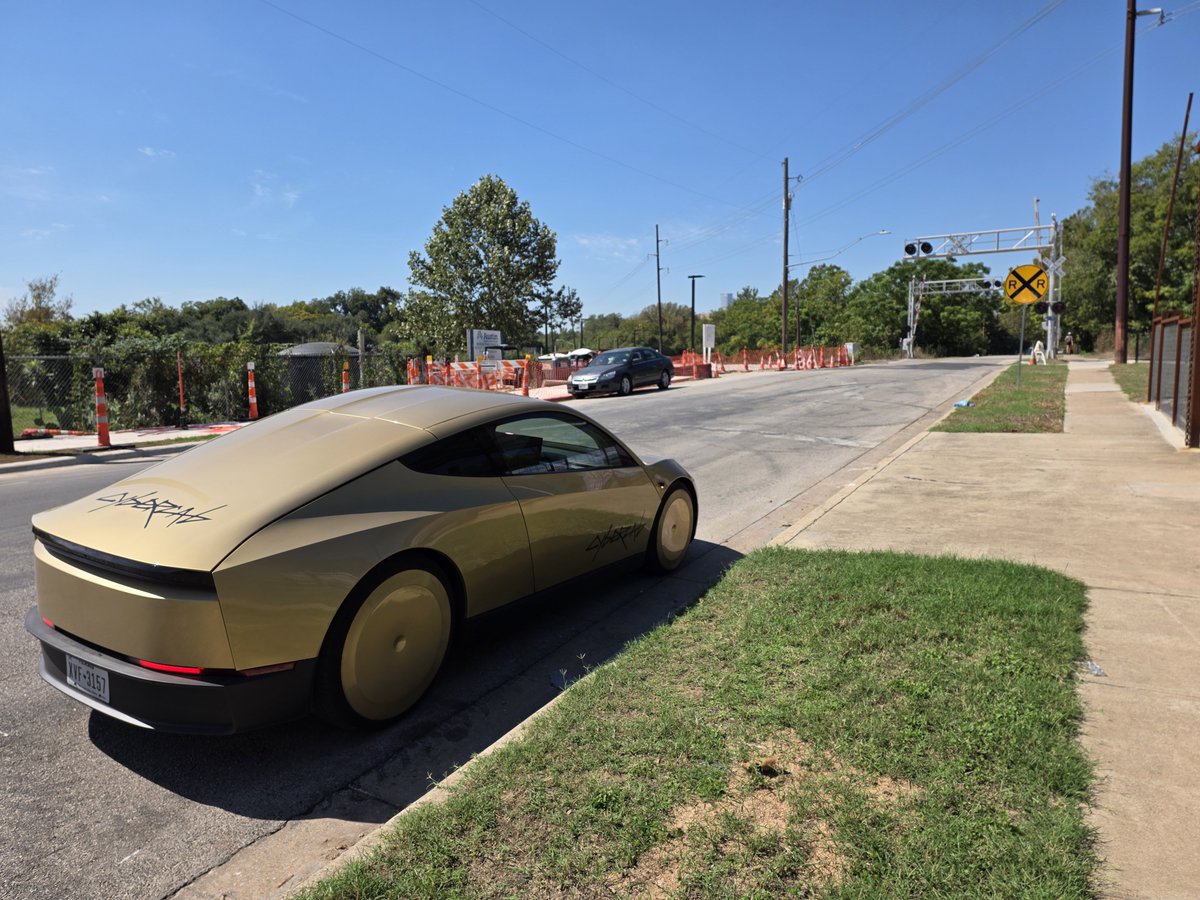
Deployment is the bottleneck, not production. As of early November 2026, Tesla has approximately 570 Cybercabs registered in Texas — roughly half of its 1,200-plus robotaxi fleet in the state, with the remainder being Model Ys. Paid rides launched in Austin on September 3, 2026, and Tesla is targeting Dallas for service expansion this month. Each new city requires regulatory approval, mapped geofences, fleet operations infrastructure, and sufficient FSD confidence data for that specific geography. You can't outrun that process by building more cars — the cars just sit until the network is ready to absorb them.
So why not open customer orders in the meantime?
Tesla's stated strategy is to keep the vast majority of Cybercabs Tesla-owned and operated as part of its ride-hailing service. Elon Musk has been explicit about this: the Cybercab is primarily a fleet asset, not a consumer product in the traditional sense. Selling units to private buyers would dilute fleet control, complicate the autonomous network, and potentially cannibalize the economics of Tesla's own robotaxi revenue. That said, Tesla is not ruling out private ownership entirely — the company aims to begin small-scale customer deliveries by end of 2026. Tesla's AI chief Ashok Elluswamy has also indicated that some customer-owned vehicles could join the robotaxi network around Q2 2027, once the integration framework is in place.
Is there any path for businesses to order Cybercabs today?
Yes, but it's limited. Tesla launched a fleet interest form on September 3, 2026 — the same day Austin rides went live — allowing businesses to inquire about purchasing Cybercab fleets, building mobility hubs, and exploring event collaborations. This is not an open consumer order page; it's a B2B pipeline. Individual buyers don't yet have a direct purchase path, and Tesla hasn't announced pricing for private sales.
What about regulatory hurdles — could those be slowing things down too?
Potentially, yes. NHTSA opened an investigation in September 2026 into Tesla's self-certification of the Cybercab to federal safety standards. The Cybercab has no steering wheel or pedals, which puts it outside the traditional FMVSS framework. Tesla opted to self-certify rather than seek an annual production exemption — a route that would cap output at 2,500 units per year. That self-certification approach is being scrutinized, and while it hasn't halted production or deployment, it adds a layer of regulatory uncertainty that likely factors into how aggressively Tesla pushes consumer availability.
What's the timeline for scaling up — both production and deployment?
On the production side, Elon Musk announced on November 6, 2026 that Cybertruck production at Giga Texas will wind down by mid-2027 to free up floor space for increased Cybercab output. That signals Tesla is planning for significantly higher Cybercab volumes within the next 12 months. On the deployment side, the service footprint is expanding — Austin, Dallas, Houston, Miami, Orlando, and Tampa are all part of the robotaxi network in some form. The pace at which new cities come online will ultimately determine whether production ever has a reason to run at full throttle.
The short version: Tesla can build Cybercabs faster than it can put them to work, and opening consumer orders would undercut the fleet-first model the entire robotaxi business is built on. The more interesting question isn't why Tesla won't sell you one today — it's whether the deployment network can grow fast enough to justify running that production line at full speed.
🚕 Following the Robotaxi rollout? See every operating city, launch date and announced market in our Tesla Robotaxi Tracker.
Related Gear
Gear up your Tesla with tested, custom-fit BASENOR accessories — shop Tesla accessories →
Sources & reporting notes
The links below identify the material source records used for this report.
- @DirtyTesLa on X (2026-11-10T14:47:39.000Z) — Direct source
Source links are preserved as published or accessed. See our editorial standards and corrections policy.
The BASENOR Editorial Desk covers Tesla, SpaceX, and related technology, curating reporting from primary sources — official accounts, regulatory filings, and software release data. Every article passes source-record and fact-checking review before publication. About the newsroom.
This report was curated by the BASENOR Editorial Desk from the sources listed above. Read our editorial standards or email editorial@basenor.com to report an error.