Tesla's Director of Autopilot, Ashok Elluswamy, posted a pointed reminder this week about what separates Tesla's self-driving approach from how most people think about driver assistance: the system doesn't just watch the road ahead — it watches everything, simultaneously, in every direction. Here's what that actually means for owners and passengers.

What exactly did Elluswamy say?
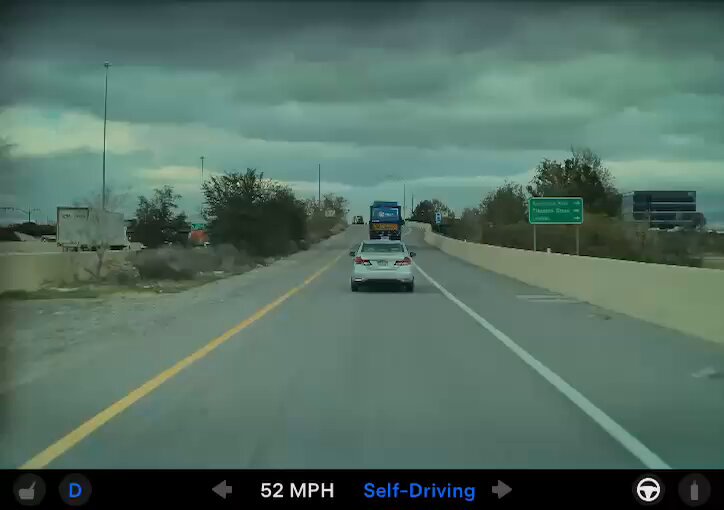
In a post on X, Elluswamy stated: "Tesla self-driving simultaneously monitors all 360 degrees around the car and takes you out of danger from any direction." The tweet included video clips — presumably dashcam or visualization footage — illustrating the system in action. The emphasis on simultaneously is deliberate: it's not a camera that sweeps around, it's a system processing all directions at once, in real time.
How does the hardware make 360-degree coverage possible?
According to Tesla's own documentation, FSD (Supervised) relies on eight external cameras positioned around the vehicle to deliver continuous, overlapping coverage of the car's full surroundings. That includes forward-facing cameras for highway and city driving, side-repeater cameras for blind spots and lane changes, and rear-facing cameras for what's coming up behind you. Together, they give the neural network a complete environmental picture — not a series of snapshots, but a unified, real-time view of the space the car occupies.
What does "takes you out of danger from any direction" actually mean?
This is the operationally important part of Elluswamy's statement. Most driver-assistance features are reactive to threats in a single axis — forward collision warnings, for instance, focus on what's ahead. Tesla's framing here is that FSD is designed to respond to hazards regardless of where they originate: a vehicle cutting in from the left, a pedestrian stepping off a curb on the right, or a car braking hard behind you. The system's job isn't just to follow the road — it's to continuously assess the risk envelope around the entire vehicle and adjust accordingly.
Is this different from what other driver-assistance systems do?
Many modern vehicles include cameras and sensors covering multiple angles, but the distinction Tesla is drawing is about simultaneous processing and unified decision-making. A system that monitors eight camera feeds but processes them sequentially — or uses them only for specific, siloed features — is architecturally different from one that feeds all inputs into a single neural network making one unified driving decision. Elluswamy's point is that FSD doesn't have blind spots baked into its design; the 360-degree awareness is the foundation of how every maneuver decision gets made.
Does this apply to all Tesla models currently on the road?
FSD (Supervised) is available on Model 3, Model Y, Model S, Model X, and Cybertruck vehicles equipped with the requisite hardware. Existing customer-owned vehicles on supported hardware configurations continue to receive FSD updates via OTA. The eight-camera architecture has been standard across Tesla's lineup for several years, meaning the underlying hardware for this level of coverage is already in the hands of a large portion of the active fleet. For more on how the software layer evolves, see our FSD coverage.
What should owners take away from this?
If you're using FSD (Supervised), the system is doing considerably more than keeping you in your lane or maintaining following distance. It is continuously building a 360-degree picture of your environment and factoring threats from all directions into every decision — including ones you might not have noticed yourself. That doesn't make it infallible, and Tesla still requires driver supervision, but it does mean the safety logic runs wider than most owners probably realize day-to-day.
Elluswamy doesn't post technical statements like this casually. When Tesla's Autopilot director takes time to articulate a core architectural principle publicly, it's usually because it's central to how the team thinks about the system's safety case — and increasingly, how regulators and the public will be asked to evaluate it.
Related Gear
Gear up your Tesla with tested, custom-fit BASENOR accessories — shop Tesla accessories →
Sources & reporting notes
The links below identify the material source records used for this report.
- @aelluswamy on X (2026-11-13T06:35:15.000Z) — Direct source
Source links are preserved as published or accessed. See our editorial standards and corrections policy.
The BASENOR Editorial Desk covers Tesla, SpaceX, and related technology, curating reporting from primary sources — official accounts, regulatory filings, and software release data. Every article passes source-record and fact-checking review before publication. About the newsroom.
This report was curated by the BASENOR Editorial Desk from the sources listed above. Read our editorial standards or email editorial@basenor.com to report an error.