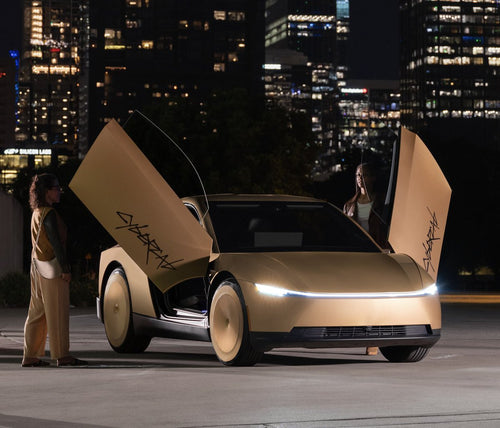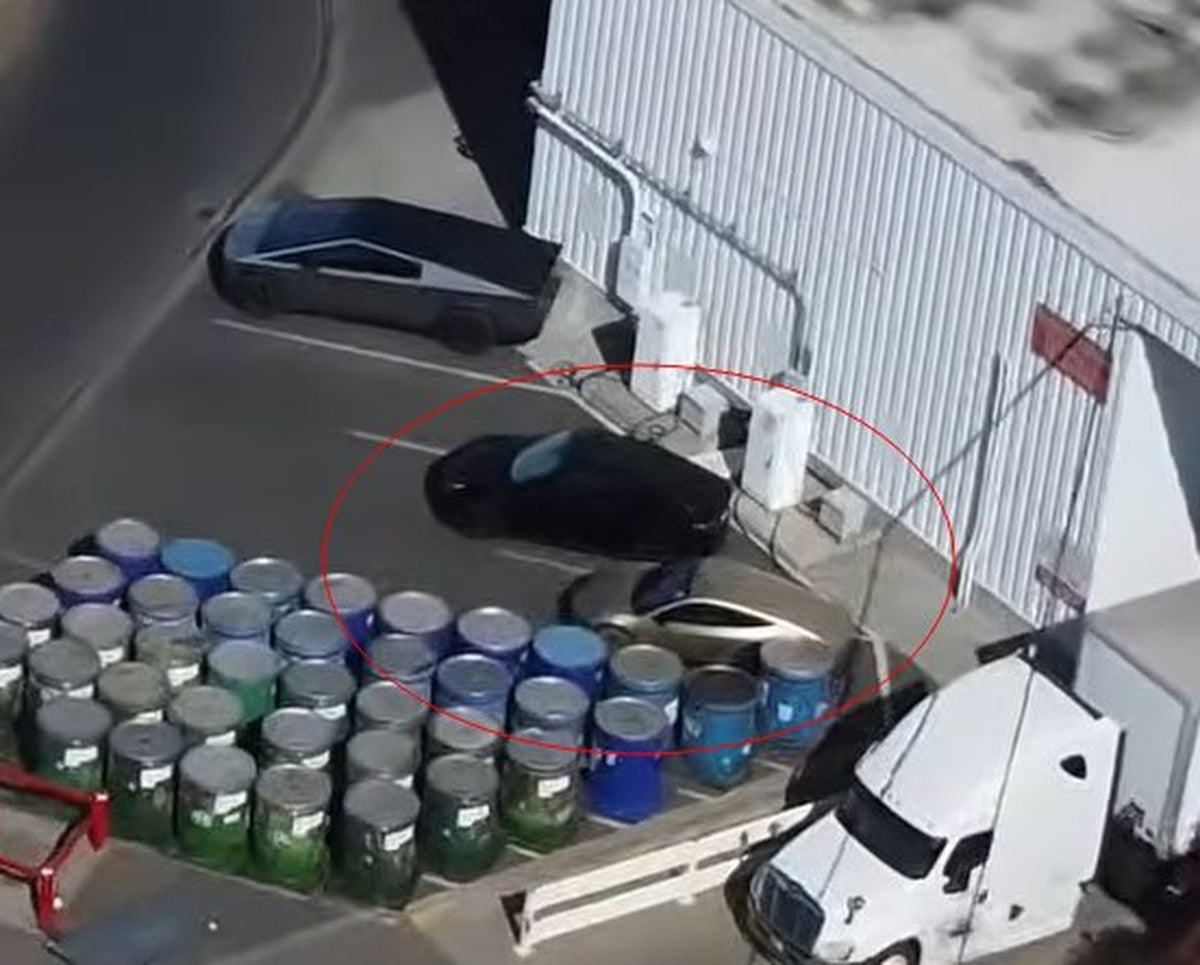
A camouflaged prototype bearing the unmistakable teardrop silhouette of the Cybercab has been spotted at Tesla's Fremont factory, reigniting speculation that Tesla is actively developing a new affordable vehicle built on the Cybercab platform. The sighting raises a pointed question: is Tesla already testing a variant of its autonomous vehicle architecture for a broader consumer audience?

What Was Spotted
The prototype, photographed at the Fremont facility, is wrapped in camouflage but shares the same flowing, teardrop-shaped body profile that defines the Cybercab. That distinctive form factor — low, rounded, and aerodynamically aggressive — is hard to disguise. The vehicle appears to be a two-passenger configuration consistent with the Cybercab's known design, though the camouflage makes it difficult to confirm whether this is a production-spec Cybercab, a variant, or something else entirely.
The timing is notable. Official Cybercab production began at Gigafactory Texas in February 2026, with continuous production ramping from April 2026. Fremont, by contrast, is where Tesla has historically conducted prototype testing, crash evaluation, and pre-production validation work — not where Cybercab units are being built at scale. A camouflaged prototype appearing there now suggests active development work on a related but potentially distinct vehicle.
The Affordable Vehicle Theory
Tesla has long signaled its intent to produce a mass-market vehicle priced around $25,000. The Cybercab itself is targeted at approximately $25,000 to under $30,000 according to previous announcements — but that vehicle is designed as a fully autonomous robotaxi without a steering wheel or pedals, which limits its appeal as a personal consumer car in most markets today.
A logical extension of the platform would be a version that retains the Cybercab's efficient "Unboxed" manufacturing process and compact architecture, but adds conventional driver controls. That approach would let Tesla share tooling, battery systems, and manufacturing infrastructure while producing a vehicle that everyday buyers can legally operate themselves. The Cybercab's EPA-certified specs give some indication of what that platform is capable of: a 163 kW permanent magnet motor, front-wheel drive, a ~47.6 kWh lithium-ion battery pack, and an unadjusted test range of over 418 miles combined — strong fundamentals for an affordable daily driver.
Tesla's Unboxed process, designed to dramatically reduce assembly time and cost through modular parallel construction, was always described as a platform strategy rather than a single-vehicle initiative. Building a consumer variant on the same architecture would be a natural application of that investment.
What Fremont's Role Tells Us
The choice of Fremont as the location for this prototype sighting matters. Gigafactory Texas is handling Cybercab production. Fremont remains Tesla's primary engineering and validation hub — it's where new vehicles get stress-tested, crash-rated, and refined before any production commitment. Seeing a Cybercab-profile vehicle there, in camouflage, is consistent with early-stage development of a derivative model rather than a routine production check on an existing one.
It's also worth noting that the Cybercab received EPA certification in May 2026, clearing a significant regulatory hurdle. That certification infrastructure could potentially be leveraged for a related variant more quickly than starting from scratch.
Tesla has not confirmed anything about this prototype. For now, the sighting is a data point — but a meaningful one, given the platform economics at play and Tesla's stated ambition to dramatically expand its addressable market. Whether this is the long-awaited sub-$30,000 consumer vehicle or simply a Cybercab engineering mule will likely become clearer as more sightings or official signals emerge in the months ahead.
🚕 Following the Robotaxi rollout? See every operating city, launch date and announced market in our Tesla Robotaxi Tracker.
Related Gear
Gear up your Tesla with tested, custom-fit BASENOR accessories — shop Tesla accessories →
Sources & reporting notes
The links below identify the material source records used for this report.
- @TeslaNewswire on X (2026-06-26T04:57:26.000Z) — Direct source
Source links are preserved as published or accessed. See our editorial standards and corrections policy.
The BASENOR Editorial Desk covers Tesla, SpaceX, and related technology, curating reporting from primary sources — official accounts, regulatory filings, and software release data. Every article passes source-record and fact-checking review before publication. About the newsroom.
This report was curated by the BASENOR Editorial Desk from the sources listed above. Read our editorial standards or email editorial@basenor.com to report an error.