📌 UPDATE — August 5, 2026
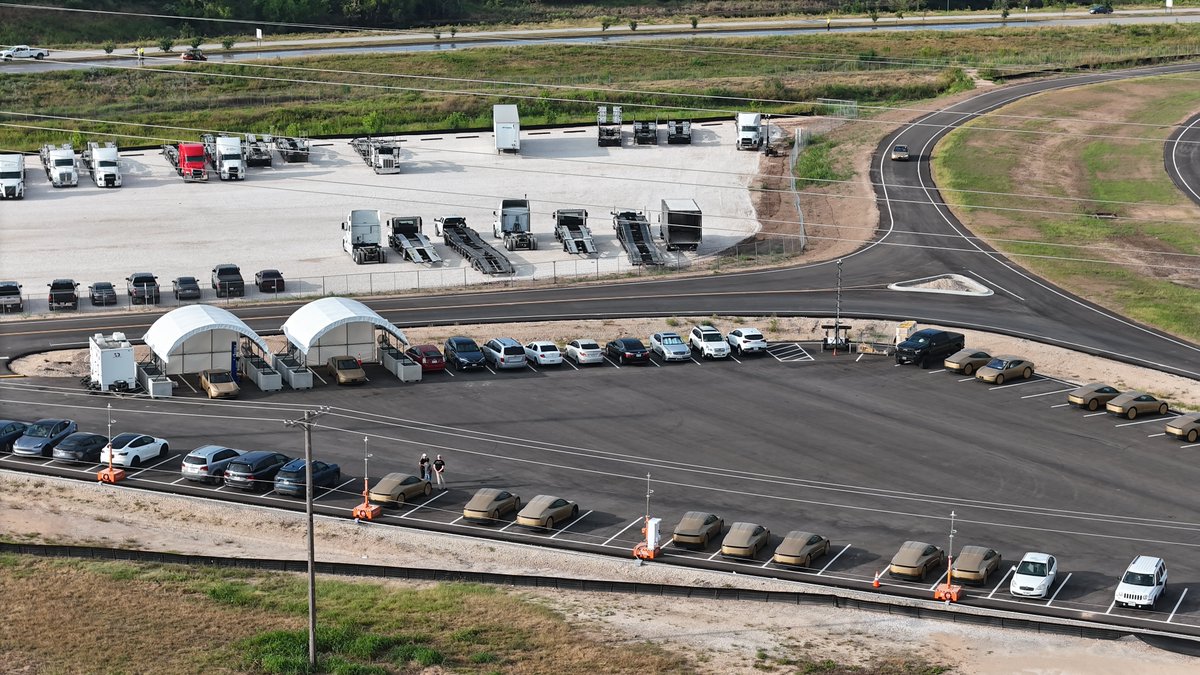
New aerial footage from Giga Texas this morning reveals Cybercabs operating fully autonomously on the test track, transporting employees without a human driver — a notable step forward for the robotaxi program. Separately, crash-test units have been spotted in what observers are calling a "Cybercab graveyard," confirming active safety validation is underway. Cybertruck production also appears to be ramping back up, and Cortex 2 is receiving additional Megapack installations. The combination of autonomous employee transport and crash testing running in parallel signals Tesla is pushing Cybercab development on multiple fronts simultaneously.


Sources: @JoeTegtmeyer, @TeslaNewswire
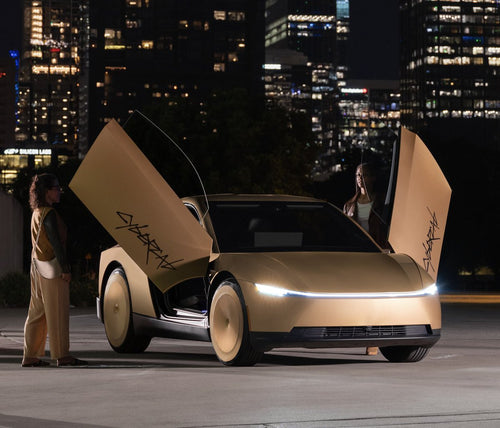
Tesla's Cybercab program is moving fast — and today's activity at the Giga Texas test track made that impossible to ignore. Observer Joe Tegtmeyer documented a busy session involving both human-driven and fully autonomous Cybercabs running a range of structured exercises, from simple stops to coordinated pack driving. Here's what stood out.

1. Human and autonomous vehicles are running together on the same track
Today's session wasn't a purely driverless exercise — it was a deliberate mix of human-operated and fully autonomous Cybercabs sharing the test loop simultaneously. That's a meaningful distinction. Running both modes together lets Tesla validate how its autonomous stack responds to unpredictable human driving behavior in a controlled but realistic environment. It's the kind of edge-case stress test that closed-loop simulations can't fully replicate.
2. The test menu goes well beyond basic laps
According to Tegtmeyer's firsthand account, the vehicles were running stops, passing maneuvers, acceleration runs, and "following the leader" convoy exercises — not just looping the track. That variety signals Tesla is working through a structured test protocol rather than simply accumulating miles. Each maneuver type targets a different aspect of the autonomy stack: reaction time, gap management, merge behavior, and fleet coordination.
3. The operations center is actively staffed and equipped
Tegtmeyer noted that the rounded tent structures serving as the operations center had lifts present — suggesting active vehicle servicing or hardware inspection happening in parallel with track testing. A staffed ops center with maintenance capability on-site points to a sustained, high-tempo testing cadence rather than occasional demonstration runs.
4. This builds on weeks of escalating Cybercab activity at the campus
Today's session isn't an isolated data point. According to background reporting, Cybercab employee rides at Giga Texas commenced in July 2026 — marking the transition from closed-loop validation to repeated real-world use with actual passengers on campus. Tesla officially announced the imminent start of those employee rides on July 10, and Cybercabs were first observed performing simulated pick-up and drop-off sequences on the test track as early as July 2. The first production Cybercab rolled off the Giga Texas line on February 17, 2026, meaning the program has moved from first unit to employee deployment in roughly five months.

5. The broader robotaxi rollout is already underway beyond the test track
While Giga Texas remains the proving ground, Tesla's driverless operations have already expanded well beyond the campus fence. Unsupervised Model Y robotaxi rides are active in Austin, and as of July 2026, Tesla has extended that service to Miami, Orlando, and Tampa. The intensity of today's Cybercab-specific track testing suggests the purpose-built vehicle — with no steering wheel or pedals — is being prepared for a similar trajectory into public commercial deployment. How quickly that happens will depend on what the test data coming off this track actually shows.
🚕 Following the Robotaxi rollout? See every operating city, launch date and announced market in our Tesla Robotaxi Tracker.
Related Gear
Gear up your Tesla with tested, custom-fit BASENOR accessories — shop Tesla accessories →
Sources & reporting notes
The links below identify the material source records used for this report.
- @JoeTegtmeyer on X (2026-07-29T16:12:57.000Z) — Direct source
- @TeslaNewswire on X (2026-07-29T16:59:20.000Z) — Direct source
Source links are preserved as published or accessed. See our editorial standards and corrections policy.
The BASENOR Editorial Desk covers Tesla, SpaceX, and related technology, curating reporting from primary sources — official accounts, regulatory filings, and software release data. Every article passes source-record and fact-checking review before publication. About the newsroom.
This report was curated by the BASENOR Editorial Desk from the sources listed above. Read our editorial standards or email editorial@basenor.com to report an error.