Tesla has officially kicked off a Cybercab display tour across Australia and New Zealand, bringing its purpose-built autonomous vehicle to the public for the first time in the region. This isn't a robotaxi launch — but it's a deliberate signal about where Tesla is heading, and the schedule is more detailed than the announcement suggests.

1. The Australian Schedule Runs City by City Through December
According to Tesla's own tour materials, the Cybercab will appear in Sydney first, starting September 21. Brisbane and Gold Coast follow in October, alongside Canberra. Melbourne and Adelaide are on the calendar for November, with Perth closing out the Australian leg in December. That's six markets across five months — a serious commitment of logistics for what Tesla is calling a display tour, not a sales event.
2. New Zealand Gets Auckland — But Not Until 2027
New Zealand isn't being skipped, but it is being pushed. Auckland is the confirmed NZ stop, currently pencilled in for sometime in 2027, with specific dates and locations still to be announced. That timeline gap is notable given that Cybercabs were already spotted undergoing cold-weather testing in New Zealand's South Island as recently as June and July 2026 — so the vehicle has clearly been in-country before this tour.
3. This Is a Showcase, Not a Service Launch
Tesla has been explicit: the tour is about giving the public a first look at the Cybercab, not launching a robotaxi service. Regulatory approval for unsupervised autonomous vehicle operation in Australia is still in development, with expectations pointing to sometime in 2027. For context, the Cybercab only entered passenger service in Austin, Texas, in September 2026 — the ink is barely dry on the US launch, and international regulatory frameworks take considerably longer to move.
4. The Messaging Is Aimed Directly at Current Model 3 and Model Y Owners
Tesla Country Director Thom Drew framed the tour with a pointed line: "Cybercab is the destination. Model 3 and Model Y are how Australians and NZers get there today." That's not accidental phrasing. Full Self-Driving (Supervised) is already available on Model 3 and Model Y in Australia and New Zealand, and Tesla is using the Cybercab's arrival to remind existing owners that the underlying technology in their car is the same stack powering the autonomous vehicle they're looking at. It's a retention and upgrade message wrapped in a display event.
5. The Cybercab's Specs Make It Worth the Attention
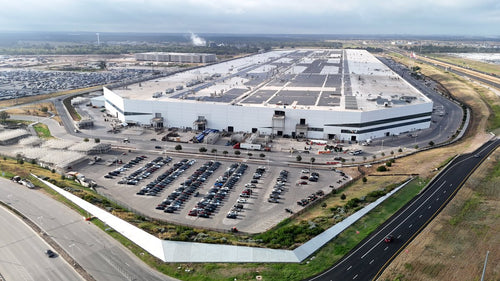
For anyone seeing the Cybercab for the first time at one of these stops: the vehicle is a purpose-built two-seater with no steering wheel, no pedals, and dihedral doors. According to EPA filings, it runs a single permanent-magnet motor producing 163 kW (219 hp), draws from a 47.6 kWh battery, and achieves over 6.1 miles per kWh — making it Tesla's most efficient production vehicle. Estimated real-world range sits around 300 miles. A consumer version is confirmed at $30,000 USD or less, with production underway at Gigafactory Texas since April 2026.
The tour is less about selling Cybercabs in Australia right now and more about normalising the idea of autonomous vehicles before the regulatory window opens. Tesla ran a similar playbook with FSD rollouts — get people familiar with the technology in supervised form, then expand capabilities as rules catch up. If you're in Sydney, the clock starts September 21.
🚕 Following the Robotaxi rollout? See every operating city, launch date and announced market in our Tesla Robotaxi Tracker.
Related Gear
Gear up your Tesla with tested, custom-fit BASENOR accessories — shop Tesla accessories →
Sources & reporting notes
The links below identify the material source records used for this report.
- @TeslaAUNZ on X (2026-09-15T01:05:17.000Z) — Direct source
- @wholemars on X (2026-09-15T01:10:02.000Z) — Direct source
Source links are preserved as published or accessed. See our editorial standards and corrections policy.
The BASENOR Editorial Desk covers Tesla, SpaceX, and related technology, curating reporting from primary sources — official accounts, regulatory filings, and software release data. Every article passes source-record and fact-checking review before publication. About the newsroom.
This report was curated by the BASENOR Editorial Desk from the sources listed above. Read our editorial standards or email editorial@basenor.com to report an error.