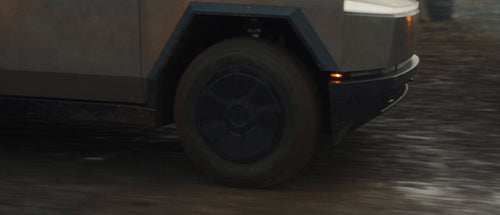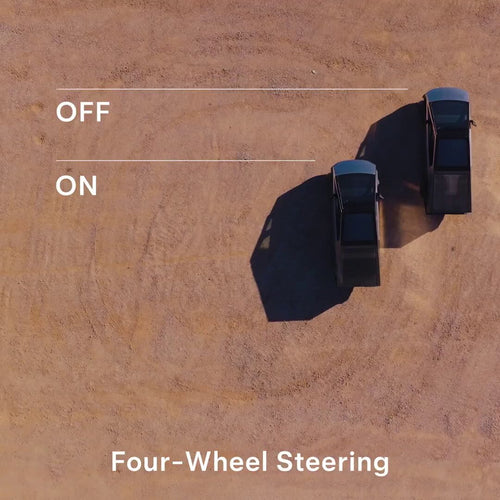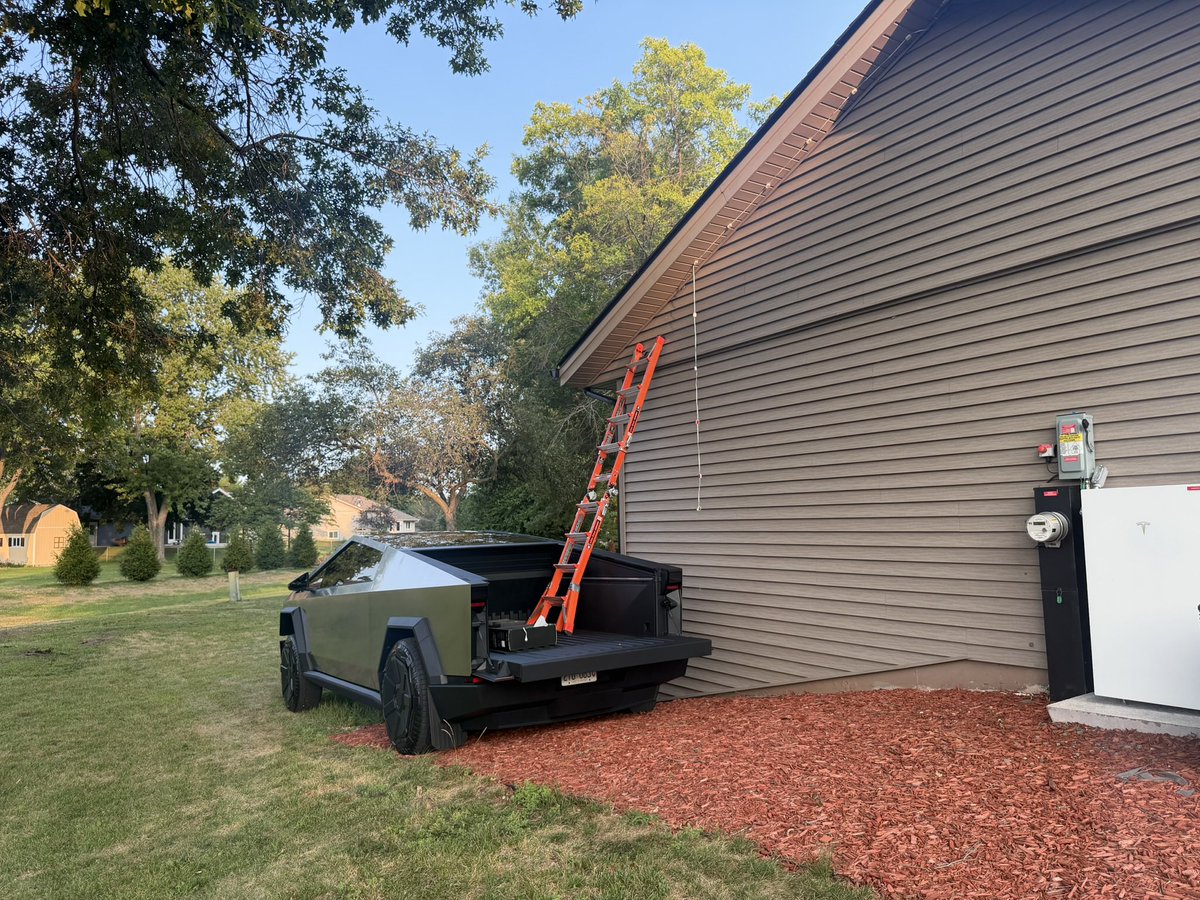
The official Cybertruck account just put the spotlight on one of the truck's most underappreciated engineering features: an adaptive air suspension system that keeps the vehicle level across virtually any terrain. It sounds simple, but the spec sheet behind it is anything but. Here's what every Cybertruck owner should understand about how this system works — and what it can actually do.

1. Auto-Leveling Is Standard on Every Variant
There's no trim-level asterisk here. The adaptive air suspension — including its self-leveling capability — comes standard on the Single Motor, Dual Motor, and Tri-Motor Cyberbeast. When cargo weight shifts or a trailer load changes the vehicle's stance, the system automatically compensates to restore a flat, stable ride height. That's not a feature you enable; it's always working in the background.
2. The Ride Height Range Is Genuinely Extreme
The numbers are worth knowing. At the low end, the Entry setting drops the truck 2.2 inches (5.5 cm) below the Medium baseline — it activates automatically when parked to make loading and exiting easier. At the high end, Extract Mode pushes ground clearance to 17.4 inches (44 cm). That's the emergency setting for when the underbody is caught on an obstacle, and it caps speed at 10 mph. In between, the off-road Very High setting sits 3.9 inches (10 cm) above Medium with a 25 mph speed limit. Total suspension travel across the full range: 12 inches (30 cm).
3. Adaptive Damping Adjusts Each Wheel Independently
Ride height is only half the story. The suspension also features active damping that reads conditions in real time and adjusts stiffness per wheel — firmer for high-speed cornering, softer for broken terrain. This isn't a two-mode toggle; it's continuous, dynamic adjustment happening across all four corners simultaneously. The practical result is that the truck doesn't have to choose between handling and comfort the way older air suspension systems did.
4. Location-Based Ride Height Memory Eliminates Repetitive Adjustments
If you regularly lower the truck at a specific garage or raise it for a particular trail, the system can save those preferences by location. Pull up to your property and it adjusts automatically — no manual input needed. For owners who move between on-road commuting and off-road use frequently, this is one of those small quality-of-life details that adds up fast.
5. CyberTent Mode Turns the Suspension Into a Camping Tool
When parked on uneven ground — a campsite, a hillside, a gravel lot — CyberTent Mode uses the adaptive air suspension to automatically level the vehicle. It also triggers a set of camping-specific automations, including activating cabin and bed lights. The suspension doing double duty as a leveling platform removes one of the more annoying friction points of truck camping: hunting for level ground or stacking rocks under a tire.
6. The System Integrates With Payload and Towing Calculations
The suspension doesn't operate in isolation from the truck's other systems. According to Tesla, the Cybertruck includes a payload and towing calculator that factors in real-time load data — including how added mass affects braking, acceleration, cornering, grade performance, and range. With a payload capacity of up to 2,500 lbs and towing up to 11,000 lbs on the Dual Motor and Cyberbeast variants (7,500 lbs on the single-motor RWD), that integration matters. The suspension helps maintain proper tire alignment under those loads while the calculator tells you exactly what the truck can handle.

What makes this system notable isn't any single spec — it's how tightly the individual pieces connect. The auto-leveling, the damping, the height memory, and the load integration all feed into a suspension that's doing considerably more work than most owners realize. If you haven't explored the off-road height settings or set up location-based preferences yet, the controls are in the Ride Height section of your vehicle's touchscreen.
Related Gear
Gear up your Cybertruck with tested, custom-fit BASENOR accessories — shop Cybertruck accessories →
Sources & reporting notes
The links below identify the material source records used for this report.
- @cybertruck on X (2026-09-20T16:27:46.000Z) — Direct source
Source links are preserved as published or accessed. See our editorial standards and corrections policy.
The BASENOR Editorial Desk covers Tesla, SpaceX, and related technology, curating reporting from primary sources — official accounts, regulatory filings, and software release data. Every article passes source-record and fact-checking review before publication. About the newsroom.
This report was curated by the BASENOR Editorial Desk from the sources listed above. Read our editorial standards or email editorial@basenor.com to report an error.