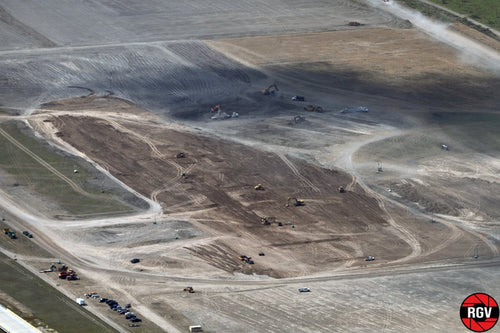
The Federal Aviation Administration has formally cleared a key regulatory hurdle for SpaceX's Starship program, issuing a Finding of No Significant Impact (FONSI) for expanded Pacific Ocean reentry contingency operations and an additional landing trajectory back to the Starbase launch site in Boca Chica, Texas. The Final Tiered Environmental Assessment and its accompanying Record of Decision were published September 2, 2026, with the official Federal Register notice following on September 4 — a concrete step toward modifying SpaceX's existing vehicle operator license.
Regulatory Filing
Agency: Department of Transportation / Federal Aviation Administration
Type: Final Tiered Environmental Assessment + FONSI/Record of Decision
FONSI Issued: September 2, 2026
Federal Register Publication: September 4, 2026
Cooperating Agencies: NASA, U.S. Coast Guard
What the FAA Actually Approved
A FONSI is not a launch license — it is the environmental green light that removes one of the last formal NEPA barriers standing between SpaceX and a license modification. Specifically, the FAA's assessment covers four distinct operational expansions:
- A new Northern Pacific Contingency Landing Area — an entirely new authorized splashdown zone, expanding the geographic footprint for safe abort scenarios during future test flights.
- Expansion of the Hawaii and Central Pacific Ocean Contingency Landing Area — broadening an already-evaluated zone to accommodate additional reentry corridors.
- Expansion of the Southeast Pacific Ocean Contingency Landing Area — similarly widening a previously approved contingency region.
- An additional Starship reentry trajectory for landing at Starbase, Boca Chica — a new flight path back to the launch site itself, which matters operationally for rapid turnaround and catch-tower recovery scenarios.
Taken together, these approvals give SpaceX significantly more flexibility in planning reentry corridors. Rather than being constrained to a narrow set of approved splashdown zones, mission planners can now route Starship through a wider envelope of Pacific trajectories while maintaining regulatory coverage for contingency events.
How We Got Here
This Final Tiered EA updates an earlier assessment published in April 2025, which had established the baseline framework for Starship environmental reviews. The FAA opened a public comment period on the draft version on July 13, 2026, and extended the deadline by one week before closing it on August 3, 2026. According to the FAA, 37 public comments were received and considered in preparing the final document — a relatively modest response that likely contributed to the agency's ability to reach a FONSI rather than escalating to a full Environmental Impact Statement.
The FAA served as lead agency throughout the process, with NASA and the U.S. Coast Guard acting as cooperating agencies — a configuration that reflects the multi-agency coordination required when a commercial launch vehicle operates over open ocean and interacts with maritime safety zones.
Why It Matters for the Starship Program
Environmental clearance is one of several regulatory gates SpaceX must pass before each new phase of Starship operations. The FONSI determination means the FAA concluded the proposed actions will not produce a significant environmental effect, which removes the requirement for the more time-consuming full Environmental Impact Statement process. That distinction matters for program cadence: a full EIS can take years; a tiered EA process, as used here, is designed to build incrementally on prior assessments and move faster.
The additional Boca Chica landing trajectory is particularly notable. Returning Starship to the launch site — rather than splashing down in the ocean — is central to SpaceX's reusability architecture. The mechanical catch system at Starbase has already demonstrated booster recovery; having a formally approved reentry corridor for the ship itself to return to that same infrastructure is a prerequisite for the full rapid-reuse operational model SpaceX has described publicly.
With the environmental record now closed, the next regulatory milestone is the actual license modification from the FAA's Office of Commercial Space Transportation. That step will determine the specific operational parameters — flight rates, trajectory constraints, and safety zones — under which the expanded Starship operations can proceed. For anyone tracking the Starship launch cadence, that license amendment is the document to watch next.
For more on the regulatory and operational milestones shaping Starship's path forward, see our SpaceX coverage.
🚀 Following the Starship program? See every test flight, official outcome and the next launch window in our SpaceX Starship Tracker.
Sources & reporting notes
The links below identify the material source records used for this report.
- FEDERAL_REGISTER (2026-09-04) — Primary public record
Source links are preserved as published or accessed. See our editorial standards and corrections policy.
The BASENOR Editorial Desk covers Tesla, SpaceX, and related technology, curating reporting from primary sources — official accounts, regulatory filings, and software release data. Every article passes source-record and fact-checking review before publication. About the newsroom.
This report was curated by the BASENOR Editorial Desk from the sources listed above. Read our editorial standards or email editorial@basenor.com to report an error.