📌 UPDATE — September 8, 2026
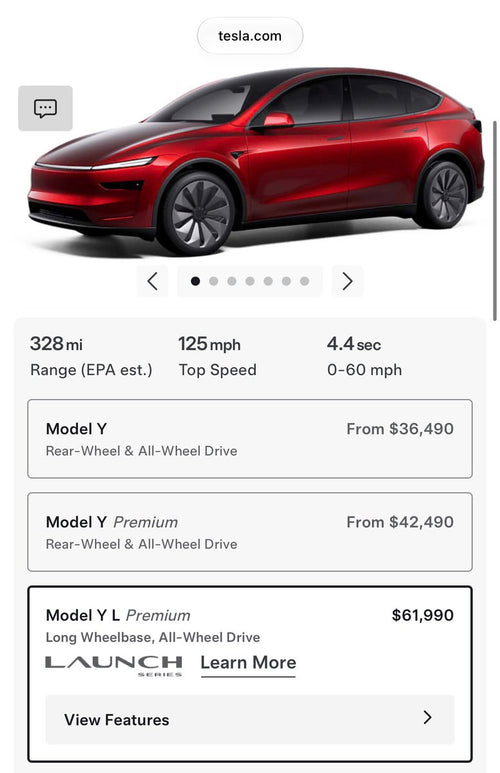
Giga Texas is now producing Cybercabs with integrated Starlink V5 modules at scale for the first time. Aerial observer Joe Tegtmeyer spotted hundreds of Cybercabs in the Giga Texas outbound lot on September 8th, with a significant number visibly equipped with Starlink modules on their hatches — a clear signal that the Starlink-equipped Cybercab has moved from prototype/limited build into meaningful production volume. The same lot also showed hundreds of Model Y L units, confirming the Austin factory is running at high capacity post-Labor Day weekend. This is the first time Starlink-equipped Cybercabs have appeared "in big numbers" in the outbound lot, making it a notable production milestone for the robotaxi program.

Both the official Starlink account and Elon Musk confirmed overnight that Starlink V5 will be factory-integrated into Tesla's Cybercab — not bolted on, not optional, built in. The announcement gives the clearest picture yet of how the robotaxi will handle connectivity for passengers and fleet operations alike. Here's what the confirmation actually tells us.

1. This Is a Factory Integration, Not an Add-On
The Starlink V5 terminal is mounted flush within the Cybercab's rear roof panel — replacing earlier prototypes that carried externally mounted dishes. According to previous reports, a physical prototype with the integrated dish was revealed in August 2026. That means the antenna is part of the vehicle's designed structure, not an aftermarket retrofit. For a robotaxi that needs to look clean and operate reliably at scale, that distinction matters.
2. Passengers Will Be Able to Stream 4K Video
Musk was direct about the passenger experience: Starlink will let you watch 4K live video while the Cybercab drives you. That's not a vague "high-speed connectivity" promise — it's a specific bandwidth commitment. The Starlink V5 terminal is capable of download speeds of 375 Mbps or higher, according to hardware specifications, which is well above what 4K streaming requires. For riders on longer trips, this repositions the Cybercab cabin as a functional entertainment space rather than just a seat.
3. The V5 Terminal Is Meaningfully Smaller Than Its Predecessor
Integrating a satellite dish into a vehicle body requires the hardware to be compact enough not to compromise aerodynamics or structure. Starlink V5 clears that bar: it is 35% smaller and 62% lighter than the V4, weighing just 1.1 kg and measuring approximately 306 × 384 mm, according to hardware data. Power draw sits at 35–50 watts average — roughly half of the V4. That lower power consumption also matters for an EV where every watt pulled from the battery affects range.
4. Connectivity Covers Operations, Not Just Entertainment
The Starlink account's announcement specifically called out "vehicle operations" alongside passenger entertainment. In practice, that means over-the-air updates, navigation data, remote diagnostics, dispatch coordination, and fleet management — all running over satellite rather than depending on local cellular towers. In dense urban areas where cell networks get congested, or in suburban and rural zones where coverage is thin, Starlink provides a consistent fallback that a pure cellular strategy cannot guarantee at fleet scale.
5. Starlink Is Not Required for Safe Autonomous Driving
This is the clarification that prevents the integration from being misread. According to previous reporting, Tesla VP of AI Software Ashok Elluswamy confirmed that Starlink connectivity is not required for the Cybercab's safe autonomous operation — the vehicle's onboard computers handle that independently. Starlink is a connectivity layer, not a safety dependency. If the satellite link drops, the car keeps driving safely. What drops is the passenger's Netflix queue, not the vehicle's ability to navigate.
6. Pricing for In-Ride Connectivity Has Not Been Disclosed
Starlink V5 residential service is available at $55/month with free hardware in some markets, but no subscription model or pricing structure for Cybercab connectivity has been announced. It's an open question whether Tesla will bundle connectivity into the ride fare, charge riders separately, or absorb it as an operational cost. That pricing decision will shape how the feature is actually used — and whether it becomes a genuine differentiator or a background utility riders never think about.
Pilot production of the Cybercab began at Gigafactory Texas in February 2026, with large-scale robotaxi deployment targeted for later this year. The Starlink V5 integration is one of the more concrete hardware commitments to emerge from that ramp — and with both the official Starlink account and Musk confirming it on the same night, it's clearly not a rumor anymore. The remaining question is how Tesla structures the connectivity economics once rides actually begin.
🚕 Following the Robotaxi rollout? See every operating city, launch date and announced market in our Tesla Robotaxi Tracker.
Related Gear
Gear up your Tesla with tested, custom-fit BASENOR accessories — shop Tesla accessories →
Sources & reporting notes
The links below identify the material source records used for this report.
- @Starlink on X (2026-09-04T00:19:02.000Z) — Direct source
- @elonmusk on X (2026-09-04T00:24:16.000Z) — Direct source
Source links are preserved as published or accessed. See our editorial standards and corrections policy.
The BASENOR Editorial Desk covers Tesla, SpaceX, and related technology, curating reporting from primary sources — official accounts, regulatory filings, and software release data. Every article passes source-record and fact-checking review before publication. About the newsroom.
This report was curated by the BASENOR Editorial Desk from the sources listed above. Read our editorial standards or email editorial@basenor.com to report an error.