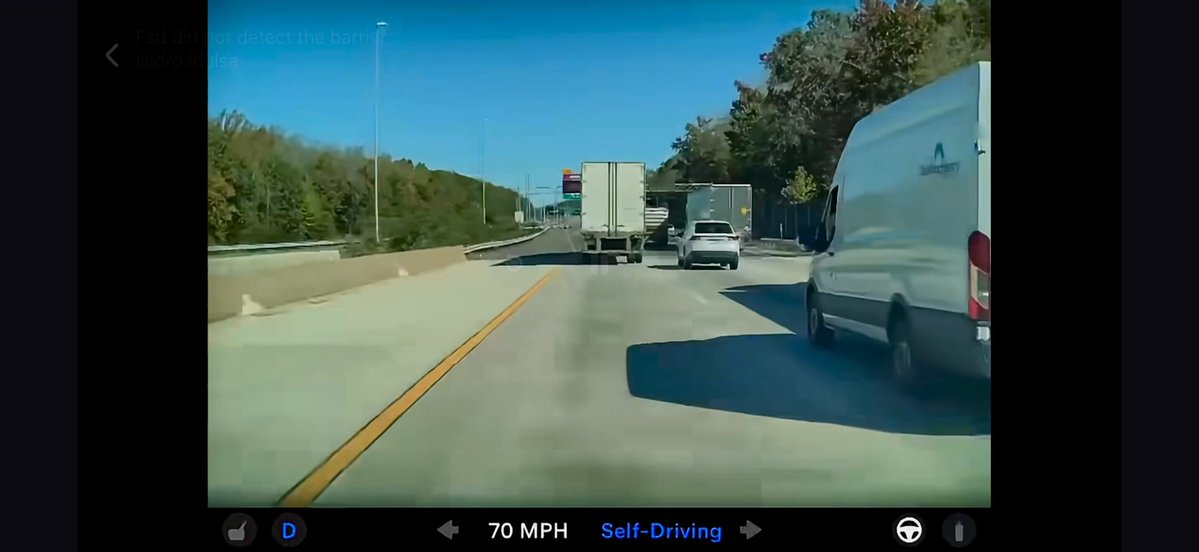
A Tesla owner and well-known community voice shared a clip this week of what he called a 'crazy FSD mistake' — a scenario that triggered a safety disengagement and, more importantly, reignited a conversation that needs to happen more often: FSD is good enough now that it's making drivers dangerously comfortable. That comfort is the problem.

The Complacency Trap
Dirty Tesla's point is worth sitting with: he can't remember his last safety disengagement. That's a testament to how far FSD has come — but it's also exactly the kind of track record that breeds overconfidence. When the system handles thousands of miles without a hitch, the temptation to treat it like a fully autonomous chauffeur grows. And that's when the edge cases bite.
The clip he shared involves a road configuration that doesn't exist in Michigan — meaning it's the kind of low-frequency scenario that FSD's training data may handle inconsistently depending on region. That unpredictability isn't a bug that will be patched away overnight. It's a fundamental reality of supervised autonomy: the system is excellent on average, and dangerous when you assume 'excellent on average' means 'safe to ignore.'
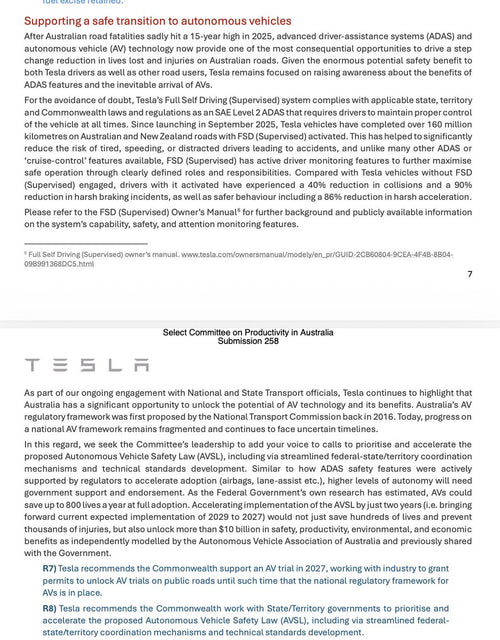
Tesla's own position is unambiguous. FSD (Supervised) is not autonomous. The driver must remain attentive and ready to intervene at all times. That hasn't changed regardless of how good the miles-per-disengagement numbers look.
What the Data Actually Says
According to Tesla's FSD Vehicle Safety Report for North America, the system currently logs approximately 6 million miles per major collision — roughly nine times better than the U.S. average. That's a genuinely impressive statistic. It's also the exact kind of number that makes people think they can open a laptop on the highway.
The problem: that average includes millions of routine highway miles where FSD barely has to work. The dangerous moments are concentrated in the tail of the distribution — unusual intersections, degraded visibility, unexpected road layouts. NHTSA escalated an engineering analysis in March 2026 specifically because FSD's degradation detection can fail to warn drivers when cameras are obscured by sun glare or fog. The system doesn't always know what it doesn't know.
What You Should Actually Do
Mode-assigned or not, this story demands a concrete action plan. Here's how to use FSD responsibly given what we know right now:
- Keep both hands near the wheel, always. Not on your phone. Not on a laptop. Not reaching into the back seat. FSD v14.3.12 (part of update 2026.38.5.6) introduced improved driver monitoring with better eye-gaze tracking and varied-lighting accuracy — the car is watching you more carefully than it used to. Treat that as a feature, not surveillance to defeat.
- Scan the road independently of what FSD is doing. The system processes what its cameras see. You can see context it can't: a driver two cars ahead braking oddly, a pedestrian about to step off a curb, a road crew around a bend. Your eyes are not redundant — they're the backup system.
- Know your local edge cases. As Dirty Tesla noted, the FSD mistake in the clip involved a road setup that doesn't exist in Michigan. Think about the unusual intersections, rail crossings, or merge configurations in your regular routes. Those are exactly where you need to be most alert, not least.
- Don't brag about hands-free miles. The culture of posting laptop-on-the-highway clips actively normalizes dangerous behavior and creates social pressure for others to do the same. It's not a flex — it's an advertisement for how to get hurt.
- Treat every disengagement as a data point, not a failure. If FSD hands control back to you, that's the system working correctly. Note what triggered it. That pattern recognition will make you a better supervised-autonomy operator over time.
- Stay current on updates. Recent releases have meaningfully improved both driver monitoring sensitivity and automatic collision evasion capabilities. Running the latest software isn't just about new features — it's about having the most capable safety net available. Check for pending updates in Controls > Software.
The Bigger Picture
FSD's improving safety record is real and worth acknowledging. But the owners who will benefit most from that progress are the ones who stay engaged — not the ones who use good statistics as permission to check out. The disengagement Dirty Tesla shared is a reminder that supervised autonomy is a collaboration, not a handoff. Your attention is still the most important safety feature in the car.
Related Gear
Gear up your Tesla with tested, custom-fit BASENOR accessories — shop Tesla accessories →
Sources & reporting notes
The links below identify the material source records used for this report.
- @DirtyTesLa on X (2026-10-31T15:34:57.000Z) — Direct source
Source links are preserved as published or accessed. See our editorial standards and corrections policy.
The BASENOR Editorial Desk covers Tesla, SpaceX, and related technology, curating reporting from primary sources — official accounts, regulatory filings, and software release data. Every article passes source-record and fact-checking review before publication. About the newsroom.
This report was curated by the BASENOR Editorial Desk from the sources listed above. Read our editorial standards or email editorial@basenor.com to report an error.