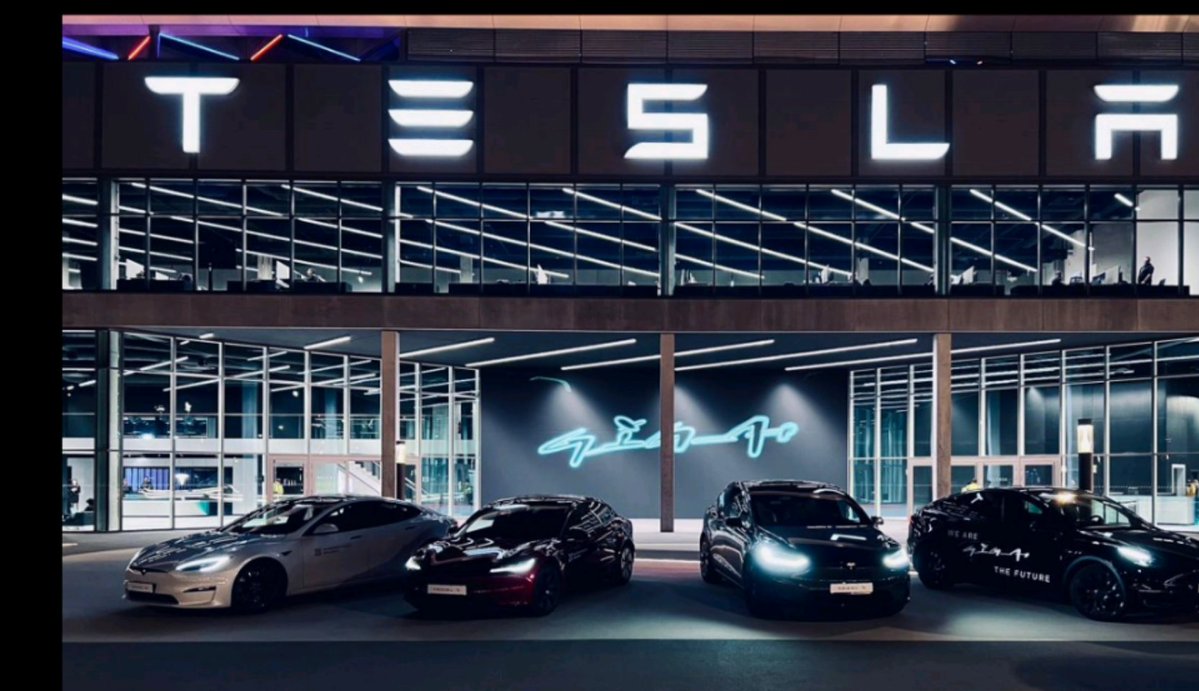
Tesla's Gigafactory Berlin has published its second environmental report under the EMAS certification program — and the headline figure is hard to ignore. The facility cut water consumption by roughly a third in a single year, used just 21% of its permitted water ceiling, and achieved over 12 consecutive months without discharging a drop of process wastewater into the municipal sewer system. For a factory that faced intense local opposition over water use when it was first built, these numbers represent a meaningful shift.

The Numbers Behind the Report
According to Tesla's 2025 Impact Report, published around July 2026, Giga Berlin consumed approximately 0.3 million cubic meters of water in 2025 — down from 0.45 million cubic meters in 2024. That's a 33% year-over-year reduction. To put it in context, the facility's annual permitted ceiling from local authorities is 1.4 million cubic meters, meaning actual consumption landed at just over 21% of what Tesla is legally allowed to draw.
Giga Berlin Water Consumption — Key Figures
| Metric | 2024 | 2025 |
|---|---|---|
| Total consumption (m³) | ~450,000 | ~300,000 |
| Per vehicle produced (m³) | 2.16 | — |
| Industry average per vehicle (m³) | 3.50 | 3.50 |
| Permitted annual ceiling (m³) | 1,400,000 | 1,400,000 |
| % of permit used | ~33% | ~21% |
Sources: Tesla 2025 Impact Report; industry average per Teslarati
Even in 2024, before the latest round of reductions, Giga Berlin was already running well below the industry average of 3.50 cubic meters per vehicle — the facility came in at 2.16 m³ per vehicle that year. The 2025 figures suggest that gap has widened further.
Zero Process Wastewater — What That Actually Means
The water volume reduction is notable, but the zero-discharge milestone may be the more technically significant achievement. According to Tesla's reporting, Giga Berlin went over 12 consecutive months without discharging any process wastewater into the municipal sewer system. The facility now treats and recycles 100% of its industrial water on-site through advanced treatment systems.
Andre Thierig, Giga Berlin's Senior Director of Manufacturing, publicly highlighted this milestone in November 2025. For a plant that drew sustained criticism from local environmental groups and the Strausberg-Erkner Water Association (WSE) during its permitting and construction phases, closing the loop on industrial water discharge is a significant operational and political win.
Returning Water Rights to the Region
In September 2025, Tesla took the additional step of returning 377,000 cubic meters of annual water rights back to the WSE — rights the company held but no longer needed given its lower-than-anticipated usage. That's not a regulatory requirement; it's a voluntary handback that directly benefits the regional water supply.
The Brandenburg region around Giga Berlin sits on a water table that local communities and environmental advocates have long argued is under pressure. Tesla's decision to relinquish unused rights, rather than hold them as a buffer, signals a deliberate posture toward the local regulatory environment — one that matters as the company continues to operate in a jurisdiction where its presence has never been uncontroversial.
EMAS and What the Certification Requires
The report is published as part of Tesla's EMAS (Eco-Management and Audit Scheme) certification — a European Union environmental management standard that requires verified, publicly disclosed environmental performance data. Unlike self-reported sustainability pledges, EMAS reports are externally validated. The fact that this is Giga Berlin's second report under the scheme means Tesla is building a multi-year track record of verified environmental data at the facility, not just a one-time snapshot.
Tesla says it has met many of the self-set environmental goals outlined in the program, and that it continues to identify further opportunities for reduction. The specifics of which goals were met and which remain open are detailed in the full report, though the water figures published so far represent the most concrete data points available.
For a factory that was once the subject of injunctions, protests, and a local referendum, the trajectory from contested construction site to EMAS-certified facility with a shrinking environmental footprint is a story worth watching — especially as Tesla continues to evaluate the role Giga Berlin plays in its European production strategy.
Related Gear
Gear up your Tesla with tested, custom-fit BASENOR accessories — shop Tesla accessories →
Sources & reporting notes
The links below identify the material source records used for this report.
- @Gf4Tesla on X (2026-09-01T19:14:57.000Z) — Direct source
Source links are preserved as published or accessed. See our editorial standards and corrections policy.
The BASENOR Editorial Desk covers Tesla, SpaceX, and related technology, curating reporting from primary sources — official accounts, regulatory filings, and software release data. Every article passes source-record and fact-checking review before publication. About the newsroom.
This report was curated by the BASENOR Editorial Desk from the sources listed above. Read our editorial standards or email editorial@basenor.com to report an error.