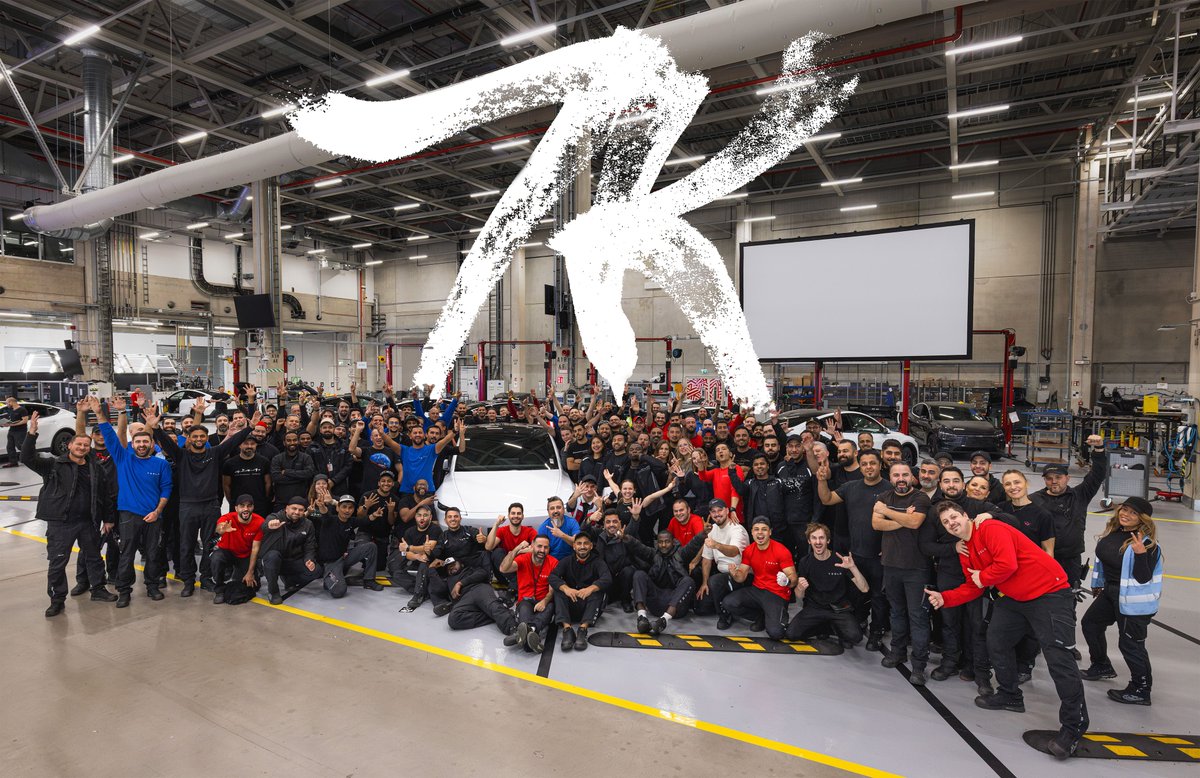
Tesla's Gigafactory Berlin crossed a meaningful production threshold this week, building 7,000 Model Y vehicles in a single seven-day period. The official @gigafactories account confirmed the milestone on Friday, and factory observer Joe Tegtmeyer was quick to note that the ramp isn't done — major construction and expansion plans are still ahead for the Grünheide plant.

How We Got Here
The 7,000-unit week is the product of a sustained, methodical ramp that has been building throughout 2026. According to production tracking data, Giga Berlin was running at roughly 5,000 units per week in Q1 2026 — a rate that translated to 61,000 Model Y vehicles over the quarter. By July, Tesla had pushed that figure toward 6,000 per week following a 20% production increase tied to additional shifts. A further push through September brought output into the 7,100–7,300 range as more shift capacity came online.
The 7,000-unit milestone confirmed this week represents an approximately 40% increase from where the factory stood at the start of the year — and it arrives just as Tesla was reportedly targeting a 7,500-unit weekly rate by mid-October 2026, according to previous reporting. The gap between where the factory is now and that near-term ceiling is narrow.
The Numbers Behind the Ramp
| Period | Weekly Run Rate | Change |
|---|---|---|
| Q1 2026 | ~5,000 / week | — |
| July 2026 | ~6,000 / week | +20% |
| September 2026 | ~7,100–7,300 / week | +18–22% |
| October 23, 2026 | 7,000 confirmed | +40% vs Q1 |
| Near-term target | 7,500 / week | +7% from now |
What Comes Next: A Factory That Doubles in Size
The current production hall in Grünheide covers approximately 2.35 million square feet (219,000 square meters). Tesla's expansion blueprint calls for a second production hall to the north of the existing facility that would be roughly 5.76 million square feet (536,000 square meters) — more than double the current footprint. Permit applications for that second hall are expected to be submitted in December 2026, with construction anticipated to begin in 2027, according to reporting from driveteslacanada.ca and other sources tracking the project.
The long-term target is an annual capacity of 1 million vehicles at the Berlin site — a figure that would make it one of the largest single-site auto plants in Europe. The full build-out is expected to take approximately ten years to complete.
Battery cell production is also in line for a significant upgrade. Plans call for doubling annual cell output from 50 GWh to 100 GWh, supported by a dedicated electrical substation, an additional water recycling system, and new wastewater treatment facilities.
To staff the expansion, Tesla announced plans to hire approximately 3,500 new employees across vehicle assembly and battery cell operations during 2026. That hiring push included 1,000 new workers starting in May, the conversion of 500 temporary positions to permanent roles, and a second hiring round of roughly 1,000 workers announced in June, according to previous reports.
Context: Why This Milestone Matters for Tesla's European Position
Giga Berlin is Tesla's primary production hub for the European market. Every incremental unit of weekly capacity reduces the company's reliance on cross-Pacific shipping from Giga Shanghai and shortens delivery timelines for European buyers. A 7,000-unit week annualizes to roughly 364,000 vehicles — meaningful volume for a single model on a single continent, and still well below the eventual 1-million-unit ceiling the expansion is designed to reach.
The pace of the ramp also carries a signal about Tesla's operational confidence in the facility. Giga Berlin had a turbulent early history — opening delays, permitting battles, and production struggles dominated the first two years. The steady cadence of milestone announcements in 2026 reflects a factory that has moved past those growing pains and into a more predictable operational rhythm.
With permit filings for the second hall expected before year-end and construction potentially beginning in 2027, the question now is whether the regulatory environment in Brandenburg will move fast enough to match Tesla's ambitions — or whether the approvals process will once again be the binding constraint on how quickly Grünheide can grow.
Related Gear
Gear up your Model Y with tested, custom-fit BASENOR accessories — shop Model Y accessories →
Sources & reporting notes
The links below identify the material source records used for this report.
- @gigafactories on X (2026-10-23T21:33:20.000Z) — Direct source
- @JoeTegtmeyer on X (2026-10-23T21:55:53.000Z) — Direct source
Source links are preserved as published or accessed. See our editorial standards and corrections policy.
The BASENOR Editorial Desk covers Tesla, SpaceX, and related technology, curating reporting from primary sources — official accounts, regulatory filings, and software release data. Every article passes source-record and fact-checking review before publication. About the newsroom.
This report was curated by the BASENOR Editorial Desk from the sources listed above. Read our editorial standards or email editorial@basenor.com to report an error.