📌 UPDATE — June 25, 2026 🔍
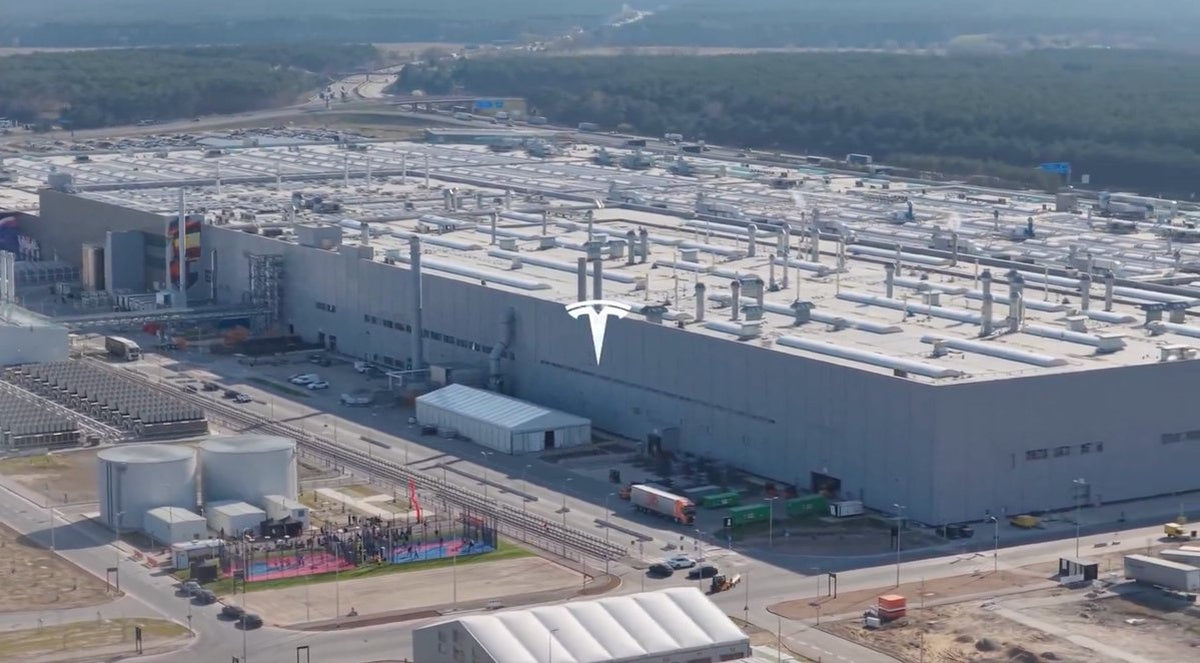
New details on Giga Berlin's near-term expansion have surfaced via a factory brochure obtained by Tesla observer Joe Tegtmeyer (@JoeTegtmeyer) during an on-site visit. Originally in German, Tegtmeyer translated and shared the document, which outlines planned infrastructure additions to the facility — some of which appear to be previously undocumented. While the full contents of the brochure are still being analyzed by the community, the document offers a rare ground-level look at the specific physical upgrades Tesla intends to make as it pushes toward its 7,500 vehicles/week target. This adds granular detail to Tesla's previously announced production ramp, suggesting the expansion involves more than just headcount and line speed — dedicated infrastructure buildout is also in the pipeline.

@JoeTegtmeyer · June 25, 2026 — View on X
Tesla is doubling down on its European manufacturing hub. The company has announced a second consecutive 20% production increase at Giga Berlin, pushing the factory's weekly output target to 7,500 vehicles — with the ramp set to begin in October 2026. A fresh wave of hiring will accompany the expansion.

A Factory in Rapid Acceleration
To understand how significant this is, it helps to look at the trajectory. Giga Berlin produced a record 61,000 vehicles in Q1 2026 — roughly 4,700 per week. In April, Tesla announced its first 20% increase, targeting approximately 6,200 vehicles per week starting in July, backed by 1,000 new hires by end of June. Now, before that first ramp has even fully landed, a second 20% increase is already on the books for October, adding another 1,000 employees to the payroll.
That's a jump from ~4,700 vehicles per week at the start of the year to a target of 7,500 by Q4 — a roughly 60% increase in weekly output across just three quarters.
The Bigger Expansion Picture
The vehicle production ramp is only part of the story at Giga Berlin. In May 2026, Tesla announced a $250 million investment in its on-site Cell factory, scaling 4680 battery cell production capacity from a previously planned 8 GWh annually to 18 GWh. That investment alone is projected to create over 1,500 new jobs in battery manufacturing.
Taken together — vehicle assembly hiring and battery cell expansion — the full three-phase growth plan for Giga Berlin is expected to generate approximately 3,500 new jobs in total. For a factory that began operations in March 2022 and has now surpassed 750,000 cumulative vehicles built, the pace of investment is striking.
Why This Matters Beyond the Numbers
Europe remains a critical and contested market for Tesla. Ramping Giga Berlin aggressively gives Tesla more pricing flexibility on European-built Model Y units, reduces logistics exposure, and strengthens the factory's role as a hub for 4680 cell supply. Each incremental unit produced locally is one fewer vehicle that needs to be shipped from Shanghai or Fremont — with all the cost and lead-time implications that entails.
The October timeline for the 7,500/week target also positions Tesla to enter 2027 with a materially stronger European production base, ahead of what is expected to be an increasingly competitive EV landscape on the continent.
Whether the ramp executes on schedule will be the real test. The April hiring wave was supposed to deliver 6,200 vehicles per week by July — that milestone is still weeks away from being confirmed. If it lands cleanly, the October target becomes considerably more credible.
Related Gear
Gear up your Model Y with tested, custom-fit BASENOR accessories — shop Model Y accessories →
Sources & reporting notes
The links below identify the material source records used for this report.
- @SawyerMerritt on X (2026-06-25T14:23:36.000Z) — Direct source
- @JoeTegtmeyer on X (2026-06-25T20:05:12.000Z) — Direct source
Source links are preserved as published or accessed. See our editorial standards and corrections policy.
The BASENOR Editorial Desk covers Tesla, SpaceX, and related technology, curating reporting from primary sources — official accounts, regulatory filings, and software release data. Every article passes source-record and fact-checking review before publication. About the newsroom.
This report was curated by the BASENOR Editorial Desk from the sources listed above. Read our editorial standards or email editorial@basenor.com to report an error.