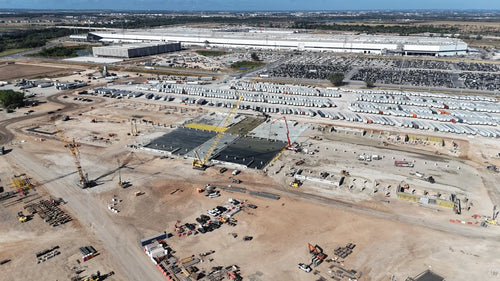
Tesla's German subsidiary has filed an official report forecasting a significant increase in production volume and capacity utilization at Giga Berlin for the 2026 financial year. The filing, surfaced by Sawyer Merritt on July 20, confirms the factory is currently supplying Model Y vehicles to more than 30 international markets — and that Tesla expects that footprint to grow as output scales.

What exactly did the Giga Berlin filing say?
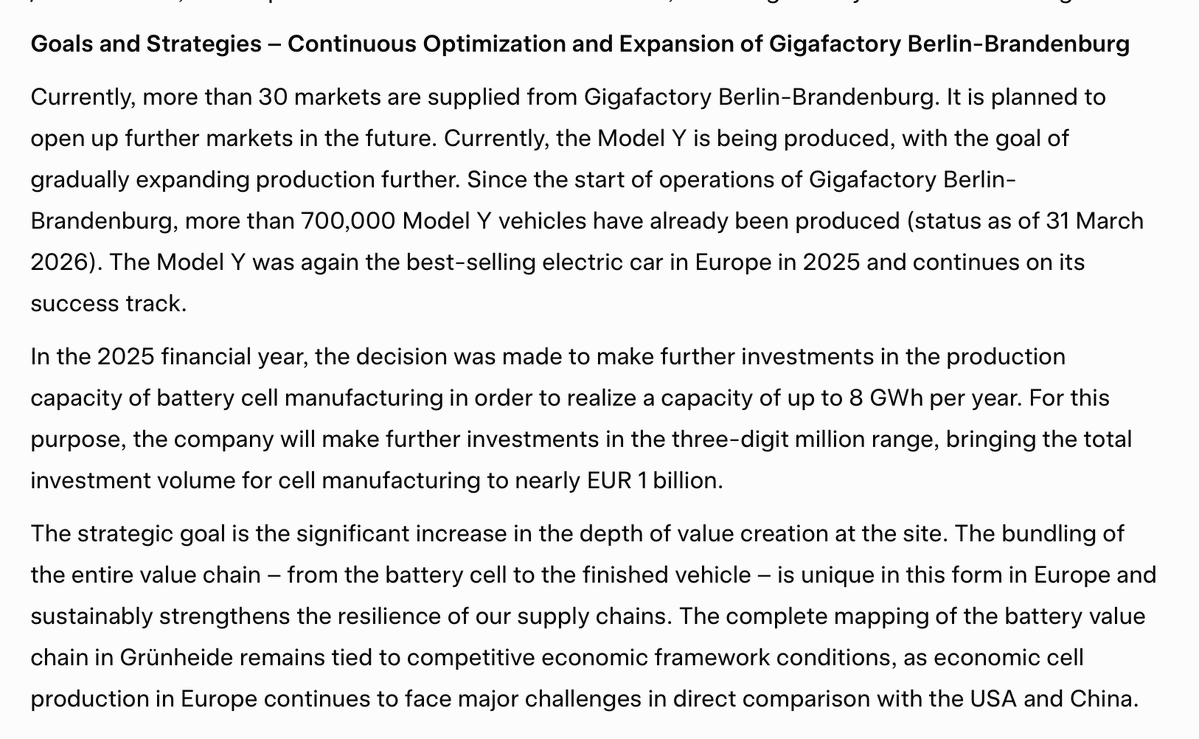
According to the official report filed by Tesla's German subsidiary in recent weeks, the company "forecasts a significant increase in production volume compared with the previous year and assumes a corresponding increase in capacity utilization" for the 2026 financial year. The filing also notes that Giga Berlin currently supplies vehicles to more than 30 markets. The language is direct and forward-looking — this is Tesla on record, not analyst speculation.
Where does Giga Berlin stand right now?
The factory produced 61,000 Model Y units in Q1 2026, establishing a weekly run rate of just over 5,000 vehicles. That's a meaningful baseline, but it still represents well under full utilization. According to background reporting, Giga Berlin's installed annual capacity exceeds 375,000 units — roughly 93,000 per quarter — meaning Q1 output was running at approximately 66% of nameplate capacity.
What are the specific production targets for the rest of 2026?
Tesla is targeting a 20% production increase starting in July 2026, which would push quarterly output to approximately 73,000 Model Y units and weekly output to around 6,000 vehicles. That would bring capacity utilization to roughly 78%. Looking further out, the factory is targeting a weekly output of 7,500 units by October 2026 — a rate that equates to approximately 375,000 vehicles annually and would effectively bring Giga Berlin to full nameplate capacity.
Is Tesla hiring to support the ramp?
Yes, and at scale. To support the production increase, Tesla planned to hire approximately 1,000 new employees starting in May 2026 and convert 500 temporary workers to permanent positions. An additional 1,000 hires were announced in June 2026. In total, the expansion is expected to create around 3,500 new positions at the Berlin site. Workforce growth of this size signals that the ramp is being treated as a sustained structural shift, not a short-term surge.
How profitable is the German operation?
Tesla's German subsidiary's 2025 annual report, released in mid-July 2026, showed a net profit of €77.1 million — an increase of nearly €20 million from the prior year. The planned production increase for 2026 was framed in that report as a direct response to improving demand and profitability. The factory is no longer in ramp-loss territory; it's a profitable operation being asked to grow faster.
What about battery cell production at the site?
Tesla is investing in on-site battery cell production at Giga Berlin, with plans to scale annual capacity to between 8 and 18 GWh. The current target is to begin cell production in Germany by 2027, initially aiming for up to 8 GWh annually. Full implementation remains contingent on market conditions, so this is a medium-term ambition rather than a near-term certainty — but it would meaningfully reduce the factory's dependence on cells sourced elsewhere.
What does this mean if you own a Tesla built in Berlin?
For owners in Europe and the 30-plus markets Giga Berlin serves, a higher-output factory generally translates to shorter wait times, more consistent trim and color availability, and a broader regional parts supply chain. The production ramp also tends to correlate with software maturity — vehicles built at higher volumes typically benefit from more refined manufacturing processes. If you're considering a Model Y order in Europe, the trajectory here is favorable.

The path from 61,000 units per quarter to full nameplate capacity in a single calendar year is aggressive. Whether Tesla hits the October 7,500-unit weekly target on schedule will be one of the more telling data points for the second half of 2026 — and a strong signal of how seriously the company is treating European demand recovery.
Related Gear
Gear up your Model Y with tested, custom-fit BASENOR accessories — shop Model Y accessories →
Sources & reporting notes
The links below identify the material source records used for this report.
- @SawyerMerritt on X (2026-07-20T00:52:42.000Z) — Direct source
- @SawyerMerritt on X (2026-07-20T00:52:42.000Z) — Direct source
Source links are preserved as published or accessed. See our editorial standards and corrections policy.
The BASENOR Editorial Desk covers Tesla, SpaceX, and related technology, curating reporting from primary sources — official accounts, regulatory filings, and software release data. Every article passes source-record and fact-checking review before publication. About the newsroom.
This report was curated by the BASENOR Editorial Desk from the sources listed above. Read our editorial standards or email editorial@basenor.com to report an error.