📌 UPDATE — July 6, 2026
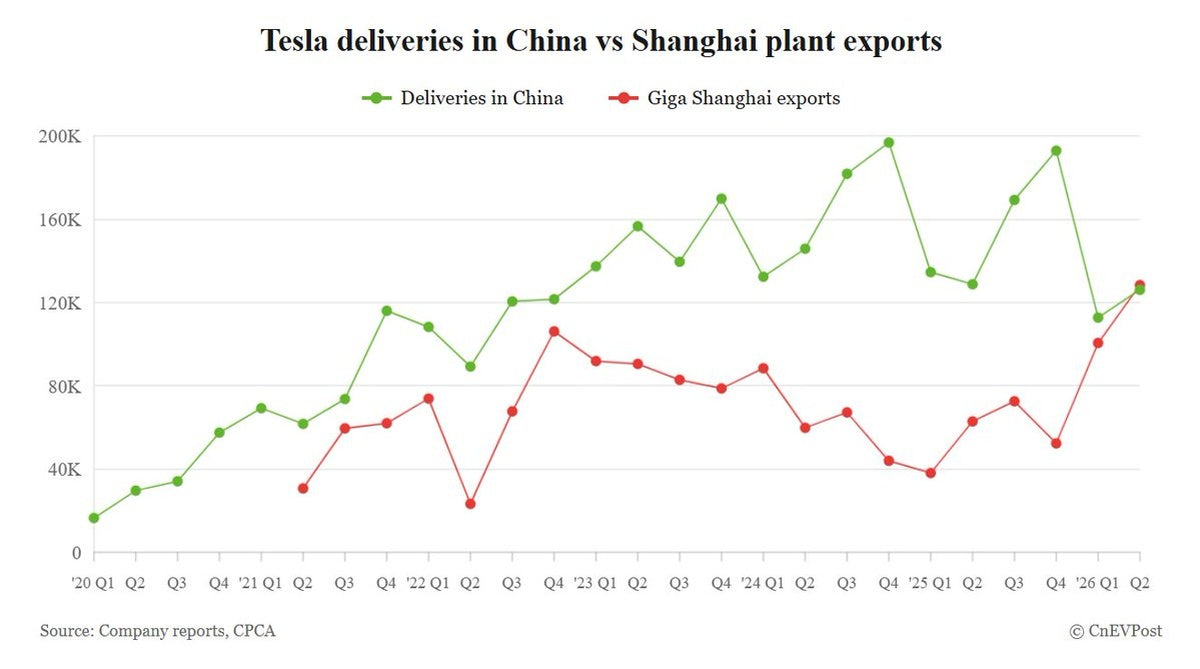
Official Q2 2026 figures confirm Tesla delivered 126,157 vehicles in China, marking a 2.05% year-on-year decline and representing just 26.28% of global deliveries — the lowest China share since late 2020. This is the first quarter on record where Giga Shanghai's export volume has surpassed domestic China sales, underscoring a structural shift in how Tesla allocates Giga Shanghai's output. The data, cited by CnEVPost, reinforces that Tesla is increasingly leaning on China-made vehicles to serve international markets rather than prioritising local demand growth.
📌 UPDATE — July 6, 2026
Tesla delivered 126,157 vehicles in China in Q2 2026, confirming a 2.05% year-on-year decline and marking the first time China's share has fallen below 30% of global deliveries since late 2020. China now accounts for just 26.28% of Tesla's worldwide volume, underscoring how aggressively Giga Shanghai has pivoted toward export markets to offset softening domestic demand. The figures, cited by CnEVPost, reinforce the structural shift detailed in this article — with export volumes from Shanghai now outpacing local sales for the first time on record.
📌 UPDATE — July 5, 2026
Official Q2 2026 figures confirm Tesla delivered 126,157 vehicles in China, marking a 2.05% year-on-year decline and representing just 26.28% of global deliveries — the lowest China share since late 2020. This is the first quarter on record where Giga Shanghai's export output has outpaced domestic Chinese sales, underscoring a significant strategic rebalancing in Tesla's production and distribution model. The data, cited by CnEVPost, solidifies what had previously been a developing trend into a confirmed structural shift.
📌 UPDATE — July 5, 2026
Official Q2 2026 figures confirm Tesla delivered 126,157 vehicles in China, down 2.05% year-on-year and representing just 26.28% of global deliveries — the lowest China share since late 2020. This marks the first quarter on record where Giga Shanghai's export output has outpaced domestic Chinese sales volume. The data, cited by CnEVPost, underscores an accelerating strategic pivot by Tesla toward using Shanghai as a global export hub rather than a primary demand market.
📌 UPDATE — July 5, 2026
Official Q2 2026 figures confirm Tesla delivered 126,157 vehicles in China, representing just 26.28% of global deliveries — the lowest China share since late 2020. The result marks a 2.05% year-on-year decline in China deliveries, reinforcing the trend that Giga Shanghai's export output is now outpacing its domestic sales volume. The data, cited by CnEVPost, puts hard numbers on what had previously been a directional story, and underscores how significantly Tesla's geographic delivery mix has shifted away from China over the past 18 months.
📌 UPDATE — July 5, 2026
Official Q2 2026 figures confirm Tesla delivered 126,157 vehicles in China, marking a 2.05% year-on-year decline and representing just 26.28% of global deliveries — the lowest China share since late 2020. This is the first quarter on record where Giga Shanghai's export volumes have outpaced domestic Chinese sales, underscoring a significant strategic rebalancing in Tesla's production allocation. The data, sourced via CnEVPost, solidifies what had previously been reported as a preliminary trend into confirmed quarterly results.
📌 UPDATE — July 5, 2026
Official Q2 2026 figures confirm Tesla delivered 126,157 vehicles in China, down 2.05% year-on-year and representing just 26.28% of global deliveries — the lowest China share since late 2020. This marks the first quarter on record where Giga Shanghai's export output has outpaced domestic Chinese sales volume. The data, cited by CnEVPost, underscores an accelerating strategic pivot at Tesla, with the Shanghai factory increasingly serving as a global export hub rather than a China-focused production center.
📌 UPDATE — July 5, 2026
Tesla delivered 126,157 vehicles in China in Q2 2026, confirming the headline figure behind this shift. The number represents a 2.05% year-on-year decline and marks the first time China's share of Tesla's global deliveries has fallen below 30% since late 2020, settling at just 26.28%. This solidifies the trend reported by CnEVPost and underscores how Giga Shanghai's export ramp is now outpacing domestic demand growth in the world's largest EV market.
📌 UPDATE — July 5, 2026
Tesla delivered 126,157 vehicles in China in Q2 2026, confirming a 2.05% year-on-year decline and marking the first time China's share of global deliveries has dropped below 30% since late 2020. China now accounts for just 26.28% of Tesla's worldwide deliveries, underscoring how rapidly Giga Shanghai's export volumes are reshaping the company's regional delivery mix. The figures, sourced via CnEVPost, add granular delivery data to the broader trend outlined in this article — with exports from Shanghai now outpacing domestic Chinese sales for the first time on record.
📌 UPDATE — July 5, 2026
Tesla delivered 126,157 vehicles in China in Q2 2026, confirming a 2.05% year-on-year decline and marking the first time China's share of global deliveries has fallen below 30% since late 2020. China now accounts for just 26.28% of Tesla's worldwide deliveries, underscoring a structural shift in the company's production and sales geography as Giga Shanghai increasingly prioritises export markets over domestic demand. The figures, sourced via CnEVPost, add granular delivery data to the broader trend outlined in this article.
📌 UPDATE — July 5, 2026
Tesla delivered 126,157 vehicles in China in Q2 2026, confirming a 2.05% year-on-year decline and marking the first time China's share has fallen below 30% of global deliveries since late 2020. China now accounts for just 26.28% of Tesla's global total, underscoring the accelerating shift in the company's production and export strategy out of Giga Shanghai. The figures, reported by CnEVPost, reinforce the trend highlighted in our original analysis — Giga Shanghai is increasingly serving global markets rather than domestic Chinese demand.
📌 UPDATE — July 5, 2026
Official Q2 2026 figures confirm Tesla delivered 126,157 vehicles in China, a 2.05% year-on-year decline that pushed China's share of global deliveries to just 26.28% — the lowest level since late 2020. This marks the first quarter on record where Giga Shanghai's export output has outpaced domestic Chinese sales, underscoring a deliberate pivot toward serving European and Asia-Pacific markets from the Shanghai facility. The drop also reflects intensifying competition from domestic Chinese EV makers, who continued to gain ground in the world's largest auto market throughout the quarter.
📌 UPDATE — July 5, 2026
Tesla delivered 126,157 vehicles in China during Q2 2026, confirming a 2.05% year-on-year decline and marking the first time China's share of global deliveries has fallen below 30% since late 2020. China now accounts for just 26.28% of Tesla's worldwide deliveries, underscoring the accelerating shift in Giga Shanghai's output toward export markets rather than domestic consumption. The figures, reported by CnEVPost, reinforce the broader trend outlined in this article — that Tesla is increasingly relying on non-China markets to absorb Shanghai production capacity.
📌 UPDATE — July 4, 2026
Tesla delivered 126,157 vehicles in China during Q2 2026, confirming a 2.05% year-on-year decline and marking the first time China's share of global deliveries has fallen below 30% since late 2020. China now accounts for just 26.28% of Tesla's worldwide deliveries, underscoring how dramatically Giga Shanghai's export role has grown relative to domestic demand. The figures, reported by CnEVPost, reinforce the trend outlined in this article — Tesla's China operation is increasingly a global export hub rather than its primary consumer market.
📌 UPDATE — July 4, 2026
New figures confirm Tesla delivered 126,157 vehicles in China in Q2 2026, marking a 2.05% year-on-year decline and representing just 26.28% of global deliveries — the lowest China share since late 2020. This is the first quarter on record where Giga Shanghai's export volumes have outpaced domestic Chinese sales, underscoring a significant structural shift in how Tesla allocates Giga Shanghai's output. The drop comes despite sustained demand in other markets, suggesting Tesla is deliberately prioritizing export fulfillment over local Chinese inventory. Analysts will be watching Q3 closely to determine whether this rebalancing reflects a long-term strategic pivot or a temporary response to softening domestic EV demand amid intensifying local competition.
📌 UPDATE — July 4, 2026
Tesla delivered 126,157 vehicles in China during Q2 2026, confirming a 2.05% year-on-year decline and marking the first time China's share of global deliveries has fallen below 30% since late 2020. The figure locks in China's contribution at just 26.28% of Tesla's worldwide total for the quarter — a historic low that underscores how rapidly Giga Shanghai's export volumes are reshaping the company's regional delivery mix. The data, sourced via CnEVPost, aligns with earlier estimates but provides the first confirmed breakdown of the year-on-year decline magnitude.
📌 UPDATE — July 4, 2026
Tesla delivered 126,157 vehicles in China in Q2 2026, confirming a 2.05% year-on-year decline and marking the first time China's share has fallen below 30% of global deliveries since late 2020. The figure — just 26.28% of Tesla's global total — underscores the accelerating shift in production strategy, with Giga Shanghai increasingly oriented toward export markets rather than domestic consumption. This is the lowest China share Tesla has recorded in over five years, reinforcing the structural nature of the trend rather than a one-off quarterly anomaly.
📌 UPDATE — July 4, 2026
Tesla delivered 126,157 vehicles in China in Q2 2026, confirming a 2.05% year-on-year decline and marking the first time China's share of global deliveries has dropped below 30% since late 2020. China now accounts for just 26.28% of Tesla's global total, underscoring a structural shift in the company's delivery mix as Giga Shanghai's export volumes continue to outpace domestic sales. The figures, sourced via CnEVPost, reinforce the trend highlighted in this article and suggest the rebalancing is more than a one-quarter anomaly.
📌 UPDATE — July 4, 2026
Tesla delivered 126,157 vehicles in China during Q2 2026, confirming a 2.05% year-on-year decline and marking the first time China's share has fallen below 30% of global deliveries since late 2020. The figure locks in China's contribution at just 26.28% of Tesla's worldwide total for the quarter — underscoring the accelerating shift in production output from Giga Shanghai toward export markets rather than domestic sales. The data, sourced via CnEVPost, reinforces the broader trend covered in this article and adds precise delivery numbers to what had previously been reported in aggregate terms.
📌 UPDATE — July 4, 2026
Tesla delivered 126,157 vehicles in China in Q2 2026, confirming a 2.05% year-on-year decline and marking the first time China's share of global deliveries has dropped below 30% since late 2020. China now accounts for just 26.28% of Tesla's worldwide deliveries, underscoring the accelerating shift in Giga Shanghai's output toward export markets rather than domestic consumption. The figures, reported by CnEVPost, reinforce the trend outlined in this article: Giga Shanghai is increasingly functioning as a global export hub rather than a China-first production center.
📌 UPDATE — July 4, 2026
New figures confirm Tesla delivered 126,157 vehicles in China in Q2 2026, marking a 2.05% year-on-year decline and representing just 26.28% of global deliveries — the lowest China share since late 2020. This is the first quarter on record where Giga Shanghai's export output has surpassed domestic China sales volume, underscoring a structural shift in how Tesla allocates production from its largest manufacturing hub. The data, sourced via CnEVPost, reinforces the trend outlined in this article and suggests the sub-30% threshold is not a one-off anomaly but a potentially sustained new baseline for Tesla's China market weighting.
📌 UPDATE — July 3, 2026
Tesla delivered 126,157 vehicles in China during Q2 2026, confirming a 2.05% year-on-year decline and marking the first time China's share of global deliveries has dropped below 30% since late 2020. China now accounts for just 26.28% of Tesla's worldwide volume, underscoring the accelerating shift in Giga Shanghai's output toward export markets rather than domestic consumption. The figures, reported by CnEVPost, reinforce the broader trend outlined in this article — that Tesla is increasingly relying on non-China markets to absorb Shanghai production capacity.
📌 UPDATE — July 3, 2026
Official Q2 2026 figures confirm Tesla delivered 126,157 vehicles in China, marking a 2.05% year-on-year decline and representing just 26.28% of global deliveries — the lowest China share since late 2020. This is the first quarter on record where Giga Shanghai's export output has outpaced domestic Chinese sales volume, underscoring a significant rebalancing of Tesla's production and distribution strategy. The data, sourced via CnEVPost, solidifies what had previously been a emerging trend into a confirmed structural shift.
📌 UPDATE — July 3, 2026
Tesla delivered 126,157 vehicles in China in Q2 2026, confirming a 2.05% year-on-year decline and marking the first time China's share has fallen below 30% of global deliveries since late 2020. China now accounts for just 26.28% of Tesla's worldwide volume, underscoring the accelerating shift toward Giga Shanghai's export-led model over domestic sales. The figures, reported by CnEVPost, reinforce the structural trend outlined in our original analysis — China is increasingly a production hub rather than Tesla's primary demand engine.
📌 UPDATE — July 3, 2026
Tesla delivered 126,157 vehicles in China in Q2 2026, confirming the figures behind our original report. The number represents a 2.05% year-on-year decline and accounts for just 26.28% of Tesla's global deliveries for the quarter — the lowest China share since late 2020. The drop underscores a structural shift in Tesla's production and sales geography, with Giga Shanghai increasingly oriented toward export markets rather than domestic consumption. CnEVPost has now independently corroborated these delivery figures.
📌 UPDATE — July 3, 2026
Official Q2 2026 figures confirm Tesla delivered 126,157 vehicles in China, a 2.05% year-on-year decline, representing just 26.28% of global deliveries — the lowest China share since late 2020. This marks the first quarter on record where Giga Shanghai's export output has outpaced domestic Chinese sales, underscoring a significant rebalancing in Tesla's production and distribution strategy. The data, cited by CnEVPost, reinforces the trend outlined in our original report and puts a precise figure on the scale of the shift away from China as Tesla's primary demand engine.
📌 UPDATE — July 3, 2026
Tesla delivered 126,157 vehicles in China in Q2 2026, confirming a 2.05% year-on-year decline and marking the first time China's share of global deliveries has fallen below 30% since late 2020. China now accounts for just 26.28% of Tesla's global total, underscoring how rapidly Giga Shanghai's export volumes are reshaping the company's regional delivery mix. The figures, cited by CnEVPost, align with the broader trend covered in this article but provide the first official quarterly breakdown confirming the sub-30% threshold has been crossed.
📌 UPDATE — July 3, 2026
Tesla delivered 126,157 vehicles in China in Q2 2026, confirming a 2.05% year-on-year decline and marking the first time China's share of global deliveries has dropped below 30% since late 2020. China now accounts for just 26.28% of Tesla's worldwide deliveries, underscoring how aggressively Giga Shanghai has shifted its output toward export markets rather than domestic sales. The figures, sourced via CnEVPost, reinforce the structural trend outlined in this article — Tesla's China operation is increasingly functioning as a global export hub rather than a primary consumer market.
📌 UPDATE — July 3, 2026
Tesla delivered 126,157 vehicles in China in Q2 2026, confirming a 2.05% year-on-year decline and marking the first time China's share of global deliveries has fallen below 30% since late 2020. China now accounts for just 26.28% of Tesla's worldwide volume, underscoring the accelerating shift in production output away from domestic consumption at Giga Shanghai. The figures, reported by CnEVPost, reinforce the trend highlighted in our original analysis — Giga Shanghai is increasingly functioning as an export hub rather than a primary demand center for Tesla.
📌 UPDATE — July 3, 2026
Tesla delivered 126,157 vehicles in China during Q2 2026, confirming a 2.05% year-on-year decline and marking the first time China's share of global deliveries has dropped below 30% since late 2020. The figure locks in China's contribution at just 26.28% of Tesla's global total for the quarter, as Giga Shanghai's export output continues to offset softening domestic demand. The data, sourced via CnEVPost, reinforces the structural shift in Tesla's regional sales mix highlighted in this article.
📌 UPDATE — July 2, 2026
Official Q2 2026 figures confirm Tesla delivered 126,157 vehicles in China, marking a 2.05% year-on-year decline and representing just 26.28% of global deliveries — the lowest China share since late 2020. This is the first quarter on record where Giga Shanghai's export output has outpaced domestic China sales volume, underscoring a structural shift in how Tesla allocates production from its largest manufacturing hub. The data, cited by CnEVPost, reinforces the trend outlined in our original report and puts hard numbers behind what had previously been a directional forecast.
Something structural is happening at Giga Shanghai. For the first time in the factory's history, the vehicles it shipped abroad in a single quarter outnumbered the vehicles delivered to Chinese customers — a reversal that, combined with China's shrinking share of Tesla's global delivery mix, signals a meaningful strategic pivot in how Tesla is using its most productive plant.

The Numbers Behind the Shift
Tesla delivered 126,157 vehicles in China during Q2 2026, down 2.05% year-on-year, according to CnEVPost. Against total global deliveries of 480,126 units in the quarter, that puts China's share at just 26.28% — the first time it has fallen below 30% since late 2020, when Giga Shanghai was still ramping production.
🇨🇳 China Market Data — Q2 2026
| Metric | Value |
|---|---|
| China Deliveries (Q2 2026) | 126,157 units |
| Year-on-Year Change | −2.05% |
| China Share of Global Deliveries | 26.28% |
| Global Deliveries (Q2 2026) | 480,126 units |
| Last Time China Share Below 30% | Late 2020 |

Giga Shanghai as an Export Engine
The export milestone is arguably the more striking data point. Giga Shanghai was originally conceived as a local-for-local factory — a way to sidestep import tariffs and serve Chinese buyers at competitive price points. That it now ships more vehicles overseas in a quarter than it sells domestically represents a fundamental reorientation of the plant's role within Tesla's global supply chain.
Tesla has been steadily expanding Giga Shanghai's export footprint into Europe, the Asia-Pacific region, and other markets where local production capacity is limited. The factory's output efficiency — widely regarded as the highest in Tesla's global network — makes it a logical hub for supplying markets that don't yet have their own Gigafactory.
What's Driving the Domestic Slowdown
The 2.05% year-on-year decline in China deliveries is modest in absolute terms, but the trend direction matters. China's EV market has become one of the most competitive in the world, with domestic brands aggressively undercutting on price and rapidly closing the technology gap on features like driver assistance and in-car software. Tesla's premium positioning has held, but maintaining volume growth in that environment requires sustained effort.
The drop below the 30% threshold is also partly a reflection of Tesla's growth elsewhere. If global deliveries are rising faster than China deliveries, the share percentage will fall even without an absolute decline in Chinese sales. Both dynamics appear to be at work here: China volumes dipped slightly while the global base expanded, compressing the share figure from two directions simultaneously.
Editor's View
The framing of this as a "China slowdown" story misses the more interesting read. Tesla is effectively using Giga Shanghai the way it uses Gigafactory Nevada — as a manufacturing asset that serves the entire company, not just the local market. The fact that exports now exceed domestic deliveries isn't a sign of weakness in China; it's a sign that Tesla has built enough production capacity there to run the plant at full utilization regardless of local demand fluctuations. That's a more resilient position than being hostage to any single market's quarterly swings. The real question is whether domestic China volumes stabilize or continue to erode — and what product moves Tesla makes in response.
Related Gear
Gear up your Tesla with tested, custom-fit BASENOR accessories — shop Tesla accessories →
Sources & reporting notes
The links below identify the material source records used for this report.
- @CnEVPost on X (2026-07-02T15:43:06.000Z) — Direct source
- @CnEVPost on X (2026-07-02T15:40:41.000Z) — Direct source
Source links are preserved as published or accessed. See our editorial standards and corrections policy.
The BASENOR Editorial Desk covers Tesla, SpaceX, and related technology, curating reporting from primary sources — official accounts, regulatory filings, and software release data. Every article passes source-record and fact-checking review before publication. About the newsroom.
This report was curated by the BASENOR Editorial Desk from the sources listed above. Read our editorial standards or email editorial@basenor.com to report an error.