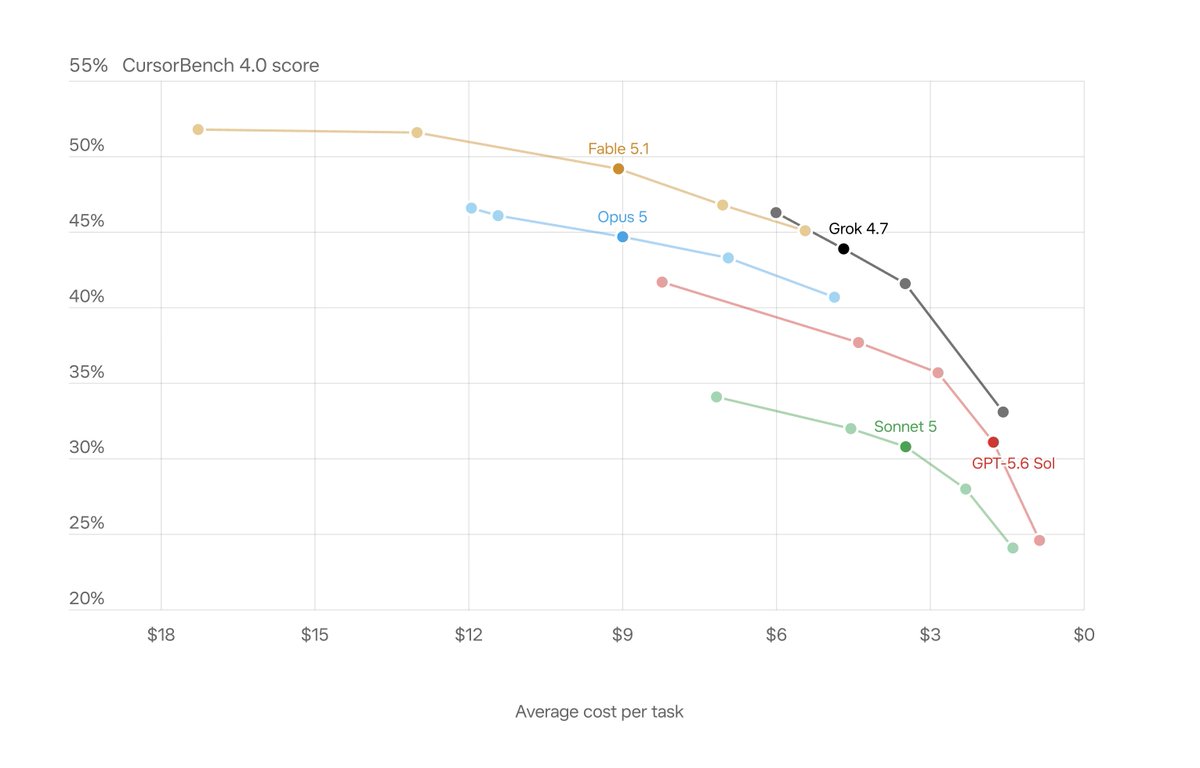
xAI dropped Grok 4.7 on September 21, 2026, and the release comes with a meaningful spec jump over Grok 4.6. Elon Musk called it a 'strong combination of intelligence, speed & low cost' — and the technical details back that up. Here's what actually changed and why it matters.

1. The Model Got Significantly Larger
Grok 4.7 runs on a new, larger base model than its predecessor. According to Elon Musk, it ships with 2.1 trillion parameters — a 40% increase over Grok 4.6's 1.5 trillion. That's not an incremental tweak; it's a structural rebuild. xAI also ran a longer reinforcement learning training pass, specifically targeting problems that require extended reasoning — the kind of multi-step tasks that trip up smaller models. The context window has also expanded to 500,000 tokens, with four reasoning levels available: low, medium, high, and xhigh.
2. Self-Verification and Long-Context Handling Are Improved
xAI's release statement specifically called out two capability areas: the model is better at checking its own outputs before returning an answer, and it handles longer documents and threads more reliably. According to xAI, Grok 4.7 is also better at creating documents and presentations — tasks that require sustained coherence across a long output. For anyone using Grok for research, drafting, or code review, these are the improvements most likely to show up in day-to-day use.

3. Native Grok Bot Harness Training Changes the Conversational Feel
This one is easy to overlook in the technical notes. xAI trained Grok 4.7 to natively understand the Grok Bot harness — the scaffolding that governs how the model interacts in chat and API environments. The practical effect is that the model behaves more naturally in conversational contexts and general knowledge work, rather than feeling like a raw reasoning engine bolted onto a chat interface. It's a training decision that should make the model feel more consistent whether you're using it through the app, the API, or a third-party integration.
4. Pricing Is Competitive, With a Few Tiers to Know
Standard Grok 4.7 is priced at $2 per million input tokens and $6 per million output tokens through the xAI API. A faster variant — Grok 4.7 Fast — is available through Cursor and Grok Build at twice those rates, though it's not accessible via the public API. Requests routed through the US regional endpoint carry a 10% premium (billed at 1.1x global rates). Free access is available within Grok Build. The standard pricing positions it as a credible option for developers who need a high-parameter model without enterprise-tier costs.
5. Availability Is Broad From Day One
Grok 4.7 is live today across Cursor, Grok Build, the xAI API, third-party coding harnesses, and model routers and cloud platforms. It's also rolling out in GitHub Copilot, accessible to Copilot Pro, Pro+, Max, Business, and Enterprise subscribers — which puts it in front of a large developer audience immediately. xAI also notes the model ships with its best-calibrated safeguards to date, which matters for enterprise deployments where guardrails are a procurement requirement.
The 4.7 release follows a pattern xAI has established with recent Grok versions: meaningful capability jumps at each point release rather than cosmetic updates. Whether the 2.1T parameter count translates to benchmark leadership is something independent testing will settle over the coming days — but the combination of a larger base model, longer RL training, and native harness integration makes this a substantive release worth paying attention to.
Sources & reporting notes
The links below identify the material source records used for this report.
- @elonmusk on X (2026-09-21T16:25:47.000Z) — Direct source
- @SawyerMerritt on X (2026-09-21T16:25:52.000Z) — Direct source
- @elonmusk on X (2026-09-21T16:31:03.000Z) — Direct source
- @wholemars on X (2026-09-21T16:42:56.000Z) — Direct source
Source links are preserved as published or accessed. See our editorial standards and corrections policy.
The BASENOR Editorial Desk covers Tesla, SpaceX, and related technology, curating reporting from primary sources — official accounts, regulatory filings, and software release data. Every article passes source-record and fact-checking review before publication. About the newsroom.
This report was curated by the BASENOR Editorial Desk from the sources listed above. Read our editorial standards or email editorial@basenor.com to report an error.