Grok Build just got a meaningful upgrade for developers: you can now deploy applications directly from within the Grok Build environment using Railway, the cloud infrastructure platform. It sounds simple, but it closes a gap that previously forced developers to context-switch between coding and deployment. Here's what you need to know.

What exactly is Grok Build, and who has access to it?
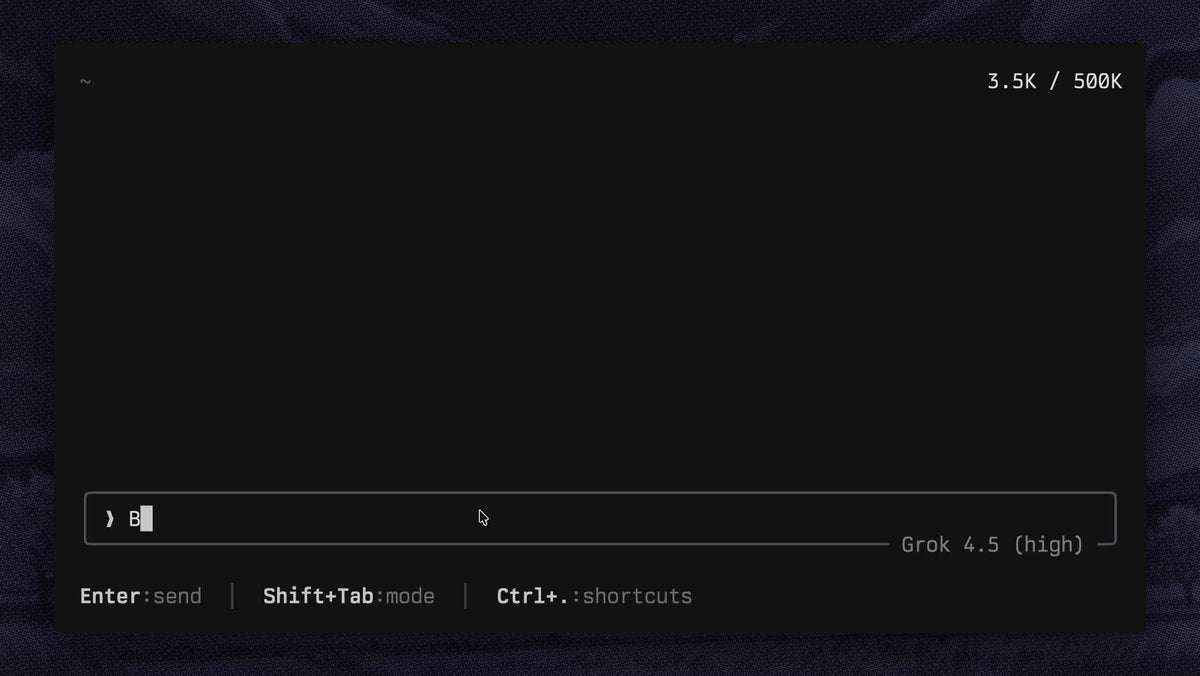
Grok Build is xAI's terminal-native coding agent, built on the grok-build-0.1 model with a 256,000-token context window. It launched into public beta on May 14, 2026, initially exclusive to SuperGrok Heavy subscribers ($300/month). By May 25, access expanded to all SuperGrok ($30/month) and X Premium+ ($40/month) tiers. Developers who prefer API access can use the model at $1.00 per million input tokens and $2.00 per million output tokens. It supports up to eight parallel agents and gained an autonomous /goal mode in late June 2026 for managing long-running tasks.
What is Railway, and why does this integration matter?
Railway is a cloud deployment platform designed to simplify the application deployment loop, particularly for AI agents. Its sandboxes — isolated Linux virtual machines — went generally available on June 26, 2026, and are built specifically for coding agents to execute commands, inspect output, and iterate in a contained environment. The integration means developers no longer need to manually configure Grok Build's Rust-based CLI or switch platforms to ship what they've built. According to Railway's documentation, Grok Build is available in Railway sandboxes alongside other agent harnesses, positioning the platform as an agent-first deployment layer.
When did this integration become available?
Grok Build became available in Railway sandbox environments on July 2, 2026, roughly two weeks before today's announcement from the official @grok account. The announcement appears to be xAI formally surfacing the integration to a broader audience rather than a same-day launch.
What does the Railway sandbox actually do for Grok Build users?
Railway sandboxes give Grok Build a ready-to-run execution environment without manual setup. The sandbox handles the infrastructure — isolated compute, networking, and storage — so the agent can focus on writing, testing, and deploying code. Railway also offers local and remote MCP (Model Context Protocol) support and an agent-first CLI, which aligns well with Grok Build's autonomous /goal mode for multi-step engineering tasks. In practical terms: you describe what you want to build, Grok Build writes and iterates on the code, and Railway handles getting it live.
Is there a privacy concern developers should know about before using Grok Build?
Yes, and it's significant enough to mention plainly. On July 14, 2026 — two days ago — it was confirmed that Grok Build CLI version 0.2.93 had been uploading entire user Git repositories to a Google Cloud Storage bucket, including full commit history, committed secrets, and API keys. The uploaded data volume was reportedly approximately 27,800 times greater than what the coding tasks required. This directly contradicted xAI's prior claims that no codebase data was transmitted to xAI servers during a session.
Elon Musk confirmed the uploads and stated that xAI would delete all previously collected user data. The company has since documented a "zero data retention" policy, added a /privacy endpoint, and reportedly implemented a server-side flag to disable the uploads. However, as of now, no independent audit has confirmed that the prior data has actually been deleted. Developers working with sensitive codebases should weigh that context carefully before connecting repositories to Grok Build, regardless of the Railway integration.
Should developers use this integration today?
The Railway integration itself is a genuine quality-of-life improvement — removing friction from the build-to-deploy pipeline is the right direction, and Railway's sandbox architecture is well-suited to agentic workflows. For personal projects, prototypes, or non-sensitive codebases, the combination of Grok Build and Railway is worth exploring. For anything involving proprietary code, credentials, or customer data, the unresolved questions around the recent repository upload incident make it prudent to wait for an independent confirmation that the data retention issue is fully resolved before going all in.
Related Gear
Gear up your Tesla with tested, custom-fit BASENOR accessories — shop Tesla accessories →
Sources & reporting notes
The links below identify the material source records used for this report.
- @grok on X (2026-07-16T17:36:58.000Z) — Direct source
Source links are preserved as published or accessed. See our editorial standards and corrections policy.
The BASENOR Editorial Desk covers Tesla, SpaceX, and related technology, curating reporting from primary sources — official accounts, regulatory filings, and software release data. Every article passes source-record and fact-checking review before publication. About the newsroom.
This report was curated by the BASENOR Editorial Desk from the sources listed above. Read our editorial standards or email editorial@basenor.com to report an error.