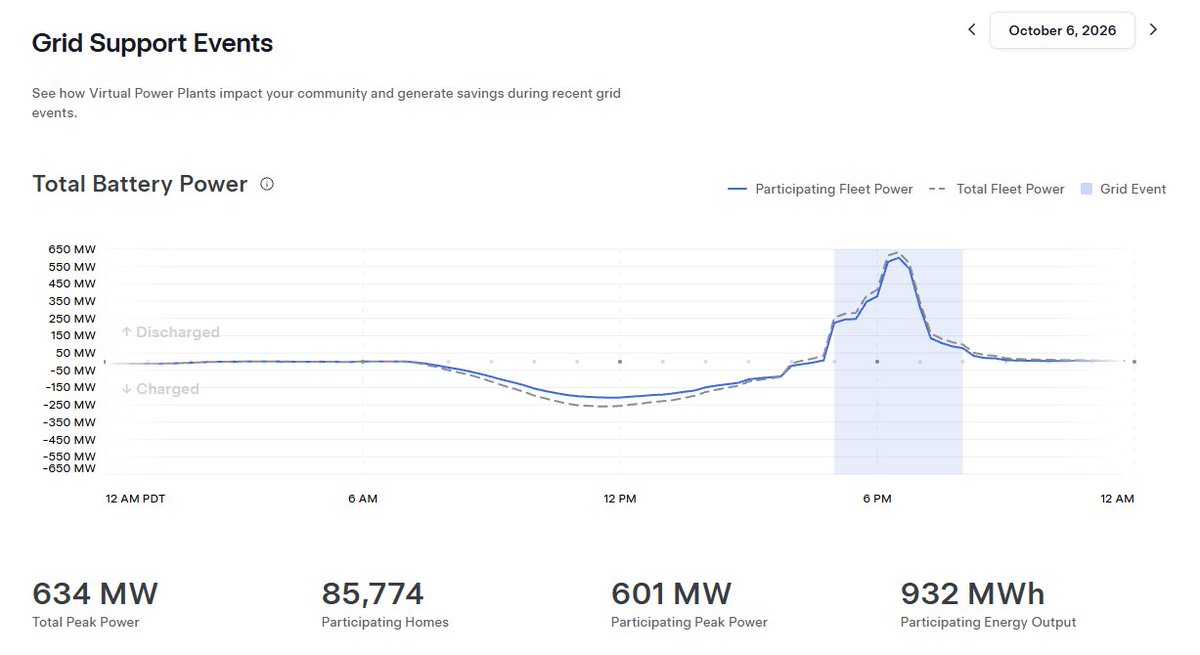
Six hundred megawatts of electricity — roughly the output of a mid-sized power plant — was dispatched to the grid from batteries sitting in ordinary people's garages and utility rooms. That number, flagged by @wholemars on October 8, is the headline. But the full picture is more interesting than a single dispatch figure. Here are five numbers that put it in context.

1. 580 MW — The Record That Started It All
On September 9, 2026, during a California heat wave, Tesla and Sunrun coordinated a dispatch of 580 megawatts from residential virtual power plants (VPPs) — what is reported as the largest residential VPP event ever recorded. The California Energy Commission and participating utilities triggered the event to stabilize the grid during peak evening demand. Tesla Powerwalls alone contributed 517 MW of that total, drawn from approximately 110,000 customer-owned batteries across the state. The 600 MW figure circulating this week represents continued momentum from that baseline.
2. 110,000 — Homes That Acted as One Power Plant
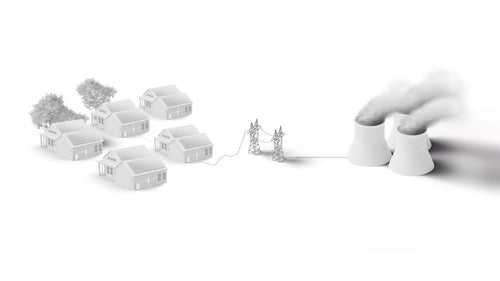
That 517 MW Powerwall contribution didn't come from a single facility — it came from roughly 110,000 individual households, each exporting a slice of stored energy simultaneously. That coordination, invisible to the homeowners involved, is the core proposition of a virtual power plant: aggregate small assets into something that behaves like centralized generation. For context, a typical large natural gas peaker plant runs between 500 MW and 1,000 MW. California effectively replicated that with garage-mounted batteries.
3. 5 GWh — Total Sent Back to California's Grid in 2026
According to verified reporting, Tesla's California Virtual Power Plant has collectively delivered 5 gigawatt-hours of stored electricity back to the state's grid across 10 major dispatch events so far in 2026 — all from Powerwall owners. To put that in household terms, 5 GWh is enough to power roughly 450,000 average U.S. homes for a full day. It's a cumulative figure that illustrates how repeated, coordinated dispatches compound into something genuinely significant at the grid scale.
4. 673 MW — Record New Residential Battery Installations in Q1 2026
The dispatch numbers are only possible because the installed base keeps growing. In the first quarter of 2026, new residential battery storage installations in the United States hit a record 673 megawatts, driven by rising electricity rates and state incentive programs in California, Hawaii, Texas, and Arizona. That single quarter of new installs is, on its own, nearly as large as the September dispatch event — meaning the pool of dispatchable home capacity is expanding fast enough to make future records almost inevitable.
5. ~50% — The Cost Advantage Over Peaker Plants
Analysis cited by the U.S. Department of Energy suggests that VPPs built from residential devices — including behind-the-meter batteries — can provide peaking capacity at roughly half the net cost of utility-scale batteries and natural gas peaker plants. That cost differential is what makes the model attractive to grid operators beyond the environmental angle. When a heat wave hits and demand spikes, calling on 110,000 home batteries is not just cleaner than spinning up a gas plant — according to that analysis, it's cheaper too.
The trajectory here is straightforward: more installs, more dispatch events, larger aggregate output. What started as a niche product for backup power during outages has quietly become a meaningful piece of California's grid management toolkit — and the numbers suggest other states with strong incentive structures are not far behind.
Sources & reporting notes
The links below identify the material source records used for this report.
- @wholemars on X (2026-10-08T17:42:47.000Z) — Direct source
Source links are preserved as published or accessed. See our editorial standards and corrections policy.
The BASENOR Editorial Desk covers Tesla, SpaceX, and related technology, curating reporting from primary sources — official accounts, regulatory filings, and software release data. Every article passes source-record and fact-checking review before publication. About the newsroom.
This report was curated by the BASENOR Editorial Desk from the sources listed above. Read our editorial standards or email editorial@basenor.com to report an error.