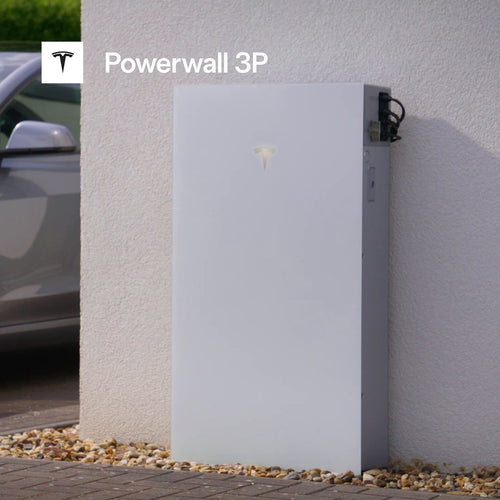
Tesla Energy is putting a spotlight on one of the Powerwall's most practical — and underused — capabilities: automatically buying cheap electricity and spending it when rates peak. It sounds simple, but the software stack behind it has grown considerably, and for homeowners on time-of-use utility plans, the financial case is sharper than ever.

What Savings Mode Actually Does
The feature Tesla Energy is highlighting is called Savings Mode — also referred to as Time-Based Control in the app. The logic is straightforward: the Powerwall 3 monitors your utility's time-of-use (TOU) schedule, charges from the grid during off-peak windows when electricity is cheapest, then supplies that stored energy back to your home during peak hours when rates are highest. You're essentially buying low and spending high, just with kilowatt-hours instead of stock.
What's changed in 2026 is how much of this happens without any owner input. Tesla's Opticaster software — bundled with every Powerwall purchase under the broader "Tesla Home" platform — handles the scheduling automatically. It factors in your local rate schedule, solar production forecasts, and household consumption patterns. The March 2026 "System Status" feature in the Tesla app added plain-language AI explanations so owners can see exactly why the battery is doing what it's doing at any given moment, which has addressed one of the most common owner complaints: not understanding why the Powerwall wasn't discharging when expected.
The October Firmware Adds an EV Layer
Firmware version 26.34, which rolled out in October 2026, extended the Savings Mode logic to vehicle charging. The new "Low-Cost Charging" feature considers both electricity rates and solar production when deciding when to charge a connected Tesla. A companion feature, "Charge on Solar," does the same for Self-Powered mode — prioritizing surplus solar generation over grid power for EV charging. For households with both a Powerwall and a Tesla vehicle on a Gen 3 Wall Connector, this firmware effectively turns the entire home energy system into a single coordinated unit.
PowerShare Expands the Value Equation
Also worth noting for prospective buyers: as of October 7, 2026, Tesla expanded PowerShare eligibility to include Model 3 and Model Y vehicles ordered on or after October 1, 2026 (along with some earlier compatible builds). When paired with a Powerwall 3 and a compatible Wall Connector, these vehicles can supply electricity to the home during a grid outage — effectively adding a second battery to the household energy reserve. That changes the ROI calculation for new Powerwall installations, since the combined storage capacity of a vehicle plus a Powerwall 3 (13.5 kWh usable) can cover more of a home's overnight load.
The Federal Tax Credit Gap
One financial reality that prospective buyers should factor in: the 30% federal residential battery storage credit under Section 25D expired on December 31, 2025. Installations in 2026 no longer qualify for that credit on outright purchases, which affects the payback period calculation. According to EnergySage, a single Powerwall 3 typically runs $13,000–$16,500 installed in the US — roughly $889–$1,222 per usable kWh. Without the federal credit, the time-of-use arbitrage savings need to do more of the financial heavy lifting, which makes Savings Mode configuration more important, not less.
For owners already in the ecosystem, the software improvements arriving through 2026 — Opticaster automation, the System Status explainer, the EV charging integration in 26.34 — represent meaningful upgrades that don't require new hardware. The Powerwall 3's 97.5% solar-to-grid efficiency and 11.5 kW continuous output were already competitive; the software layer is where Tesla is now differentiating. Whether the system pays off depends heavily on local utility rate structures, but for homeowners on aggressive TOU tariffs, the arbitrage window is real and the automation to capture it is now largely hands-free.
Sources & reporting notes
The links below identify the material source records used for this report.
- @teslaenergy on X (2026-10-28T23:42:26.000Z) — Direct source
Source links are preserved as published or accessed. See our editorial standards and corrections policy.
The BASENOR Editorial Desk covers Tesla, SpaceX, and related technology, curating reporting from primary sources — official accounts, regulatory filings, and software release data. Every article passes source-record and fact-checking review before publication. About the newsroom.
This report was curated by the BASENOR Editorial Desk from the sources listed above. Read our editorial standards or email editorial@basenor.com to report an error.