📌 UPDATE — September 6, 2026
New details have emerged about a key safety layer built into the Cybercab's automatic door system. According to @wholemars, the Cybercab's doors will refuse to open automatically if the onboard sensors detect pedestrians, cyclists, or passing vehicles in the door's path — a direct extension of the UWB and vision-based detection described below. If you need to exit anyway, a hold-to-override option lets you force the door open slowly, giving nearby road users time to react. This confirms Tesla is treating the butterfly doors not just as a convenience feature but as an active safety system, with the slow-open override acting as a last-resort safeguard rather than a simple bypass.

📹 Via @wholemars — tap to view video on X
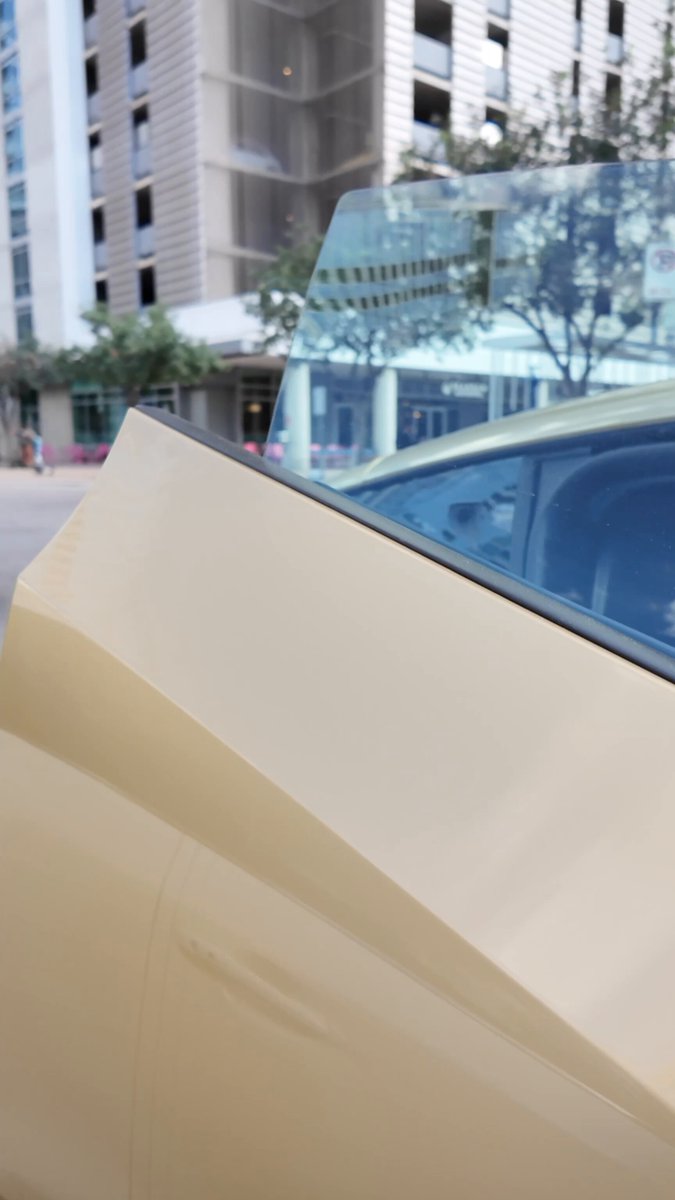
Two days into paid robotaxi service in Austin, the Tesla Cybercab is already drawing attention for something passengers never had to think about with a human driver: the doors know when — and when not — to open. Video circulating on X shows the butterfly doors operating with a level of environmental awareness that goes well beyond a simple proximity trigger.

What the System Actually Does
The Cybercab's door logic operates in two layers. The first is approach detection: as a confirmed rider walks toward the vehicle, the nearest butterfly door opens automatically to receive them. The second layer is the more technically interesting one — a vision system scans the door's swing path before and during opening. If an obstruction is present, the door holds. It does not open into a passing cyclist, a parked car, or a bollard.
According to code surfaced from the Tesla Robotaxi App v26.8.0, Ultra-Wideband (UWB) technology handles the rider-approach side of the equation — the same short-range precision positioning tech used in modern smartphone-to-car unlocking systems. The vision system then acts as a real-time safety check on top of that trigger. Tesla has not officially detailed this architecture publicly, but the app code and early rider observations align with how the system behaves in the field.
The Bigger Picture for Autonomous Passenger Experience
Door behavior is one of those details that sounds trivial until you think through the robotaxi context. In a human-driven ride-share, the driver can verbally warn a passenger not to door someone, or hold the door if the situation looks tight. Remove the driver and that judgment call has to live somewhere in the vehicle's software stack. Tesla's answer is to make it a sensor-fusion problem: UWB confirms the right person is approaching, vision confirms the path is clear, and the door moves only when both conditions are satisfied.
The butterfly (gull-wing) door geometry adds another dimension. Because these doors swing upward rather than outward, the obstruction profile is different from a conventional car door — overhead clearance matters as much as lateral clearance. The precision shown in the video suggests the system is accounting for the full arc of travel, not just a simple proximity bubble.
Manual Overrides Are Built In
For situations where the automatic system doesn't trigger — or for passengers who simply prefer manual control — Tesla has layered in multiple fallback options. A button on the B-pillar opens the door from outside. Inside the cabin, passengers can tap a door icon on the central touchscreen or use a physical lever on the door panel. A mechanical release is also present for emergencies or power-loss scenarios.
The crash protocol is worth noting separately: in the event of a collision, the Cybercab is designed to automatically unlock doors, activate hazard lights, illuminate the cabin, disable the high-voltage battery, and vent the windows — a sequenced egress procedure that doesn't require any passenger input.
The Cybercab launched paid service in Austin on September 4, 2026. The door precision on display this week is a small but telling indicator of how much engineering attention has gone into the passenger-side experience — the part of autonomous driving that doesn't show up in miles-per-intervention statistics, but will define whether people actually trust getting into one of these cars alone.
🚕 Following the Robotaxi rollout? See every operating city, launch date and announced market in our Tesla Robotaxi Tracker.
Related Gear
Gear up your Tesla with tested, custom-fit BASENOR accessories — shop Tesla accessories →
Sources & reporting notes
The links below identify the material source records used for this report.
- @TeslaNewswire on X (2026-09-06T06:07:44.000Z) — Direct source
Source links are preserved as published or accessed. See our editorial standards and corrections policy.
The BASENOR Editorial Desk covers Tesla, SpaceX, and related technology, curating reporting from primary sources — official accounts, regulatory filings, and software release data. Every article passes source-record and fact-checking review before publication. About the newsroom.
This report was curated by the BASENOR Editorial Desk from the sources listed above. Read our editorial standards or email editorial@basenor.com to report an error.