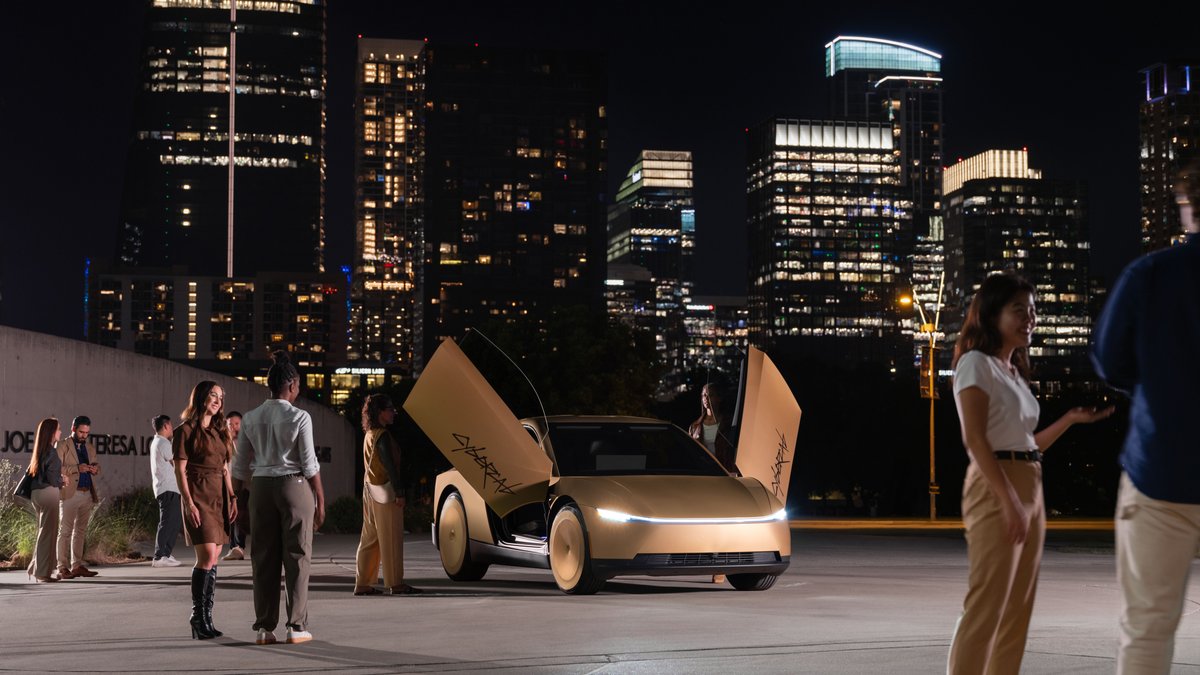
A new Sandy Munro teardown-style walkthrough with Tesla's engineering team, highlighted in a thread by @wholemars, confirms just how aggressively Tesla has rethought the Cybercab from the ground up. The two-seat robotaxi doesn't just lack a steering wheel — it ditches the traditional paint shop, hydraulic brake lines, and even the master cylinder, while introducing a third-generation heat pump and a fully modular 'unboxed' assembly process.
For Tesla owners and investors watching the robotaxi rollout in Austin, the details matter: this is the first full look at how Giga Texas is actually building Cybercabs, and it signals where Model 2, Semi, and future Tesla vehicles are headed.
The Unboxed Process, in Practice
Cybercab production starts with five independent modules built and tested in parallel: front, rear, left side, right side, and the battery-and-seats structural unit. Only after each module passes its own quality checks do they converge in an automated framing cell.
Tesla has been talking about the unboxed method since Investor Day 2023, but this is the clearest confirmation that it's live on the Giga Texas line that began mass production in April 2026. According to fifthrow.com and evwire.com reporting on the same Munro video, the approach cuts factory floor space and capex by roughly 40–50% versus a conventional line, and Tesla is targeting a 10-second cycle time with 100% automation (currently around 78%). Final assembly reportedly uses just 25 automated stations — a fraction of a typical Model Y line.
Brake-by-Wire: A Direct Consequence of Modular Build
Because the front and rear modules are assembled separately, running hydraulic brake lines across the vehicle during final framing is a non-starter. Tesla's answer is its first production brake-by-wire system.

According to the Munro walkthrough and corroborating reporting from teslanorth.com, the Cybercab eliminates brake fluid entirely, using electric actuators at each wheel corner with no central master cylinder. Combined with the steer-by-wire system Tesla first productized on Cybertruck, the Cybercab is now the company's first vehicle with no mechanical linkage between driver inputs and either steering or braking — fitting, given there is no driver.
For a robotaxi, the implications go beyond manufacturing. Fully electric brake actuation means faster response to autonomous driving commands, individual wheel-level control for stability and regen blending, and far fewer wear items for a vehicle designed for a 500,000-mile service life.
Heat Pump V3 and the Shift to Coolant-Side Heat Distribution
Cybercab debuts what Tesla calls its third-generation heat pump architecture. The key change, per @wholemars's recap of the engineering discussion, is isolating the refrigerant system inside a compact sealed assembly and moving heat distribution into the coolant loop. Historically, the refrigerant side has caused a disproportionate share of thermal system failures — think back to the heat pump complaints that dogged early Model Y vehicles in cold climates.
Tesla internally calls it the 'Super Manifold V3.' According to evwire.com's coverage of the same video, it is 38% more efficient than competing thermal systems, and production is 80% automated. For a fleet vehicle expected to run 20+ hours per day, thermal efficiency and reliability aren't luxuries — they're margin.
Killing the Paint Shop
Traditional automotive paint shops cost hundreds of millions of dollars, consume enormous factory footprint, and are among the largest sources of VOC emissions in car manufacturing. Cybercab skips the paint shop entirely.

Exterior panels are injection-molded plastic with a colored polyurethane coating applied via the Reaction Injection Molding (RIM) process — the color is formed into the panel as it's molded. According to pu-magazine.com and evwire.com, this in-mold coating approach eliminates 100% of VOC emissions on these parts and cuts overall manufacturing and supply chain emissions for the panels by roughly 35%.
Why the Doors Open Like That
Sandy Munro asked the obvious question: why pick upward-swinging doors that are harder and more expensive to repair? Tesla's engineers gave a refreshingly honest first answer — they look cool.

They then explained the functional case: easier ingress and egress for riders, which matters when the vehicle is primarily transport-as-a-service and expected to cycle through hundreds of passengers per week. In a ride-hailing context, the time cost of awkward entry is paid thousands of times over the vehicle's life.
Charging: Pragmatism Now, Optimus Later
The most pragmatic answer in the Munro video came on charging. Cybercab ships with a concealed, conventional NACS charge port — not the inductive wireless charging Tesla showed at the 2024 'We, Robot' event.
The reason, per Tesla's engineers: the near-term fleet needs to leverage the existing Supercharger network. Building out a nationwide inductive charging infrastructure in parallel with ramping Cybercab production would be a non-starter. Longer term, Tesla suggested, Optimus could physically plug in Cybercabs at depots — a bridge solution before full inductive deployment.
According to teslahubs.com reporting on the vehicle's charging spec, the Cybercab does not include an onboard AC charger, meaning it cannot charge from standard home outlets or Level 2 stations — DC fast charging only. That's a tell: this vehicle is designed to live at Supercharger-equipped depots, not in driveways.
Key Figures
| Metric | Value | Source |
|---|---|---|
| Parallel production modules | 5 | @wholemars / Munro video |
| Factory floor space / capex reduction | ~40–50% | fifthrow.com |
| Final assembly stations | ~25 automated | fifthrow.com |
| Heat pump efficiency gain | +38% vs competing systems | evwire.com |
| VOC emissions on exterior panels | −100% vs paint shop | pu-magazine.com |
| Battery capacity (estimated) | ~48 kWh, 4680 cells, 88S6P | teslahubs.com |
| Designed service life | 500,000 miles | teslahubs.com |
The Bigger Strategic Picture
Tesla framed the Cybercab's end-state use cases to Munro as: autonomous ride-hailing, personal transportation and commuting, delivery services, and long-term Optimus integration. The company explicitly envisions households giving up their second car — or dropping personal vehicle ownership altogether.
That's a sharp strategic contrast with Model 3 and Model Y, which remain personal-ownership products. The Cybercab is being engineered as transport-as-a-service infrastructure: a vehicle designed around 500,000-mile duty cycles, depot charging, no AC onboard charger, no mirrors, no steering wheel. Every manufacturing decision in the Munro video — unboxed modules, brake-by-wire, paint-shop deletion, sealed refrigerant loop — ladders up to the same goal: build this vehicle faster and cheaper than anyone has ever built a car.
Whether Tesla hits the aggressive cost targets Elon Musk has implied (sub-$30,000 Cybercab, sub-$0.30/mile ride cost) is the open question. Production began in February 2026 at Giga Texas, paid public rides launched in Austin in September 2026, and NHTSA opened an investigation that same month into Tesla's self-certification of Cybercab's compliance with federal safety standards. Tesla's AI chief Ashok Elluswamy has said customer-owned vehicles are expected to join the robotaxi fleet around Q2 2027.
What to Watch Next
Four signals will tell us whether the Munro video reflects a line that's actually scaling:
- Giga Texas cycle time: Tesla is at ~78% automation targeting 100% and a 10-second cycle. Earnings call commentary over the next two quarters will reveal whether that curve is bending the right way.
- NHTSA self-certification investigation: The September 2026 probe could constrain how fast Tesla deploys customer-owned Cybercabs in 2027.
- First retail pricing: No official customer purchase price has been released. The number Tesla eventually posts will be the clearest signal of whether unboxed economics actually delivered.
- Fleet charging infrastructure: Watch for permit filings at Tesla-owned depots. The absence of onboard AC charging makes depot DC infrastructure a hard constraint on fleet scale.
The Munro video is the most detailed external look at Cybercab manufacturing to date. The engineering story it tells is cohesive: every unusual choice — the doors, the paint, the brakes, the heat pump — connects back to the same thesis. Whether that thesis survives contact with 100,000-unit annual production is the next thing Tesla has to prove.
🚕 Following the Robotaxi rollout? See every operating city, launch date and announced market in our Tesla Robotaxi Tracker.
🤖 Tracking Tesla's humanoid robot? See every Optimus production milestone and appearance in our Tesla Optimus Tracker.
Related Gear
Gear up your Tesla with tested, custom-fit BASENOR accessories — shop Tesla accessories →
Sources & reporting notes
The links below identify the material source records used for this report.
- @wholemars on X (2026-10-26T19:10:32.000Z) — Direct source
- @wholemars on X (2026-10-26T19:17:33.000Z) — Direct source
- @wholemars on X (2026-10-26T19:23:31.000Z) — Direct source
- @wholemars on X (2026-10-26T19:26:46.000Z) — Direct source
- @wholemars on X (2026-10-26T19:29:43.000Z) — Direct source
- @wholemars on X (2026-10-26T19:32:33.000Z) — Direct source
- @wholemars on X (2026-10-26T19:34:35.000Z) — Direct source
Source links are preserved as published or accessed. See our editorial standards and corrections policy.
The BASENOR Editorial Desk covers Tesla, SpaceX, and related technology, curating reporting from primary sources — official accounts, regulatory filings, and software release data. Every article passes source-record and fact-checking review before publication. About the newsroom.
This report was curated by the BASENOR Editorial Desk from the sources listed above. Read our editorial standards or email editorial@basenor.com to report an error.