30-Second Brief
The News: At NVIDIA GTC 2026, CEO Jensen Huang declared that the "ChatGPT moment" for self-driving cars has officially arrived — signaling industry-wide confidence that full autonomy is now achievable.
Why It Matters: This isn't just hype from a chipmaker. NVIDIA is the infrastructure backbone powering Tesla's competitors — and Huang's declaration, backed by new automaker partnerships and a concrete robotaxi deployment timeline, tells Tesla owners the autonomous driving race just shifted into a higher gear.
Source: @ray4tesla on X
Jensen Huang Declares the 'ChatGPT Moment' for Self-Driving Has Arrived — What It Means for Tesla Owners
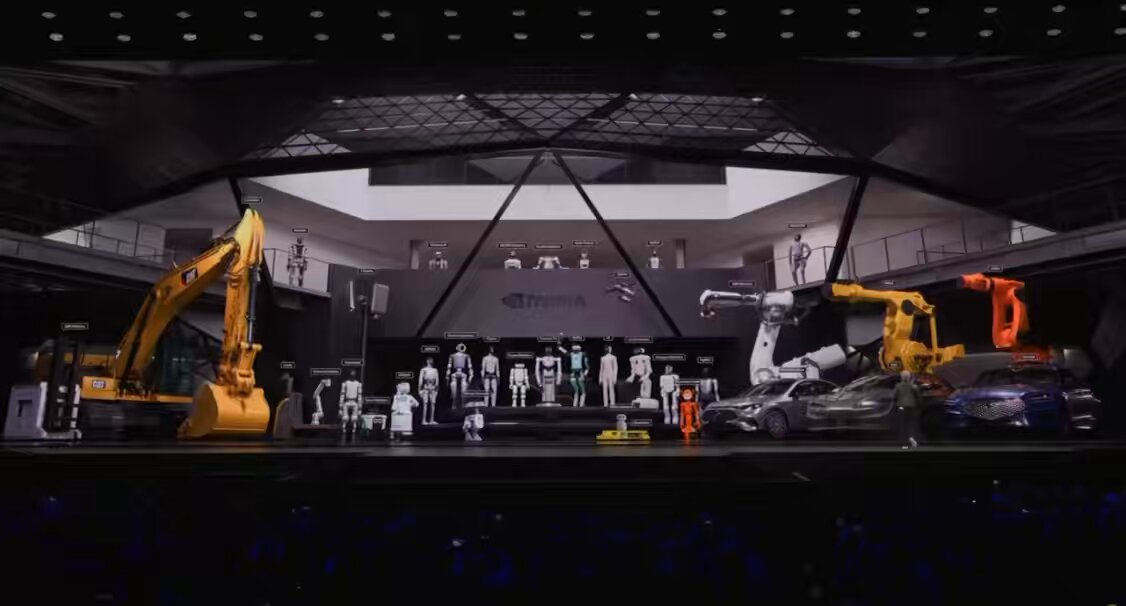
At NVIDIA GTC 2026 on March 16, 2026, CEO Jensen Huang made one of the boldest declarations in the history of autonomous vehicles. Standing in front of a packed keynote audience, he announced that the industry has crossed a threshold — the same kind of inflection point that ChatGPT represented for AI in 2022. "We now know we could successfully, autonomously drive cars," Huang said. That sentence carries enormous weight for anyone watching the self-driving space — including every Tesla owner waiting on FSD to reach its full potential.

📊 Key Figures from NVIDIA GTC 2026
| Metric | Value | Context |
|---|---|---|
| Annual vehicle production on NVIDIA DRIVE Hyperion | 18 million | BYD, Hyundai, Nissan, Geely + existing partners |
| Uber robotaxi initial launch cities | 2 cities | Los Angeles & San Francisco, H1 2027 |
| Uber robotaxi expansion target | 28 cities | Across 4 continents by 2028 |
| NVIDIA projected AI demand by 2027 | $1 trillion+ | High-confidence demand cited by Huang |
What NVIDIA Actually Announced
Huang's declaration wasn't just rhetorical. GTC 2026 came loaded with concrete announcements that back up the confidence. Here's what was revealed:
DRIVE Hyperion — 18 Million Vehicles a Year
NVIDIA announced new partnerships with BYD, Hyundai, Nissan, and Geely — all building Level 4-ready vehicles on the NVIDIA DRIVE Hyperion platform. Combined with existing partners like Mercedes-Benz, Toyota, and General Motors, the platform now covers an annual production footprint of 18 million vehicles. That's not a pilot program. That's a supply chain.
Uber Robotaxis — Dates and Cities Confirmed
NVIDIA and Uber have significantly expanded their collaboration. NVIDIA's Drive AV software, the Alpamayo open models, and the Halos OS will power Uber's robotaxi fleet. The deployment schedule is specific: Los Angeles and San Francisco in the first half of 2027, scaling to 28 cities across four continents by 2028. These aren't vague promises — they're operational timelines with named cities.
Alpamayo 1.5 — The Model Behind the Wheel
NVIDIA also introduced Alpamayo 1.5, described as a major upgrade to its autonomous vehicle model family. It processes driving video, ego-motion history, navigation guidance, and natural language prompts to generate real-time driving trajectories. The ability to handle natural language inputs is a notable design choice — it suggests these systems are being built to learn from edge cases and human instruction, not just rigid rule sets.
Physical AI Data Factory Blueprint
NVIDIA unveiled an open reference architecture designed to automate the generation, augmentation, and evaluation of training data for autonomous vehicles and robotics. It's being integrated with Microsoft Azure and Nebius. In plain terms: NVIDIA is building the industrial-scale data pipeline that autonomous driving companies need to train reliable AI at speed.
🔭 The BASENOR Take
| Timeline | Robotaxi deployments: H1 2027 (LA/SF) → 28 cities by 2028 |
| Impact Level | 🔴 High — reshapes the competitive landscape for Tesla FSD |
| Confidence | High — backed by named partners, specific cities, and production figures |
The "ChatGPT moment" framing is deliberate and worth unpacking. When ChatGPT launched in late 2022, it didn't just impress technologists — it proved to the entire world that large language models could be genuinely useful to everyday people. That moment of public proof changed investment patterns, hiring decisions, and corporate strategy overnight. Huang is saying the same inflection point has now arrived for autonomous driving: the technology has crossed from "theoretically possible" to "demonstrably real."
For Tesla owners, the implications are direct. Tesla is not building on NVIDIA's platform — it runs its own silicon (the custom AI training cluster Dojo) and its own FSD stack. But NVIDIA's announcements confirm that the broader industry is now moving with urgency and with real deployment timelines. That's competitive pressure, and competitive pressure historically accelerates Tesla's own roadmap. When Uber robotaxis are running in LA and San Francisco in 2027, Tesla's Cybercab and FSD v13+ will be measured against them in real-world conditions.
The 18-million-vehicle production figure is the one that deserves the most attention. That's not a startup ecosystem — that's the mainstream auto industry committing its volume production lines to NVIDIA's autonomous driving stack. BYD alone sells more EVs globally than Tesla. When manufacturers at that scale integrate Level 4-ready hardware into their standard production vehicles, it signals that autonomous driving is transitioning from a premium feature to a baseline expectation.
For Tesla owners who follow our FSD coverage: the race has not been decided. Tesla's end-to-end neural network approach and its massive real-world fleet data advantage remain significant differentiators. But GTC 2026 made clear that the gap between Tesla and the broader industry — once enormous — is closing faster than many expected. Jensen Huang's "ChatGPT moment" declaration isn't just marketing. It's a signal that the industry has crossed a threshold, and the next 24 months will tell us who built the better map to the other side.
📋 Tracking Tesla software? See every firmware, FSD and app version in one place in our Tesla Software Update Tracker.
🚕 Following the Robotaxi rollout? See every operating city, launch date and announced market in our Tesla Robotaxi Tracker.
Related Gear
Gear up your Tesla with tested, custom-fit BASENOR accessories — shop Tesla accessories →
Sources & reporting notes
The links below identify the material source records used for this report.
- @ray4tesla on X (2026-03-17T05:09:19.000Z) — Direct source
Source links are preserved as published or accessed. See our editorial standards and corrections policy.
The BASENOR Editorial Desk covers Tesla, SpaceX, and related technology, curating reporting from primary sources — official accounts, regulatory filings, and software release data. Every article passes source-record and fact-checking review before publication. About the newsroom.
This report was curated by the BASENOR Editorial Desk from the sources listed above. Read our editorial standards or email editorial@basenor.com to report an error.