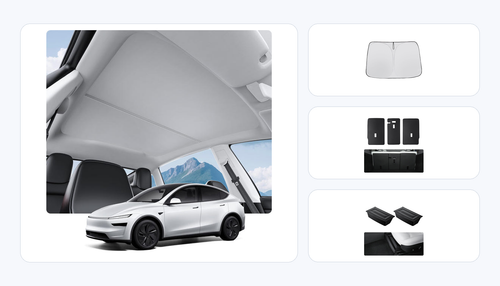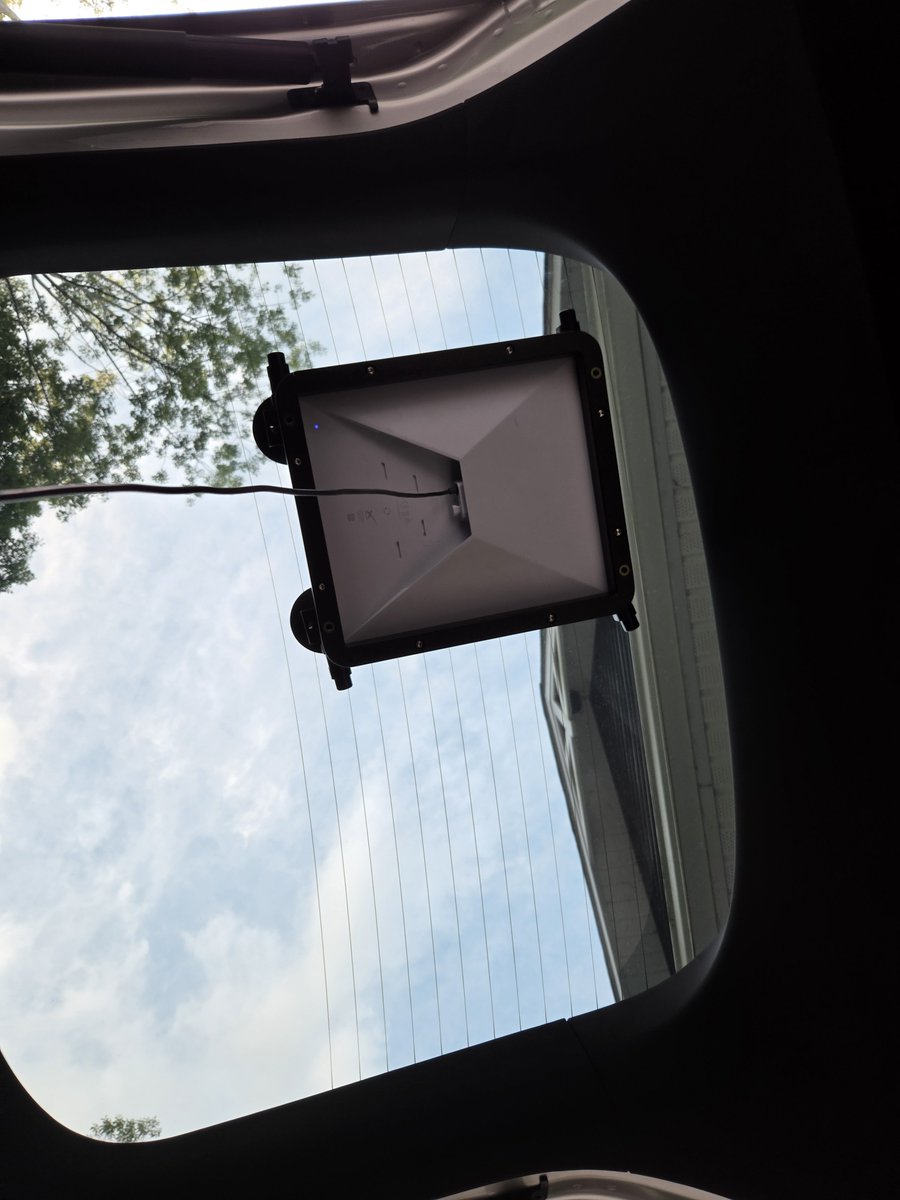
Tesla appears to have quietly applied a heat-rejecting metallic tint to the rear window of the Model Y Long Range (YL) — a change that has a meaningful side effect for anyone planning to run Starlink from their vehicle. According to Dirty Tesla and corroborating user reports, the rear glass blocks satellite signals entirely, leaving the front windshield as the only viable mounting point for a Starlink dish.
What exactly is happening with the Model Y L rear window?
Based on a report from Dirty Tesla, the rear window on the YL appears to use Tesla's heat rejection glass — the same type of metallic-layer treatment found on other Tesla models designed to reflect infrared radiation and reduce cabin heat. That metallic layer, while excellent at blocking heat, also attenuates radio frequency signals in the Ku and Ka bands that Starlink relies on. The result: a Starlink dish placed behind or under the rear window gets little to no signal.

Has Tesla confirmed this?
Not for the Model Y L specifically. Tesla has not issued any official statement or spec sheet entry acknowledging that the YL rear window blocks Starlink signals. The change appears undocumented — there is no mention of it in delivery paperwork or on Tesla's website. That said, this is not without precedent. In March 2026, Tesla's lead Cybertruck engineer Wes Morrill officially confirmed that the metallic layer in the Cybertruck's glass roof interferes with Starlink, recommending the windshield as the correct placement instead. The mechanism is identical.
Is this just one person's experience, or is it a broader pattern?
It's broader. An August 2026 Reddit thread independently describes the new Model Y L glass glazing as blocking Starlink completely on both the rear ceiling window and the boot window, with only the front window unaffected — directly mirroring what Dirty Tesla reported. A separate November 2025 report on a 2026 Model Y Juniper noted that a Starlink Mini failed to connect under the glass roof but worked fine under the rear hatch glass. Taken together, the reports suggest this is a consistent characteristic of the newer glass specification, not an isolated defect.
Why would Tesla add signal-blocking glass to the rear window?
The thermal benefit is real. According to a February 2025 analysis of the 2026 Model Y Juniper, the rear window showed 83% and 12% infrared heat rejection figures depending on measurement method. Metallic oxide coatings that achieve this level of IR rejection are the same coatings that impede radio frequency transmission — it is a physical trade-off, not a design oversight. Tesla is clearly prioritizing cabin cooling performance, which is a legitimate engineering choice, particularly for a long-wheelbase vehicle with more rear passenger space to keep comfortable.
So where should YL owners place their Starlink dish?
The front windshield. Both the Dirty Tesla report and the Cybertruck guidance from Wes Morrill point to the same conclusion: Tesla's front windshield does not appear to use the same signal-blocking metallic layer, making it the only reliable through-glass placement for a Starlink terminal in vehicles equipped with heat rejection rear glass. Starlink's own setup documentation consistently emphasizes a clear, unobstructed view of the sky — placing the dish behind any glass that attenuates RF will degrade or eliminate connectivity.
Is Tesla working on a permanent fix for this?
There is evidence Tesla is aware of the broader challenge. A December 2025 Tesla patent application described embedding Starlink receivers into sunroofs using a roof component specifically engineered to be "highly transparent to radio frequencies to ensure effective penetration of satellite signals." That language suggests Tesla's engineers understand the tension between heat rejection coatings and satellite connectivity, and are actively exploring integrated solutions. Whether that technology reaches production vehicles — or whether a retrofit option emerges for existing YL owners — remains an open question.
For now, if you own a Model Y Long Range and plan to use Starlink, the front windshield is your only confirmed option. It is worth testing placement before committing to any permanent mount, and checking whether your specific build date glass specification matches what is being reported.
Related Gear
Gear up your Model Y with tested, custom-fit BASENOR accessories — shop Model Y accessories →
Sources & reporting notes
The links below identify the material source records used for this report.
- @DirtyTesLa on X (2026-08-17T00:30:07.000Z) — Direct source
Source links are preserved as published or accessed. See our editorial standards and corrections policy.
The BASENOR Editorial Desk covers Tesla, SpaceX, and related technology, curating reporting from primary sources — official accounts, regulatory filings, and software release data. Every article passes source-record and fact-checking review before publication. About the newsroom.
This report was curated by the BASENOR Editorial Desk from the sources listed above. Read our editorial standards or email editorial@basenor.com to report an error.