Morgan Stanley analyst Adam Jonas issued a fresh note on SpaceX this week, arguing that a widening gap between investor pessimism and the company's underlying business trajectory makes current share prices look attractive. The call lands as SpaceX stock (SPCX) has slipped below its IPO price — handing short sellers an estimated $8.7 billion in paper profits — yet Jonas sees the selloff as sentiment-driven rather than fundamental.

The Core Argument
Jonas's note, which built on analysis he first published in early July, centers on a straightforward thesis: the market is pricing in fear while the business keeps executing. His direct language — "the current disconnect between increasingly bearish investor sentiment and largely unchanged fundamentals creates an attractive entry point" — is unusually blunt for a Wall Street research note, and it signals conviction rather than a routine rating reiteration.
Morgan Stanley maintains an Overweight rating on SpaceX shares with a price target of $300, according to research cited by Benzinga and TipRanks. With SPCX trading around $160 at the time of Jonas's initial July note, that target implies roughly 87% upside — and by mid-July the gap had widened further, putting the target at more than double the prevailing price.
The Numbers Behind the Thesis
| Metric | Figure | Context |
|---|---|---|
| MS Price Target | $300 | ~87% upside from ~$160 in early July |
| 2025 Revenue Projection | $18.7B | Current-year baseline |
| 2030 Revenue Projection | $319B | Driven by Starlink V3 + Starship scale |
| 2040 Revenue Projection | $3.3T | Contingent on orbital AI infrastructure buildout |
| Starship Launch Cost (2030 target) | ~$500/kg | Requires rapid full reusability |
| Starship Launch Cost (2040 target) | <$150/kg | Assumes continued cadence improvements |
| Short Seller Paper Profits | ~$8.7B | Accumulated as SPCX fell below IPO price |
| External Capital Needed (2027–2034) | ~$84B/yr | Jonas estimates ~$700B total debt to fund TAM ambitions |
Why Sentiment Diverged From Fundamentals
Jonas's note doesn't dismiss the bear case — it acknowledges it. The risks are real: geopolitical exposure, adversarial threats in orbit, and intensifying competition in cloud computing deals where Starlink's enterprise ambitions increasingly overlap with established hyperscalers. The capital requirements alone are staggering. According to the research, SpaceX could need roughly $300 billion in annual CapEx by 2031, with positive free cash flow not expected before 2035. That kind of burn rate is enough to spook growth investors who've watched rate-sensitive names get repriced across the market.
But Jonas's counterpoint is structural: SpaceX's deep vertical integration across AI, manufacturing, and space infrastructure gives it cost advantages that are genuinely difficult to replicate. Starlink — now expanding with V3 broadband satellites and Mobile Gen 2 hardware — functions as both a near-term cash-flow engine and the backbone of a much larger orbital connectivity play. The argument is that the market is discounting execution risk without adequately pricing the moat.
The Near-Term Catalyst to Watch
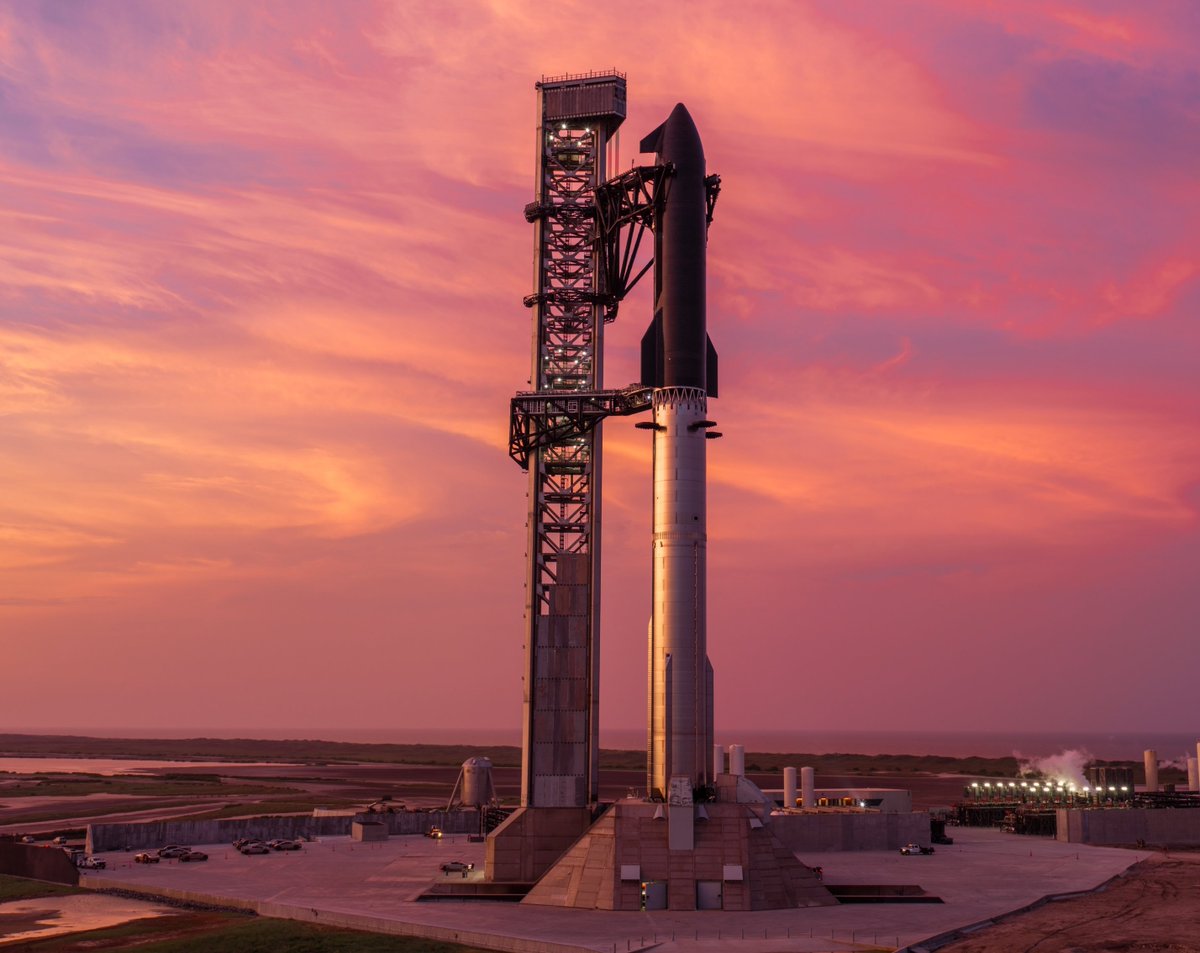
Jonas flagged Starship Flight 13 as a key near-term catalyst as of mid-July. Every successful Starship mission advances the reusability roadmap that underpins the entire long-range cost model — the path from $500/kg to sub-$150/kg doesn't happen without a high launch cadence, and cadence doesn't happen without reliable hardware. Investors watching SPCX should treat each Starship flight as a data point on whether the 2030 projections remain credible, not just as a spectacle.
Whether Jonas is early or right on time depends almost entirely on execution. The $3.3 trillion revenue figure for 2040 is the kind of number that reads as science fiction until it doesn't — and the analyst's point is that the current price already treats it that way. For those tracking SpaceX's trajectory, our SpaceX coverage has the full timeline of milestones feeding into this story.
🚀 Following the Starship program? See every test flight, official outcome and the next launch window in our SpaceX Starship Tracker.
Sources & reporting notes
The links below identify the material source records used for this report.
- @SawyerMerritt on X (2026-07-24T15:33:10.000Z) — Direct source
Source links are preserved as published or accessed. See our editorial standards and corrections policy.
The BASENOR Editorial Desk covers Tesla, SpaceX, and related technology, curating reporting from primary sources — official accounts, regulatory filings, and software release data. Every article passes source-record and fact-checking review before publication. About the newsroom.
This report was curated by the BASENOR Editorial Desk from the sources listed above. Read our editorial standards or email editorial@basenor.com to report an error.