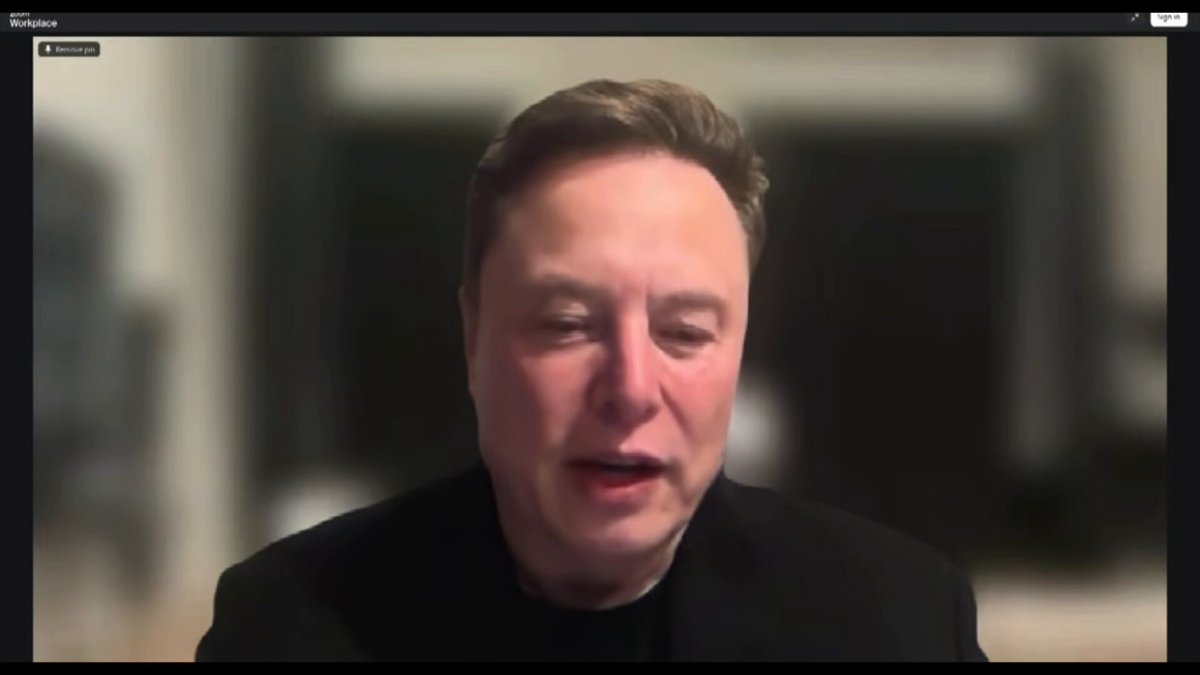
Elon Musk made one of his most sweeping predictions yet about the future of transportation in a new interview published May 18, 2026: within ten years, he expects artificial intelligence to be behind the wheel for 90% of all miles driven globally — reducing human-controlled driving to what he called 'quite a niche thing.' For Tesla owners already using Full Self-Driving, the statement may feel less like a bold forecast and more like a trajectory already in motion.

The Prediction in Context
Musk's 90% figure is ambitious, but it doesn't exist in a vacuum. Tesla has been methodically building toward exactly this scenario for years, and the pace of execution in 2026 alone gives the timeline real credibility.
Cybercab production began in April 2026 — a vehicle with no steering wheel and no pedals, designed from the ground up to never be driven by a human. Driverless robotaxi rides using Cybercabs have already started in Austin, Texas, where Tesla's pilot program first launched with a modest fleet of Model Y vehicles in June 2025. The Cybercab targets a ~$25,000 price point and carries a long-term production ambition of 2 million units per year, according to Tesla's stated goals.
On the software side, FSD (Supervised) v14.3 — paired with Hardware 4.5 — rolled out in April 2026 as part of the Spring Update. Tesla has stated its intention to release unsupervised FSD nationwide throughout the U.S. and in most countries by the end of 2026. If that timeline holds, the legal and technical gap between 'supervised assistance' and 'the AI is actually driving' will close faster than most observers expected even 18 months ago.
Where the Gaps Still Are
The honest read on Musk's prediction requires acknowledging what's still unresolved. As of today, Tesla's Full Self-Driving system remains legally classified as an advanced driver-assistance system (ADAS) in most jurisdictions — meaning a licensed human driver must be present and attentive. That regulatory reality is the primary barrier to rapid scaling, not the technology itself. Tesla has noted this explicitly in the context of China, where supervised FSD expansion is pending regulatory approval rather than technical readiness.
Internationally, FSD (Supervised) is currently available in the U.S., Canada, Mexico, Puerto Rico, Australia, New Zealand, the Netherlands, and South Korea. Each new market requires its own regulatory pathway. Getting from those eight markets to 'most countries' by end of 2026 is an aggressive target, and the pace of regulatory approvals globally will be as decisive as any software milestone.
There's also the question of scale. Musk has stated he expects 'millions' of autonomous Teslas on the road by the latter half of 2026, with some statements indicating 'hundreds of thousands' by late in the year. Those are meaningfully different numbers, and the spread reflects genuine uncertainty about how quickly both production and regulatory clearance can compound.
What It Means If He's Right
A world where 90% of miles are AI-driven by 2036 would represent the most significant shift in personal transportation since the automobile displaced the horse. Insurance models, urban planning, parking infrastructure, traffic law — all of it gets rebuilt around a fundamentally different assumption about who (or what) is operating vehicles.
For current Tesla owners, the near-term implication is more practical: the FSD subscription model is already shifting to subscription-only for consumers in 2026, meaning the economics of autonomous driving access are changing now, not in ten years. Owners who want to stay ahead of that curve should be paying attention to how Tesla's licensing terms evolve alongside the technology.
Sawyer Merritt, who shared the clip, added his own data point: AI already drives more than 90% of the miles he personally travels. That's one early adopter's experience — but it's the kind of anecdote that tends to become the norm faster than most people anticipate. Musk has been wrong on timelines before, but the direction of travel here is hard to argue with. The question is whether ten years is the right number, or whether the real answer is closer — or further — than it looks today.
📋 Tracking Tesla software? See every firmware, FSD and app version in one place in our Tesla Software Update Tracker.
🚕 Following the Robotaxi rollout? See every operating city, launch date and announced market in our Tesla Robotaxi Tracker.
Related Gear
Gear up your Tesla with tested, custom-fit BASENOR accessories — shop Tesla accessories →
Sources & reporting notes
The links below identify the material source records used for this report.
- @SawyerMerritt on X (2026-05-18T07:36:43.000Z) — Direct source
Source links are preserved as published or accessed. See our editorial standards and corrections policy.
The BASENOR Editorial Desk covers Tesla, SpaceX, and related technology, curating reporting from primary sources — official accounts, regulatory filings, and software release data. Every article passes source-record and fact-checking review before publication. About the newsroom.
This report was curated by the BASENOR Editorial Desk from the sources listed above. Read our editorial standards or email editorial@basenor.com to report an error.