Elon Musk laid out a sweeping vision on Saturday for how Starlink will connect the world's vehicles and carry the coming wave of AI-generated internet traffic. In a series of posts on X, the SpaceX CEO declared that 'all cars will have Starlink in the future' and argued the satellite network is the only system capable of supporting the exponential bandwidth growth that agentic AI systems will demand.
The comments arrive less than three weeks after Tesla confirmed Starlink connectivity would be integrated into every Tesla vehicle — a policy shift first disclosed on July 22, 2026 — and coincide with SpaceX's push for FCC approval of its Gen 3 constellation, which the company has explicitly pitched as the 'communications backbone of the AI age.'
What Musk Said
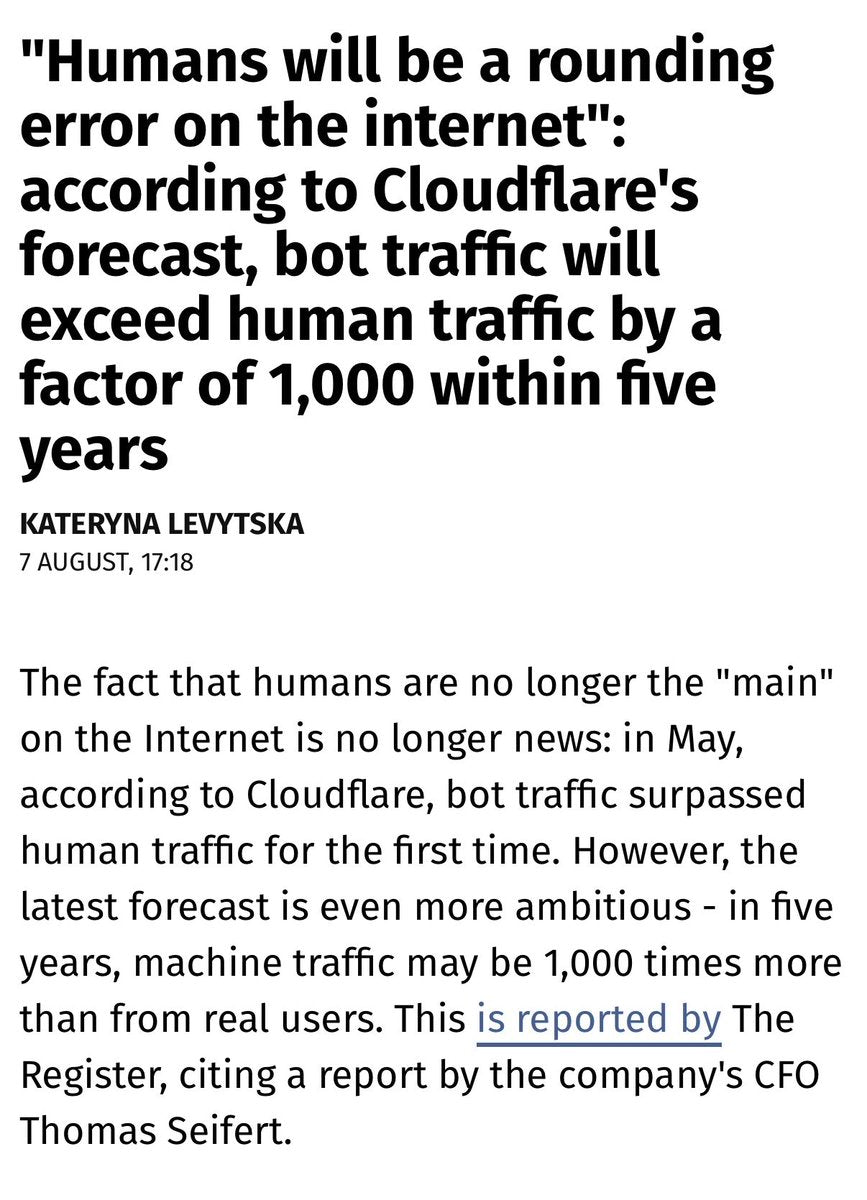
Musk's argument unfolded across three connected posts. He began by endorsing a Cloudflare forecast projecting that autonomous AI agents will generate internet traffic that 'VASTLY' exceeds human usage — a shift he called 'not a close call at all.'

Minutes later, he narrowed the argument to infrastructure: 'the only system that can support the insanely fast bandwidth growth needed by AI is Starlink.' A follow-up reply pushed the thesis into the automotive layer, stating that satellite connectivity is 'the only way to get super high bandwidth to billions of vehicles.'
Taken together, the three posts frame a single strategic claim — that ground-based cellular networks will not scale to handle either the volume of AI traffic or the density of connected vehicles expected over the next decade, and that Starlink is positioned as the default fallback for both.
How We Got Here
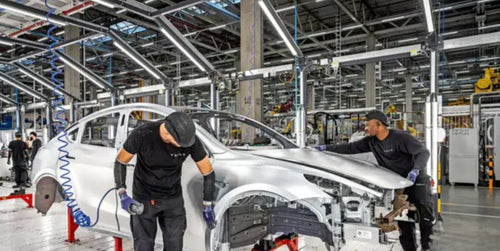
The vehicle side of this vision has been building for years. According to public FCC records, the agency granted Starlink authorization for in-motion use on cars, trucks, boats, and aircraft on July 1, 2022, clearing the regulatory path for automotive integration. The Cybercab robotaxi, unveiled in its production form on July 20–21, 2026, was the first Tesla product to make Starlink standard hardware, using it for navigation updates, mapping, and back-end fleet management.
On July 22, 2026, Musk expanded that commitment to the full Tesla lineup, confirming Starlink would be integrated into every vehicle the company sells. Saturday's posts extend the same logic industry-wide, suggesting that satellite connectivity will become a baseline requirement for any automaker operating autonomous or high-bandwidth fleets.
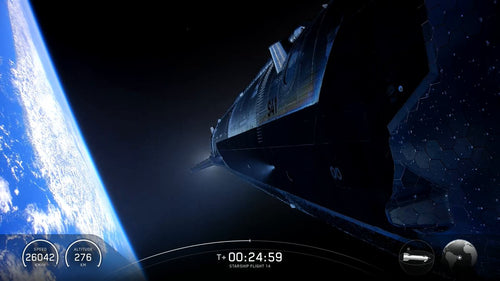
The AI-bandwidth argument is newer. SpaceX filed with the FCC earlier this year to authorize a third-generation Starlink constellation, describing the system in the application as designed to serve 'billions of AI-powered devices.' According to SpaceX filings, each V3 satellite is projected to be more than ten times as capable as the current V2 generation, with a planned deployment count roughly ten times larger — implying an approximate 100-fold increase in delivered network capacity once fully built out.
Key Figures
| Metric | Detail |
|---|---|
| FCC in-motion approval | July 1, 2022 |
| Fleet-wide Tesla Starlink commitment | July 22, 2026 |
| V3 satellite capability vs V2 | ~10x per satellite |
| Projected total network capacity gain | ~100x current generation |
| Starlink Mini hardware price (Feb 2026) | $199 (down from $599) |
| Land Mobility plans | From $55/month (50GB) up to $530/month (2TB) |
Why the AI Angle Matters
Musk's endorsement of the Cloudflare forecast is worth taking seriously because it reframes what a 'connected car' actually needs to do. A vehicle running local AI models — for FSD, in-cabin assistants, or fleet coordination — is not just downloading map tiles. It is potentially uploading high-definition spatial data, camera feeds, and telemetry, while receiving continuous model updates and coordinating with other agents in the network.
Musk described this in an earlier August statement as 'massive uplink capacity to support high-definition spatial and auditory data necessary for real-time decision-making and industrial automation.' That is a fundamentally different traffic profile than human web browsing, and it is the specific gap the Gen 3 constellation is being designed to close.
Cellular networks — particularly in rural corridors, along highways between metros, and across large parts of the developing world — were not built with that load in mind. Satellite mesh coverage, by contrast, is geography-agnostic once the constellation is in place.
What It Means for Tesla Owners
For current Tesla owners, Saturday's posts do not change anything immediately. Vehicles already on the road continue to rely on their existing LTE or Wi-Fi connectivity for OTA updates, streaming, and app features. The July 22 fleet-wide commitment applies to forthcoming vehicles rather than retrofits, and Musk has not publicly outlined a hardware upgrade path for legacy cars.
The more interesting question is what the standard package looks like when Starlink becomes baseline hardware. That likely means a small, roof-integrated phased-array antenna similar in principle to the Starlink Mini — which now weighs 2.56 lbs, draws 20–40W, and supports in-motion use up to 100 MPH according to Starlink's published specifications. It also raises open questions about service tiers: whether basic connectivity is bundled into the vehicle price, whether premium tiers (video calls, high-bandwidth entertainment, agentic AI features) require a subscription, and how that stacks against the existing Premium Connectivity plan.
What to Watch Next
- FCC action on Gen 3: The pending Gen 3 constellation authorization is the gating item for the AI-scale bandwidth claim. Watch for FCC responses to SpaceX's filing over the coming quarters.
- Cybercab volume production: Cybercab is the first vehicle where Starlink is central to the product thesis, not an add-on. Its ramp will be the first real-world stress test.
- Hardware integration disclosures: Tesla has not yet detailed the antenna hardware, service tiers, or software integration for fleet-wide Starlink. Expect more specifics as vehicles ship with the capability.
- Legacy fleet path: Whether existing Model 3, Model Y, Cybertruck, and existing Model S/X owners get any form of satellite connectivity — retrofit accessory, tethered option, or nothing at all — remains an open question.
Editor's View
The provocative claim here is not that Starlink will end up in cars — that was already the direction of travel after the July 22 announcement. It is Musk explicitly binding Starlink's growth curve to AI's bandwidth curve. If agentic traffic really does dwarf human traffic within a few years, then the economics of terrestrial connectivity look very different, and the constellation SpaceX is building looks less like a rural-broadband product and more like general-purpose infrastructure. That is a much larger addressable market than 'people who can't get fiber' — and it explains why every new Tesla is getting an antenna.
🚕 Following the Robotaxi rollout? See every operating city, launch date and announced market in our Tesla Robotaxi Tracker.
Related Gear
Gear up your Tesla with tested, custom-fit BASENOR accessories — shop Tesla accessories →
Sources & reporting notes
The links below identify the material source records used for this report.
- @elonmusk on X (2026-08-09T20:45:59.000Z) — Direct source
- @elonmusk on X (2026-08-09T20:49:39.000Z) — Direct source
- @elonmusk on X (2026-08-09T20:51:21.000Z) — Direct source
Source links are preserved as published or accessed. See our editorial standards and corrections policy.
The BASENOR Editorial Desk covers Tesla, SpaceX, and related technology, curating reporting from primary sources — official accounts, regulatory filings, and software release data. Every article passes source-record and fact-checking review before publication. About the newsroom.
This report was curated by the BASENOR Editorial Desk from the sources listed above. Read our editorial standards or email editorial@basenor.com to report an error.