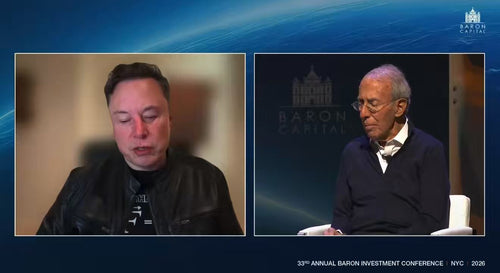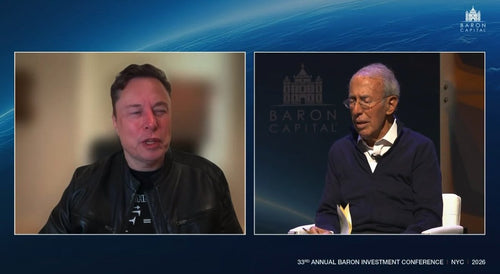

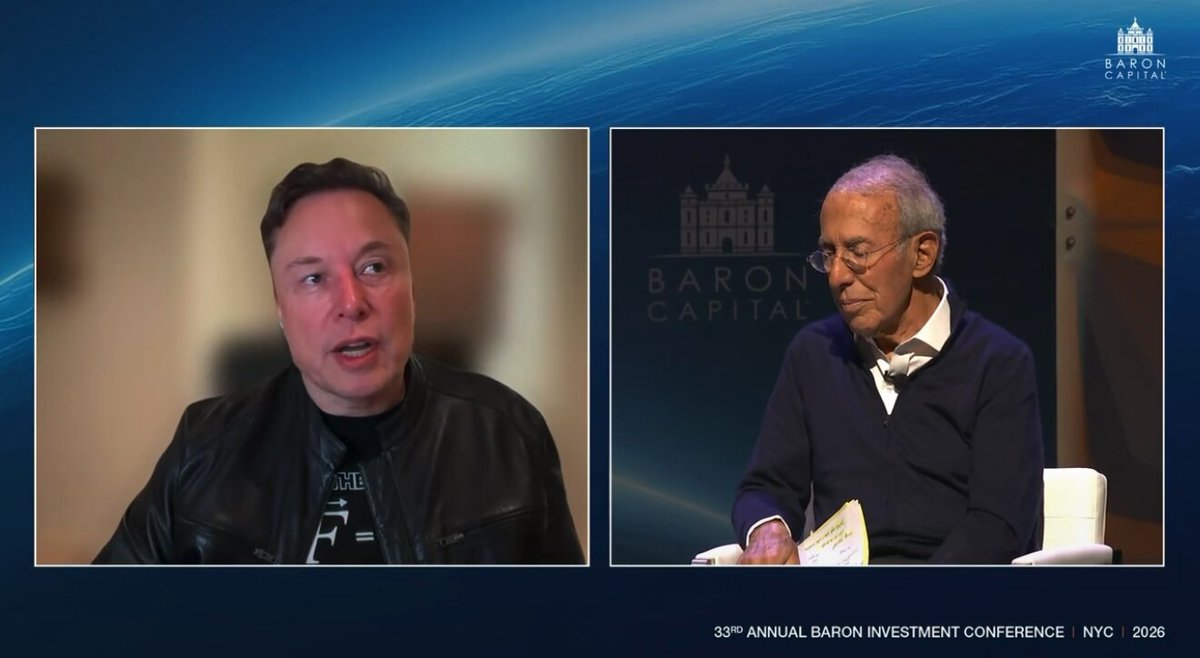
Elon Musk doubled down on one of the boldest financial projections in SpaceX's history today, reiterating that the company's annual recurring revenue (ARR) is likely to exceed $500 billion by December 2027 — with a trillion-dollar run rate not out of the question. The statement, shared publicly again via a clip surfaced by @SawyerMerritt, echoes guidance Musk first delivered on SpaceX's Q3 2026 earnings call last month, and it reframes SpaceX from a launch provider into something closer to a hyperscale compute and connectivity company.
Musk was careful to hedge: "It seems quite likely that our ARR in Dec 2027 will exceed $500B. This is not a promise, this is my best guess. $1 trillion is not out of the question." That framing matters — he's describing an end-of-period run rate, not total revenue booked across all of 2027. But even as a run rate, the number represents a scale leap that few private companies in history have ever credibly projected.

The Numbers Behind the Projection
To understand how SpaceX could plausibly argue a $500B+ ARR trajectory, it helps to anchor on where the business sits today. According to figures disclosed on the Q3 2026 earnings call and summarized in reporting from Seeking Alpha and 247 Wall St., SpaceX posted the following in the September quarter:
| Metric | Q3 2026 | Context |
|---|---|---|
| Total Revenue | $14.6B | +161% YoY |
| Net Income | $4.4B | Profitable quarter |
| Super Intelligence Revenue | $7.6B | Now largest segment |
| 2026 ARR Target | $100B | On track by year-end |
| Q1 2027 Revenue Guide | $33B–$37B | Per CFO Bret Johnsen |
The headline shift here isn't Starlink — it's the Super Intelligence segment, which according to the Q3 disclosures has surpassed Starlink as SpaceX's largest revenue driver in a single quarter. That line of business, which monetizes SpaceX-operated AI compute capacity, is the engine Musk is betting on to close the gap between a $100B end-of-2026 ARR and a $500B–$1T end-of-2027 ARR.
Why Super Intelligence Changes the Math
A 5x–10x ARR expansion in 12 months is not something that happens in the launch business. Falcon 9 cadence, Starship development, and even Starlink's subscriber ramp don't scale that fast — physics and capex timelines won't allow it. What can scale that fast is compute capacity priced against AI demand.
Musk said on the Q3 call, according to summaries from Seeking Alpha and Webull, that he has high confidence in bringing an additional 10 gigawatts of compute online in 2027, on top of the roughly 2.5 to 3 GW expected to be live by the end of 2026. That would put SpaceX at a potential 13 GW of operational compute by the end of 2027, with Musk citing a "small possibility" of reaching 20 GW.
At hyperscale pricing — the kind of revenue-per-GW-year economics that Nvidia, Microsoft, and Oracle have disclosed in recent earnings — a 13 GW fleet is the kind of asset base that can generate hundreds of billions in recurring revenue. That's the mechanical bridge from $100B ARR today to Musk's $500B+ projection: capacity expansion plus pricing power in a supply-constrained AI compute market.
How to Read "Not a Promise"
Musk's hedging language — "my best guess," "not a promise," "not out of the question" — is doing real work in this statement. SpaceX is a private company, and these projections are being delivered to investors and the public without the disclosure guardrails that would apply to a public filing. Taking the projection at face value requires accepting three compounding assumptions:
- Compute capacity is delivered on schedule. Building 10 additional GW of AI-grade compute in a single calendar year is unprecedented. Power procurement, chip supply, data center shell construction, and cooling buildout all need to land simultaneously.
- AI demand holds at current pricing. The $500B+ math assumes current hyperscale pricing. A capacity glut, a reasoning-cost breakthrough, or a slowdown in enterprise AI spend would compress the revenue-per-GW number materially.
- Starlink and launch keep growing on top. The projection isn't just a Super Intelligence number — it's the whole company. Starlink subscriber growth, government launch contracts, and Starship-era commercial payloads all need to keep contributing.
Even Musk's own framing allows for a wide band: $500B at the low end, $1T at the high end. That's a 2x spread, which is unusual language from a CEO unless the underlying business genuinely has that much variance in near-term outcomes.
What It Means for Tesla and the Broader Musk Ecosystem
For Tesla owners and investors watching the Musk portfolio, the SpaceX projection matters for two reasons. First, SpaceX's compute buildout is adjacent to — and in some cases overlapping with — the AI infrastructure Tesla relies on for FSD training and Optimus development. The more compute SpaceX operates, the more supply exists in the Musk orbit that Tesla could theoretically access, lease, or partner against.
Second, the sheer scale of a potential $500B+ ARR SpaceX reshapes valuation conversations across the group. If SpaceX is on a credible path to hyperscaler-tier revenue, the private-market secondary pricing of its shares will reflect that — and it changes the gravitational center of Musk's attention and capital allocation. That has downstream implications for Tesla's pace of AI investment, chip sourcing, and the competitive dynamics with xAI.
What to Watch Next
- Q4 2026 earnings (late January 2027): Whether SpaceX hits the $100B ARR mark by year-end, as Musk has guided. Miss this and the 2027 projection loses credibility fast.
- Compute capacity disclosures: Any specific announcements about new data center sites, power agreements, or chip delivery commitments for the 10 GW 2027 buildout.
- Q1 2027 results against the $33B–$37B guide: This is the first checkpoint on whether revenue is scaling at the pace required to reach a $500B+ year-end run rate.
- Super Intelligence customer disclosures: SpaceX hasn't named the enterprise customers driving the $7.6B Q3 segment revenue. Any color on contract concentration would help investors judge the durability of the ARR projection.
For now, Musk has planted a flag that's hard to ignore. Whether it holds depends on power lines, chip shipments, and whether AI demand keeps absorbing capacity as fast as SpaceX can bring it online.
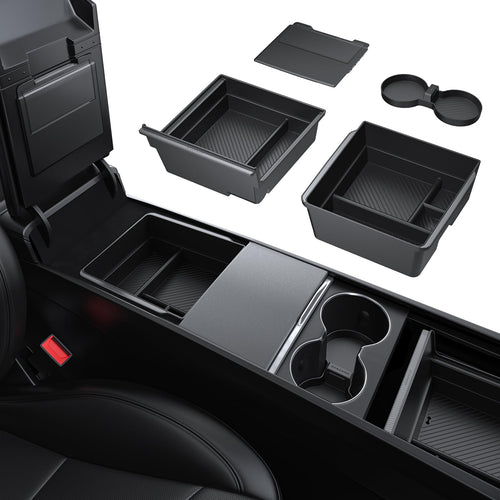
Related Gear
Gear up your Tesla with tested, custom-fit BASENOR accessories — shop Tesla accessories →
Sources & reporting notes
The links below identify the material source records used for this report.
- @SawyerMerritt on X (2026-11-06T18:40:00.000Z) — Direct source
Source links are preserved as published or accessed. See our editorial standards and corrections policy.
The BASENOR Editorial Desk covers Tesla, SpaceX, and related technology, curating reporting from primary sources — official accounts, regulatory filings, and software release data. Every article passes source-record and fact-checking review before publication. About the newsroom.
This report was curated by the BASENOR Editorial Desk from the sources listed above. Read our editorial standards or email editorial@basenor.com to report an error.