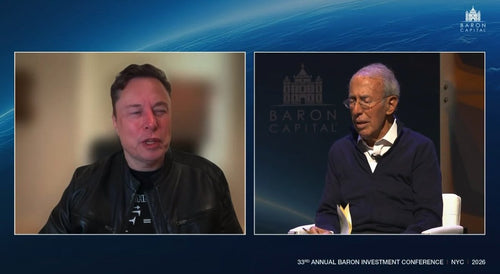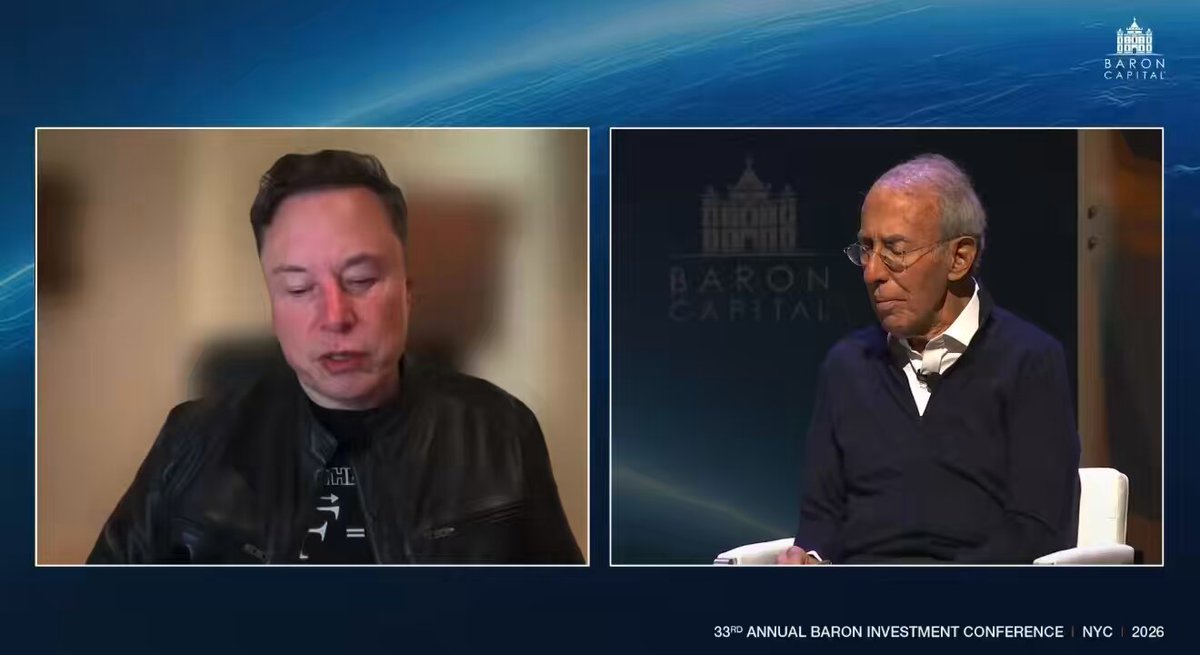
Elon Musk addressed a question that's been floating around since Terafab was announced: what does the name actually mean? In a new interview shared on November 6, 2026, Musk walked through three possible interpretations — and confirmed which one is intentional. The answer has real implications for how Tesla, SpaceX, and xAI are thinking about the scale of what they're building.

So what does 'Terafab' actually stand for?
According to Musk's own explanation, the 'Tera' in Terafab refers to terawatt — as in, one trillion watts of AI computing capacity produced per year. He acknowledged the other readings with some humor: 'terror fab' (his words) and 'Terra' (Latin for Earth), but confirmed the terawatt interpretation is the intended one. The 'fab' part is straightforward semiconductor industry shorthand for fabrication facility.
What is Terafab actually building?
Terafab is a joint semiconductor manufacturing venture involving Tesla, SpaceX, and xAI, with Intel also participating, announced by Musk on March 21, 2026. The facility's stated goal is to produce vertically integrated AI compute hardware — logic chips, memory, and advanced packaging — all under one roof. According to verified reporting, the annual production target is 1 terawatt of computing capacity, which translates to roughly 100 to 200 billion chips per year. The initial prototype fab is operating in Austin, Texas, near Gigafactory Texas, while the permanent plant is planned for Grimes County, Texas, on the site of a former power generating facility.
What process technology will it use?
According to multiple reports, Terafab will initially use 2-nanometer process technology, with a roadmap that potentially includes Intel's 14A process — a 1.4-nanometer-class node — in future generations. That would put it at the leading edge of what's commercially available anywhere in the world.
Where does Tesla Energy fit into this?
The story summary frames Terafab as relevant to Tesla Energy and Megapack production, but the verified picture is more specific: Terafab's output is primarily aimed at AI chips for Tesla vehicles, Optimus humanoid robots, SpaceX's orbital AI data centers, and xAI's machine learning infrastructure. Musk has stated that roughly 80% of Terafab's compute output is intended to reside in space — where power and cooling conditions are more favorable — with the remaining 20% serving terrestrial applications. Tesla Energy's Megapack manufacturing is a separate operation and is not part of Terafab's stated scope.
Why does the name clarification matter for Tesla owners?
It signals the ambition of the underlying project. A terawatt of annual AI compute production would be an unprecedented manufacturing scale — the kind of infrastructure that could underpin not just today's FSD and Optimus development, but generations of AI-dependent features beyond them. For owners, Terafab is less about next quarter's software update and more about whether Tesla can control its own chip supply chain at a scale that keeps pace with its AI roadmap. Vertical integration at this level — if it executes — removes a critical dependency on third-party foundries for the compute that increasingly runs every Tesla on the road.
Related Gear
Gear up your Tesla with tested, custom-fit BASENOR accessories — shop Tesla accessories →
Sources & reporting notes
The links below identify the material source records used for this report.
- @SawyerMerritt on X (2026-11-06T18:19:24.000Z) — Direct source
Source links are preserved as published or accessed. See our editorial standards and corrections policy.
The BASENOR Editorial Desk covers Tesla, SpaceX, and related technology, curating reporting from primary sources — official accounts, regulatory filings, and software release data. Every article passes source-record and fact-checking review before publication. About the newsroom.
This report was curated by the BASENOR Editorial Desk from the sources listed above. Read our editorial standards or email editorial@basenor.com to report an error.