📌 UPDATE — July 23, 2026
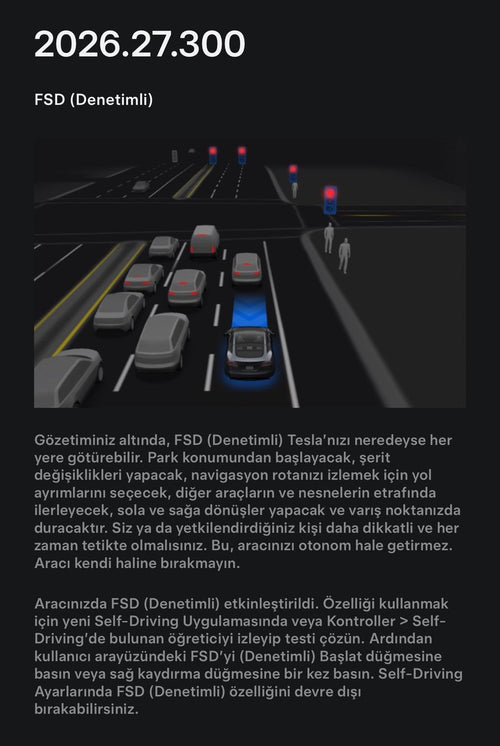
French officials have reportedly made a formal case to delay deployment of autonomous driving technology in France, with proposed restrictions including requiring drivers to keep hands on the wheel and preventing the software from exceeding speed limits. Commentator Whole Mars Catalog — who appears to have been present or briefed on the proceedings — called the officials' arguments "shocking and appalling," noting that while the proposed changes are technically implementable, they would paradoxically make FSD less safe rather than more. The hands-on-wheel requirement, for instance, conflicts with how the system is designed to operate at peak performance. Critics argue France's regulatory posture prioritizes optics over outcomes, echoing Musk's earlier warning that delays in approval have direct life-or-death consequences.

Elon Musk escalated his public pressure campaign against European regulators on July 22, 2026, stating bluntly that France's continued delay in approving Full Self-Driving will result in preventable deaths. The comment, posted on X in reply to @SawyerMerritt, arrives on the same day as Tesla's Q2 earnings call — and was immediately countered by France's Transport Minister, setting up a direct public clash between Tesla and one of Europe's largest auto markets.

What France Is Actually Blocking — and Why
French Transport Minister Philippe Tabarot pushed back the same day, saying the safety trade-offs of FSD Supervised are "not yet sufficient to authorize it as it currently stands" and pointedly added: "this system is not a self-driving system." That framing matters — it signals France is treating FSD Supervised as a driver-assistance product that still falls short of compliance thresholds, not as an autonomous system awaiting a rubber stamp.
The specific technical objections are substantive. According to reporting on the regulatory process, French authorities have flagged that FSD can allow speeds up to 50% above the posted limit when surrounding traffic is moving faster — without an explicit driver request. Regulators have also raised concerns about driver attention monitoring in urban environments, particularly at intersections, during lane changes, and on roundabouts. The underlying compliance question centers on UN Regulation No. 171, which came into force in September 2024 and sets requirements for system-initiated maneuvers in urban settings.
France's vehicle approval authority, the CNRV, has taken an "EU-first" stance: it will not issue a national authorization until the Technical Committee on Motor Vehicles (TCMV) — the EU body currently reviewing the Netherlands' provisional approval of FSD — completes its process. That EU-wide vote is not expected before October 2026.
The Netherlands Opened a Door; Europe Hasn't Walked Through It
The Netherlands granted provisional approval for FSD Supervised in April 2026, and the Dutch regulator is now seeking EU-wide recognition on Tesla's behalf. That pathway exists under EU type-approval rules, but it requires the TCMV to reach a consensus — and France's public opposition signals that consensus is far from guaranteed.
In the meantime, Tesla has extended its FSD Ride-Along Experience program in France through September 30, 2026. The program lets residents experience FSD from the passenger seat with a Tesla-employed driver at the wheel, across nine French cities. It keeps the technology visible without triggering the regulatory approval requirement — but it is not the same as customer deployment.
The Stakes, by the Numbers
| Metric | Figure |
|---|---|
| Tesla France registrations, June 2026 | 7,474 (+105% YoY) |
| Global FSD subscribers (end of Q1 2026) | 1.28 million |
| FSD as share of Tesla fleet | ~14% |
| FSD subscription price in France | €99/month |
| FSD version launched in Europe | v13 (March 2026) |
| EU-wide TCMV vote expected | No earlier than October 2026 |
France's Tesla registrations doubling year-over-year underscores the market's relevance. Those owners are paying for vehicles that support FSD hardware but cannot legally activate the feature on French roads. Tesla removed the one-time FSD purchase option across most of Europe, including France, in May 2026 — meaning the subscription revenue clock is also waiting on regulatory clearance.
The Broader Argument
Musk's "will cost lives" framing is a direct inversion of the standard regulatory logic: that approving an unproven system poses safety risks. Tesla's counter-argument, implicit in that statement, is that the counterfactual — humans driving without FSD assistance — is itself the dangerous baseline. It's an argument Tesla has made in the US context for years, and it's now being applied to European regulators explicitly.
Whether that argument gains traction in Brussels depends less on rhetoric and more on the TCMV's technical review of the Dutch provisional approval. France has made clear it won't move independently of that process. The question is whether the EU body will reach a decision before October — and whether the specific compliance gaps around UN Regulation No. 171 can be addressed in that window, either through a software update to FSD or a negotiated regulatory carve-out.
For the roughly 7,400 Tesla owners who registered vehicles in France last month alone, the answer to that question determines whether FSD remains a feature they're paying for but can't use.
Related Gear
Gear up your Tesla with tested, custom-fit BASENOR accessories — shop Tesla accessories →
Sources & reporting notes
The links below identify the material source records used for this report.
- @elonmusk on X (2026-07-22T16:24:34.000Z) — Direct source
Source links are preserved as published or accessed. See our editorial standards and corrections policy.
The BASENOR Editorial Desk covers Tesla, SpaceX, and related technology, curating reporting from primary sources — official accounts, regulatory filings, and software release data. Every article passes source-record and fact-checking review before publication. About the newsroom.
This report was curated by the BASENOR Editorial Desk from the sources listed above. Read our editorial standards or email editorial@basenor.com to report an error.