Elon Musk reignited conversation around lunar colonization on August 11, posting that 'Moonbase Alpha will be so cool' and reaffirming SpaceX's long-term goal of making lunar travel available to anyone who wants it. The statement is brief, but the infrastructure behind it is anything but — SpaceX is currently running cryogenic stress tests on its Starship Human Landing System variant and pushing toward an uncrewed lunar landing demonstration as early as this year.

Where the Moon Plan Actually Stands
In February 2026, Musk announced a strategic reprioritization: building a self-sustaining city on the Moon before scaling up Mars operations. The reasoning is logistical — the Moon offers launch windows every 10 days with a roughly two-day transit time, compared to Mars' 26-month alignment cycle. That cadence makes it far easier to build up infrastructure, test systems, and iterate quickly. Mars development continues in parallel, but the Moon is now the nearer-term proving ground.
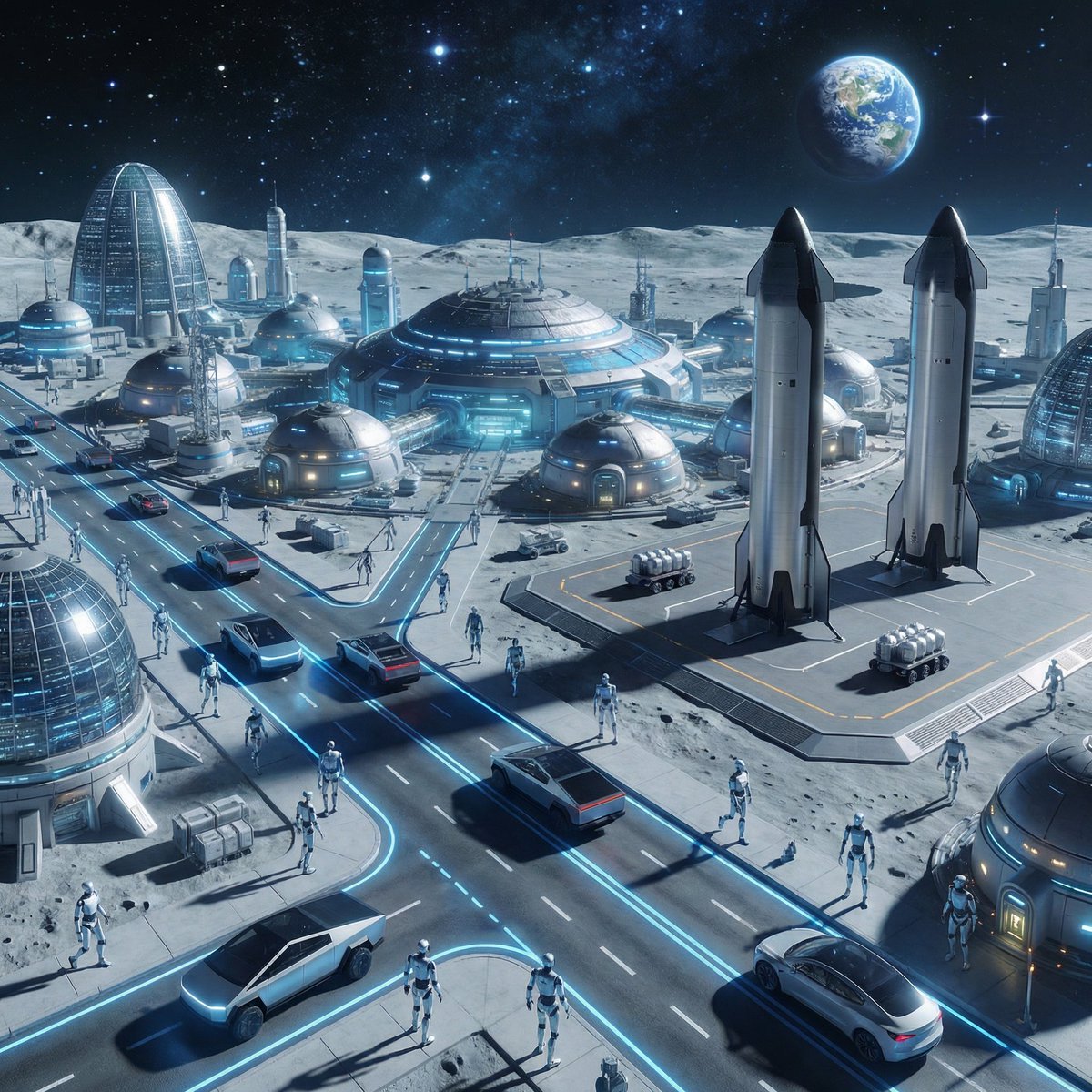
SpaceX's vision for the lunar surface goes well beyond a research outpost. According to SpaceX, Starship is designed to deliver up to 100 tons of cargo directly to the lunar surface — enough to ship rovers, habitat modules, and manufacturing equipment in a single flight. The company has outlined plans for robotic construction of lunar factories, with early production focused on Starmind AI satellites to be launched from the Moon via electromagnetic mass drivers. It's an ambitious industrial roadmap, not just a flags-and-footprints mission.
The Cost Curve That Makes 'Anyone' Possible
The 'anyone can go' framing is the part that tends to get dismissed — and understandably so, given that private orbital seats currently run around $50 million. But the economics of Starship's full reusability are designed to collapse that number over time. Projections from SpaceX suggest lunar mission ticket prices could fall below $10 million per seat by 2030, with cargo delivery to the lunar surface already priced at $100 million per metric ton for research and development missions starting no earlier than 2028.
That's still not a consumer product. But the trajectory matters. The same logic that brought orbital access from a government-only endeavor to a commercial market is being applied to the Moon — compress the cost curve fast enough and the addressable audience expands dramatically. Musk's 'anyone' is a long-horizon statement, not a 2027 booking window.
What Has to Go Right First
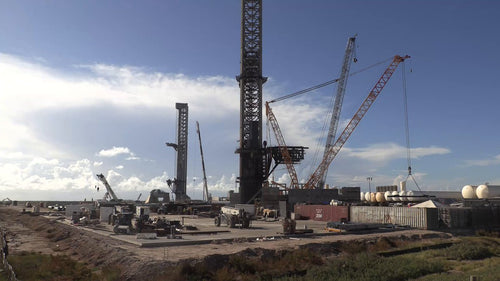
The near-term milestones are concrete and measurable. As of early August 2026, SpaceX is conducting final cryogenic stress tests at Starbase on the HLS variant built for NASA's Artemis program. Separately, the company is running long-duration orbital storage tests to prove that liquid propellant can be held at cryogenic temperatures in space for weeks — a prerequisite for the in-orbit refueling that any crewed lunar mission requires.
Two major Starship V3 flight tests are targeted for 2026: a long-duration flight test and an in-space propellant transfer demonstration. The uncrewed HLS lunar landing demo — which will include trans-lunar injection, near-rectilinear halo orbit insertion, lunar descent, and engine restart for ascent — is targeted for no earlier than this year. NASA's crewed Artemis III landing, which uses Starship as the Human Landing System, is officially targeted for no earlier than mid-2027.
SpaceX is also expanding launch operations in Florida at LC-39A and LC-37 to increase build and flight rates, and is pushing the FAA for a more streamlined regulatory approval process to keep the Artemis schedule intact. Regulatory friction has already caused delays in previous Starship test campaigns, and the company is clearly trying to get ahead of that bottleneck for the crewed mission window.
The Bigger Picture
Musk's post is two sentences, but it lands at an inflection point. SpaceX is closer to a crewed lunar landing than at any point in the program's history, with hardware in final testing and a NASA contract providing both funding and deadline pressure. The 'Moonbase Alpha' framing — borrowed from the classic 1970s sci-fi series — signals something beyond a single mission: a permanent, named installation that people can conceptually inhabit. That kind of cultural framing tends to follow real engineering confidence, not precede it.
Whether the timeline holds depends on propellant transfer tests, FAA approvals, and Starship's flight cadence over the next 12 months. But the direction is set. For more on SpaceX's progress toward that goal, see our SpaceX coverage.
🚀 Following the Starship program? See every test flight, official outcome and the next launch window in our SpaceX Starship Tracker.
Sources & reporting notes
The links below identify the material source records used for this report.
- @elonmusk on X (2026-08-11T19:32:48.000Z) — Direct source
Source links are preserved as published or accessed. See our editorial standards and corrections policy.
The BASENOR Editorial Desk covers Tesla, SpaceX, and related technology, curating reporting from primary sources — official accounts, regulatory filings, and software release data. Every article passes source-record and fact-checking review before publication. About the newsroom.
This report was curated by the BASENOR Editorial Desk from the sources listed above. Read our editorial standards or email editorial@basenor.com to report an error.