NASA's Ames Research Center has quietly become a key partner in making SpaceX's Super Heavy booster reliable enough for the punishing reuse cadence that Artemis lunar missions demand. Wind tunnel tests on a 1.2% scale model of the Super Heavy V3 were completed in late July 2026 — and the implications stretch well beyond aerodynamics. Here's what the collaboration actually means, broken down into the five points that matter most.

1. The Focus Is the Booster, Not Just the Ship
The instinct when you hear "NASA–SpaceX Artemis collaboration" is to assume the work centers on the Starship upper stage — the Human Landing System (HLS) that actually touches down on the Moon. As NASASpaceflight noted, that assumption is wrong here. NASA Ames' contribution is specifically targeted at Super Heavy booster entry dynamics and reuse reliability. That's a meaningful distinction: the booster is the part that has to survive repeated high-energy returns and be turned around quickly, and it's the part that failed to complete its controlled landing during Flight 12 in May 2026 due to heat-related damage and incorrect engine alarm settings.
2. A 1.2% Scale Model Went Through Real Wind Tunnels
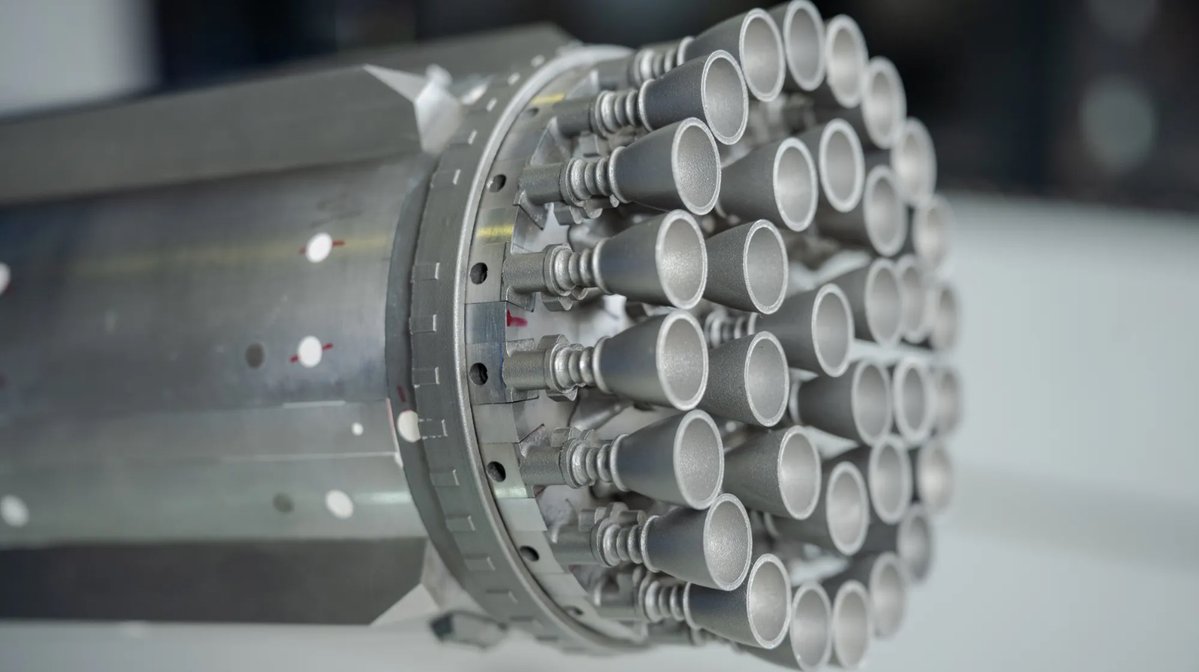
This wasn't a simulation exercise. According to NASA, engineers built a highly detailed 1.2% scale model of the Super Heavy V3 booster and ran it through advanced wind tunnels at Ames' facility in California. The tests replicated aerodynamic forces across transonic and supersonic flight phases — the regimes where the booster experiences the most violent pressure changes during both ascent and return. The data collected will be used to validate computational fluid dynamics (CFD) models and identify design optimizations that can't easily be caught in software alone.

3. Tanker Reflights Are the Real Pressure Point
Getting to the Moon under Artemis isn't a single-launch problem. Starship HLS requires multiple orbital refueling missions — essentially tanker Starships that launch, transfer propellant to the mission vehicle in orbit, and return — before a crewed lunar landing can proceed. Each of those tanker missions needs a Super Heavy booster. If the booster can't be reliably caught, inspected, and reflown on a tight schedule, the entire mission architecture slows to a crawl. That's why booster reusability isn't a secondary concern for Artemis — it's load-bearing infrastructure. NASA Ames' aerodynamic data directly feeds the reliability improvements needed to sustain that cadence.

4. The V3 Booster Is the Foundation for Artemis III and Beyond
The Super Heavy V3 being tested is not a generic research vehicle — it's the specific configuration expected to power the Starship HLS for Artemis III, currently projected for 2027, and subsequent crewed lunar landings in 2028. Reducing technical risk on this booster now, while there's still runway before those missions, is exactly the kind of work that keeps launch schedules from slipping further. The FAA closed its investigation into the Flight 12 booster anomaly after SpaceX implemented four corrective measures, but the Ames wind tunnel program represents a deeper, longer-term investment in understanding the vehicle's aerodynamic behavior across its full flight envelope.

5. The Booster Reuse Program Is Still Early
Context matters here: the first Super Heavy booster reflight only happened during Flight 9 on May 27, 2025. The mechaSzilla catch capability was first demonstrated during Flight 5 with a Block 1 booster. As of late July 2026, the fleet has logged 6 Block 1, 5 Block 2, and 2 Block 3 Starship flights — a program that is progressing but still accumulating the kind of empirical data that makes high-cadence reuse feasible. NASA Ames' wind tunnel results feed directly into that knowledge base, giving SpaceX government-grade aerodynamic validation to complement its own flight data. For a program where each booster return is still a meaningful engineering event, that external expertise is a genuine accelerant.
The wind tunnel tests were announced July 31 and August 3, 2026, making this one of the most recent confirmed milestones in the NASA–SpaceX Artemis partnership. Whether the aerodynamic data translates into a noticeably cleaner booster return on the next flight test will be the first real-world proof point to watch. For more on SpaceX's broader Starship program, see our SpaceX coverage.
🚀 Following the Starship program? See every test flight, official outcome and the next launch window in our SpaceX Starship Tracker.
Sources & reporting notes
The links below identify the material source records used for this report.
- @NASASpaceflight on X (2026-08-02T16:15:51.000Z) — Direct source
Source links are preserved as published or accessed. See our editorial standards and corrections policy.
The BASENOR Editorial Desk covers Tesla, SpaceX, and related technology, curating reporting from primary sources — official accounts, regulatory filings, and software release data. Every article passes source-record and fact-checking review before publication. About the newsroom.
This report was curated by the BASENOR Editorial Desk from the sources listed above. Read our editorial standards or email editorial@basenor.com to report an error.