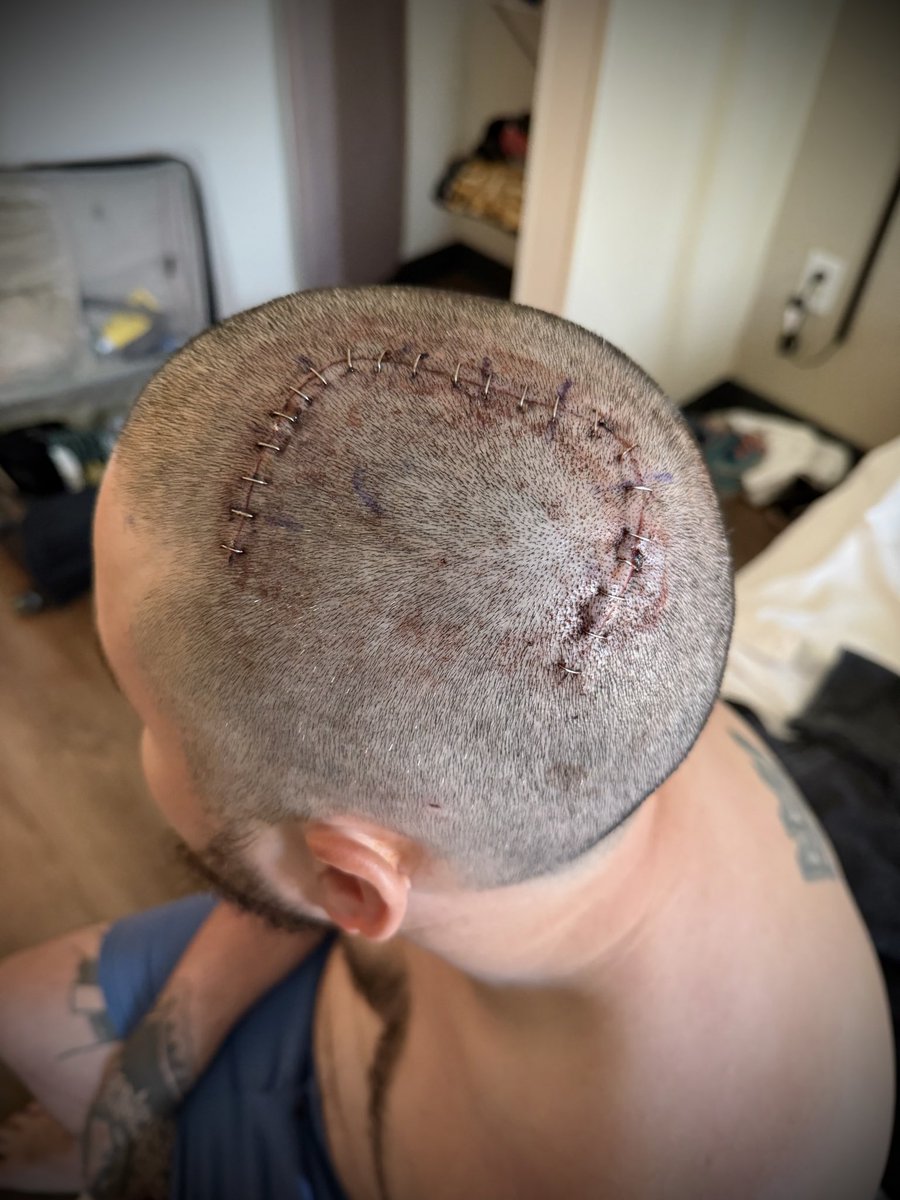
A Neuralink patient has shared a photo of their head following brain-computer interface surgery, offering a rare, unfiltered look at what recovery from the procedure actually looks like. The image, surfaced by @wholemars on X, adds a human dimension to a trial program that now spans more than 27 publicly identified participants across four countries.

What does the implant actually look like after surgery?
The N1 implant is coin-sized and designed to sit flush with the skull. According to Neuralink, once the surgical site heals, the device becomes essentially invisible beneath the scalp. Patient accounts back this up: Jon L Noble, who received his implant in London in December 2025, noted his scar was already fading by day seven post-surgery. The photo shared today is consistent with what previous patients have described — a healing incision site with no visible hardware protruding from the skull.
How invasive is the procedure?
The surgery is performed by a robotic system that places 1,024 ultra-thin, flexible threads into the motor cortex. The threads carry electrodes that read neural signals. Despite the precision required, patients who have spoken publicly describe the procedure as straightforward. Noble was discharged the day after his surgery. Neuralink has taken steps to reduce complications over successive implantations — notably implementing measures to minimize brain motion during thread placement to address the thread retraction issue observed in the program's first patient.
How quickly do patients regain function?
Faster than most people expect. Noble was controlling an Apple MacBook cursor with his thoughts within two weeks of his implant, and was playing World of Warcraft hands-free by day 80. Neuralink's second human patient, identified as Alex, used the device to play video games and design 3D objects during his recovery. ALS patient Jake Schneider, who received his implant more recently, described the device in October 2026 as an 'extension of my body and a lifeline' that he uses from the moment he wakes up to the moment he goes to sleep.
How many people have the implant now?
As of early 2026, Neuralink had expanded its human clinical trials to 21 participants worldwide. The Neura Pod patient tracker, updated October 22, 2026, lists over 27 publicly identified Neuralink patients and seven clinical trial sites across four countries. The program has collectively logged more than 50,000 hours of brain recording data — with the first human participant, Noland Arbaugh (@ModdedQuad), contributing nearly 10,000 hours of that total on his own.
What is the product actually called?
On October 30, 2026 — the same day this patient photo circulated — Elon Musk officially named Neuralink's first consumer-facing product Telepathy. The name had been floated informally before, but this marks the first official use of it as a product designation. The underlying hardware remains the N1 implant with its 1,024-electrode, 64-thread architecture.
Is a more capable version coming?
Yes. Musk announced in January 2026 that a next-generation Neuralink implant — expected to deliver roughly three times the capability of the current N1 — was anticipated later in 2026. No updated timeline has been confirmed publicly since that announcement, but the pace of patient enrollment and the volume of neural data being collected suggest the clinical program is generating the evidence base needed to support that next hardware step.
Patient-shared photos and firsthand accounts like the one circulating today serve a purpose beyond social media curiosity — they normalize a technology that, until very recently, existed only in research papers and controlled demonstrations. With Telepathy now a named product and the trial cohort growing, the gap between 'experimental' and 'available' is narrowing faster than most observers anticipated.
Sources & reporting notes
The links below identify the material source records used for this report.
- @wholemars on X (2026-10-30T21:43:37.000Z) — Direct source
Source links are preserved as published or accessed. See our editorial standards and corrections policy.
The BASENOR Editorial Desk covers Tesla, SpaceX, and related technology, curating reporting from primary sources — official accounts, regulatory filings, and software release data. Every article passes source-record and fact-checking review before publication. About the newsroom.
This report was curated by the BASENOR Editorial Desk from the sources listed above. Read our editorial standards or email editorial@basenor.com to report an error.