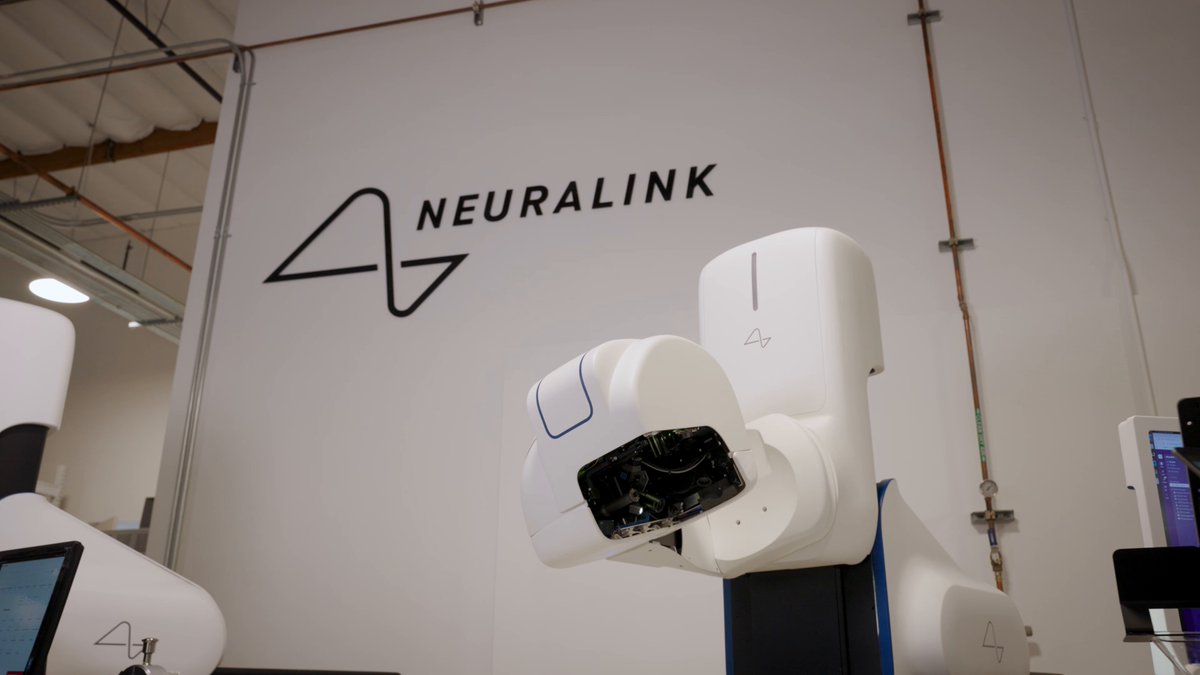
Neuralink has pulled back the curtain on one of the most technically demanding parts of its brain-computer interface system: the surgical needle that places each electrode thread into the brain. In a post this week, the company confirmed it manufactures these needles entirely in-house, using laser milling to create features too small to see with the naked eye — a capability that speaks directly to how seriously the company is treating manufacturing as a competitive advantage.

What the Needle Actually Does
The needle's job sounds deceptively simple: grasp each electrode thread and insert it into brain tissue at the correct depth and position. In practice, that requires tolerances that push the limits of conventional machining. According to verified technical specifications, the surgical robot uses a needle just 25 micrometers in diameter — roughly one-quarter the width of a human hair — constructed from tungsten-rhenium, a metal alloy chosen for its combination of hardness and flexibility at extreme scales.
The threads themselves are even more delicate. Each one is composed primarily of polyimide with thin gold or platinum conductors, measuring just 4–6 µm in thickness and approximately 20 mm in length. Neuralink's N1 implant uses 128 of these threads, each carrying 8 electrodes, for a total of 1,024 recording sites per device. Getting every one of those threads placed correctly — without damaging surrounding tissue — is the engineering problem the needle is designed to solve.
Why In-House Manufacturing Matters
Bringing needle production in-house rather than relying on external suppliers gives Neuralink direct control over tolerances, iteration speed, and cost. The company targets manufacturing precision of ±1 micron for its surgical instruments — a standard that rules out most conventional machining approaches and explains why laser milling is central to the process. Lasers can ablate material at scales that mechanical tools simply cannot reach reliably.
The cost impact has been significant. According to available data, the manufacturing cost of disposable needle cartridges has been reduced by 95 percent — a figure that becomes critical as Neuralink moves toward high-volume production. Elon Musk announced in late 2025 that the company would shift to high-volume BCI device production in 2026, with the surgical procedure itself expected to become almost entirely automated.
That automation push is already visible in the performance numbers. The surgical robot can now insert a single electrode thread in 1.5 seconds, down from 17 seconds previously — an 11x speed improvement. Insertion depths can exceed 50 millimeters, and the system is designed to be compatible with 99% of human brain anatomical variations. Neuralink also notes that threads can pass through the dura — the brain's outer membrane — without requiring its removal, a meaningful reduction in procedural complexity.
The Longer Manufacturing Roadmap
The laser milling capability announced this week fits into a broader pattern of Neuralink verticalizing its production stack. The company has developed custom hardware for etching metal wire to the required diameter and integrated in-line inspection systems for quality control and data collection during manufacturing — essentially building a feedback loop that tightens tolerances over time.
Looking further ahead, Neuralink has indicated it intends to eventually use laser beams to create the skull openings needed for thread insertion, replacing mechanical drills and eliminating the vibrations associated with them. If needle manufacturing is any indication, the company will likely develop that capability in-house as well rather than sourcing it externally.
The gap between a research-grade prototype and a device that can be implanted in thousands of patients reliably comes down almost entirely to manufacturing discipline. Neuralink's decision to own that process — from laser-milled needles to automated surgical robots — suggests the company is treating production engineering as seriously as the neuroscience itself.
Sources & reporting notes
The links below identify the material source records used for this report.
- @neuralink on X (2026-05-08T21:40:50.000Z) — Direct source
Source links are preserved as published or accessed. See our editorial standards and corrections policy.
The BASENOR Editorial Desk covers Tesla, SpaceX, and related technology, curating reporting from primary sources — official accounts, regulatory filings, and software release data. Every article passes source-record and fact-checking review before publication. About the newsroom.
This report was curated by the BASENOR Editorial Desk from the sources listed above. Read our editorial standards or email editorial@basenor.com to report an error.