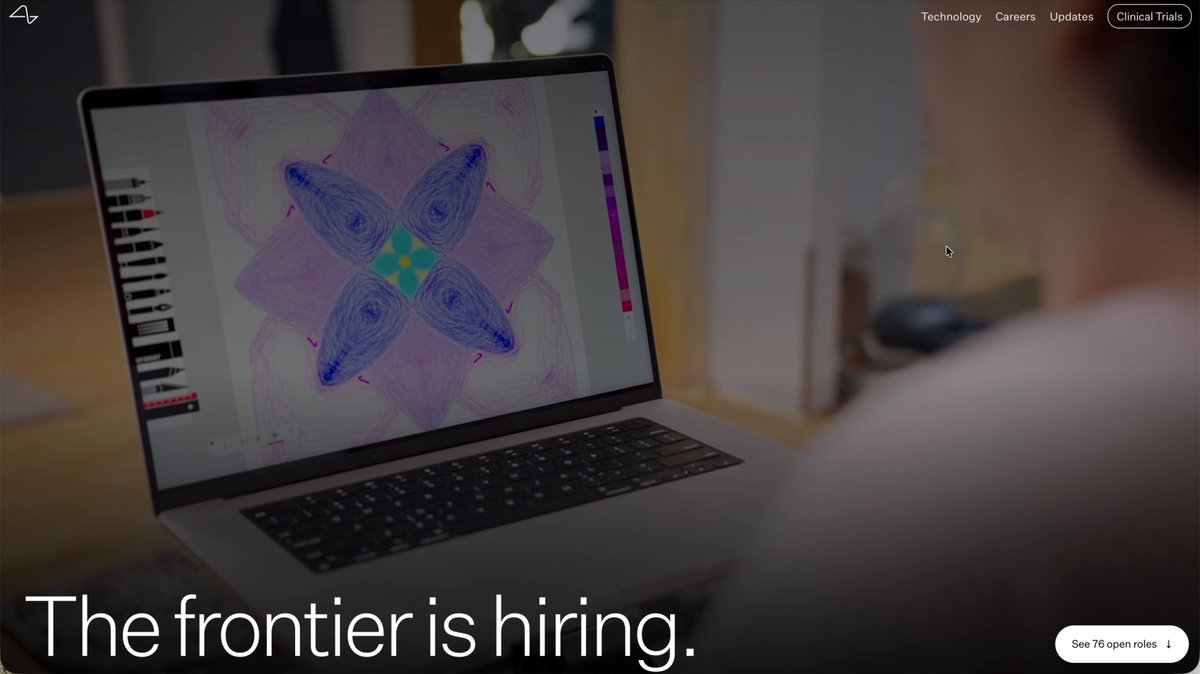
Neuralink quietly refreshed its careers page this week, and the update is more revealing than a typical job board. Rather than listing perks and ping-pong tables, the company laid out a blunt, specific set of operating values — including a clear signal about the kind of candidates they're actively filtering out. For anyone watching how Elon Musk's brain-computer interface company is scaling up, it's a candid look at the culture being built around one of the most consequential technologies in development.

According to Neuralink's careers page, the company is actively hiring as of August 2026. Here are the five values they've chosen to lead with — and what each one signals about the organization they're trying to build.
1. Focus on the User
This is listed first, and the framing is deliberate. Neuralink's page states that every decision traces back to the people who depend on this technology, and that their outcomes are the primary metric. For a company working on brain implants for patients with severe neurological conditions — paralysis, ALS, blindness — this isn't abstract mission-speak. It's a direct acknowledgment that the end user is a person whose autonomy and quality of life are on the line. The Link device is designed to record from 1,024 electrodes and be fully wireless, usable by patients at home without clinical supervision.
2. Think from First Principles
Neuralink explicitly asks employees to reason from physics and evidence rather than precedent. This is a familiar refrain across Musk's companies — SpaceX famously used first-principles thinking to slash rocket manufacturing costs — but it carries extra weight in the medical device context. Regulatory pathways, surgical procedures, and implant designs all have deeply entrenched precedents. The company is signaling it wants people willing to question those defaults rather than default to what's been done before. Neuralink received FDA approval for human trials in 2023, itself a milestone that required challenging conventional timelines.
3. Deliver Urgently Without Compromise
The tension between speed and rigor is one most engineering organizations struggle to resolve. Neuralink's answer is to hold both simultaneously. The page frames urgency in human terms — people are waiting — while insisting that accuracy cannot be sacrificed because the work involves human implantation. It's a harder standard than most companies set, and it's worth noting that it rules out both the move-fast-and-break-things mentality and the slow-by-default culture of traditional medical device firms. That's a narrow target, and it's intentional.
4. Demand Excellence
The bar Neuralink sets here is specific: the best work of your life. Notably, the page frames this as a mutual expectation — employees are expected to hold this standard for themselves and for their colleagues. That's a meaningful distinction from companies that use excellence as a one-way management tool. It also suggests a peer-accountability culture where underperformance isn't just a manager's problem to address. For candidates evaluating the role, this is probably the clearest signal about day-to-day intensity.
5. Act with Kindness
This one tends to surprise people familiar with the broader Musk company culture narrative. Neuralink's careers page pairs direct feedback and tackling difficult problems with an explicit commitment to maintaining a humane environment. The combination — blunt honesty plus genuine care — is harder to execute than either alone, but it's also a more sustainable culture model for a company that needs to retain highly specialized talent over a long research and development horizon. Brain-computer interface work doesn't move in product cycles; it moves in decades.
Taken together, these five values sketch a company that knows exactly what it is and what it isn't. The careers page isn't trying to appeal to everyone — and that's probably the point. Neuralink's mission, restoring autonomy for people with unmet medical needs and eventually expanding human potential through brain-machine interfaces, requires a workforce that can hold urgency and precision at the same time, for years. The new page is less a recruitment tool than a filter.
Sources & reporting notes
The links below identify the material source records used for this report.
- @SawyerMerritt on X (2026-08-21T17:44:16.000Z) — Direct source
Source links are preserved as published or accessed. See our editorial standards and corrections policy.
The BASENOR Editorial Desk covers Tesla, SpaceX, and related technology, curating reporting from primary sources — official accounts, regulatory filings, and software release data. Every article passes source-record and fact-checking review before publication. About the newsroom.
This report was curated by the BASENOR Editorial Desk from the sources listed above. Read our editorial standards or email editorial@basenor.com to report an error.