Nvidia announced Monday that xAI will deploy its new Vera CPUs to accelerate the next generation of agentic AI applications powering Grok — and, in a first for the industry, extend an optimized Vera Rubin NVL72 rack-scale system into orbit aboard xAI's Starmind AI satellites. The partnership formalizes what Elon Musk hinted at earlier this year: xAI's entire forward compute roadmap is being built on Nvidia's next-generation architecture, with no dual-sourcing strategy in sight.
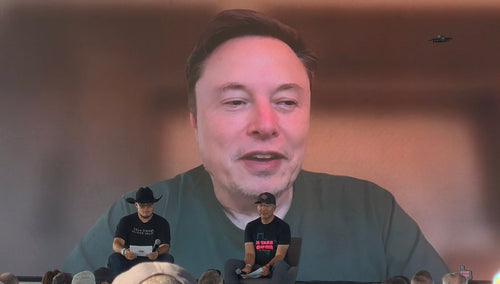
The announcement expands a relationship that already includes Nvidia's reported $2 billion investment in xAI as part of a $20 billion funding round tied to the Colossus 2 data center in Memphis, according to StockTitan and Investing.com. What's new today is the specific hardware commitment — and the space angle.

What Nvidia and xAI Committed To
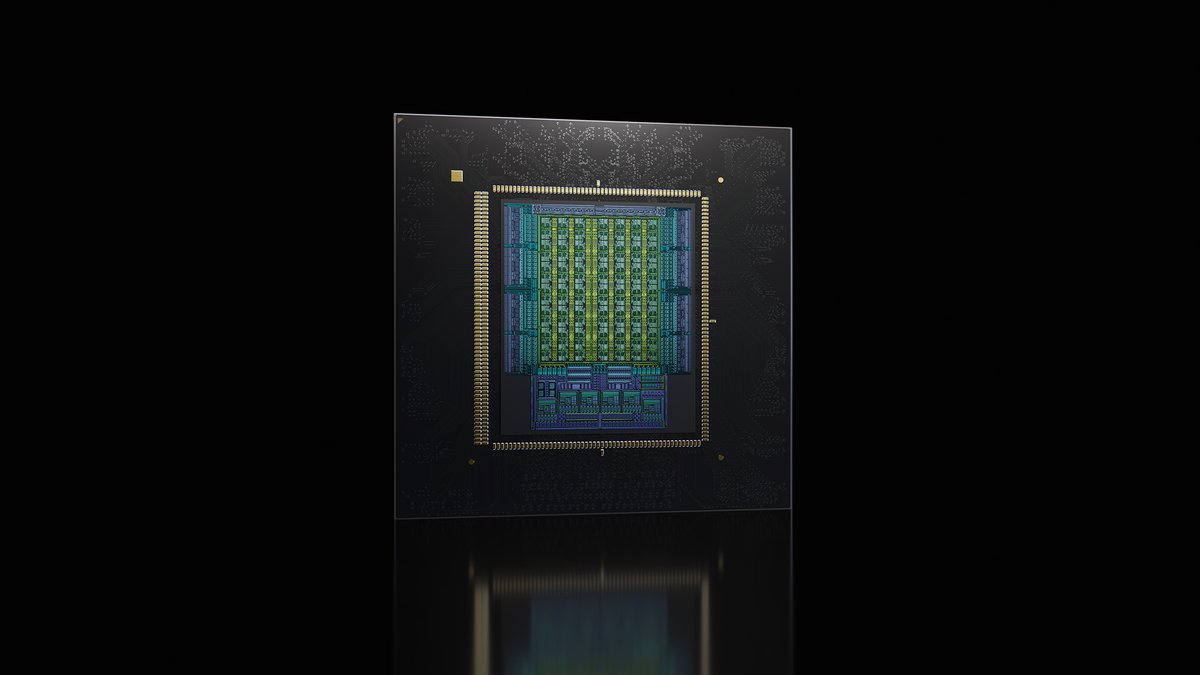
According to Nvidia's official announcement, xAI will deploy Vera CPUs to handle the heavy orchestration, code execution, data processing, and simulation workloads that modern agentic AI systems demand. These are the tasks that surround the GPU — the connective tissue that lets an AI agent actually plan, call tools, and execute multi-step reasoning rather than simply generating a single response.
The Grok infrastructure will scale on the Nvidia Vera Rubin platform, which Nvidia says entered full production around May 31, 2026. Nvidia is targeting gigawatt-class deployments — the same scale Musk has publicly discussed for Colossus 2.
The headline detail, however, is the plan to fly an optimized Vera Rubin NVL72 system aboard xAI's first-generation Starmind AI satellite. Nvidia describes the payload as "datacenter-class space compute" combining Rubin GPUs and Vera CPUs. It would be, if delivered, the first serious attempt to place a full rack-scale AI training or inference node in orbit.
Key Figures
| Spec | Detail |
|---|---|
| Vera CPU cores | 88 custom Nvidia-designed Olympus cores |
| Memory bandwidth | Up to 1.2 TB/s (LPDDR5X) |
| Memory capacity | Up to 1.5 TB per socket |
| Claimed performance | Up to 1.8x faster than x86 on certain agent workloads |
| Vera Rubin NVL72 | 72 Rubin GPUs + 36 Vera CPUs + ConnectX-9 SuperNICs + BlueField-4 DPUs per rack |
| Nvidia investment in xAI | Up to $2B (part of $20B round for Colossus 2) |
| Vera CPU availability | Fall 2026 (per Nvidia) |
How We Got Here
Musk telegraphed this direction earlier in 2026 when he stated that all future xAI infrastructure would be built exclusively on Nvidia hardware, specifically the Vera Rubin generation. That commitment closed the door on speculation that xAI might follow Meta and others in adopting a mixed-silicon strategy with AMD Instinct or custom ASICs.
Colossus 2 in Memphis is the near-term anchor for that plan. The original Colossus, brought online in 2024, established xAI's ability to scale training clusters rapidly — Musk claimed a 100,000-GPU cluster stood up in months. Colossus 2 is designed to scale into gigawatt territory, and Nvidia's Vera Rubin roadmap is what makes that thermally and economically viable.
The Starmind satellite angle is newer. SpaceX has been positioning Starship as the launch vehicle for large orbital payloads, and placing AI compute in orbit sidesteps two constraints that increasingly bind terrestrial data centers: grid interconnect timelines and cooling. Space offers effectively unlimited passive cooling and continuous solar generation. It also creates new problems — radiation hardening, servicing, and latency to ground users — that Nvidia and xAI have not yet detailed.
Reading the Official Statements
Ian Buck, Nvidia's VP of Hyperscale and HPC, framed Vera as the CPU that gives "AI agents the CPU performance to act in real time." Mike Nicolls, President of SpaceXAI, said Vera gives xAI "the CPU performance and memory bandwidth to run enormous amounts of orchestration, code and data processing while keeping GPUs doing what they do best."
Both statements point at the same architectural thesis: the bottleneck in agentic AI is no longer raw GPU FLOPS — it's the CPU-side plumbing that feeds those GPUs, manages tool calls, and executes generated code. Nvidia is betting that a purpose-built CPU with 1.2 TB/s of memory bandwidth is a meaningful advantage over standard x86 server chips.
What to Watch Next
Several things remain unresolved. Nvidia's own filing language notes that these deployments are "not commitments, promises, or legal obligations" and that products are available on a "when-and-if-available basis." Pricing for Vera CPUs has not been disclosed. And no launch window has been shared for the Starmind AI1 satellite carrying the space-based NVL72 payload.
The near-term signals worth tracking: Colossus 2's power-up timeline in Memphis, the first Vera Rubin NVL72 shipments to hyperscale customers this fall, and whether any Starmind satellite hardware appears on SpaceX's manifest through 2027. If xAI is serious about datacenter-class orbital compute, the launch cadence will tell the story faster than any press release.
Why It Matters for Tesla Owners
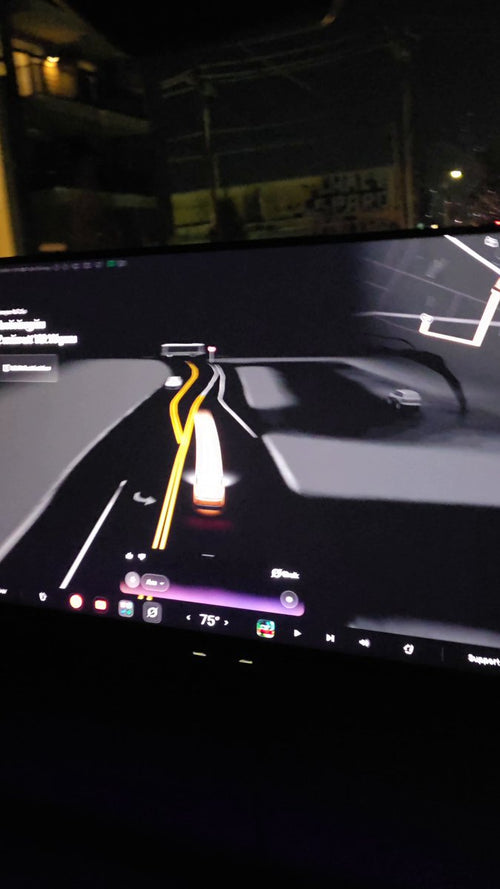
Grok is increasingly embedded in the Tesla ownership experience through the in-car AI assistant that rolled out over the past year. The compute powering those responses — and the responsiveness owners feel when asking Grok to plan a trip, control cabin settings, or answer complex questions — traces directly back to xAI's training and inference infrastructure. A material upgrade to that backend, combined with agentic capabilities that let Grok actually execute multi-step tasks, is the kind of change owners will notice in the cabin over the next 12 to 24 months.
Related Gear
Gear up your Tesla with tested, custom-fit BASENOR accessories — shop Tesla accessories →
Sources & reporting notes
The links below identify the material source records used for this report.
- @SawyerMerritt on X (2026-08-24T15:34:06.000Z) — Direct source
Source links are preserved as published or accessed. See our editorial standards and corrections policy.
The BASENOR Editorial Desk covers Tesla, SpaceX, and related technology, curating reporting from primary sources — official accounts, regulatory filings, and software release data. Every article passes source-record and fact-checking review before publication. About the newsroom.
This report was curated by the BASENOR Editorial Desk from the sources listed above. Read our editorial standards or email editorial@basenor.com to report an error.