Tesla Energy officially announced Powerwall 3 is now available in Japan, billing it as 'Built for Japan' — a phrase that turns out to mean more than marketing copy. According to verified launch data, sales opened August 3, 2026, with installations expected to begin September through October. Here are the six details that actually matter for Japanese households considering the switch.

1. Power Output Nearly Doubled vs. Powerwall 2
The headline spec upgrade is power delivery. Powerwall 3 provides a maximum output of 9.69 kW and 11.5 kW of continuous AC discharge — compared to the 5 kW rating of Powerwall 2. For Japanese households running air conditioning, IH cooktops, and EV charging simultaneously, that headroom is the difference between a battery that actually covers peak load and one that doesn't. Usable storage capacity stays at 13.5 kWh, the same as the previous generation.
2. The Solar Inverter Is Built In
Powerwall 3 includes an integrated solar power conditioner, meaning it connects directly to solar panels without a separate inverter. That simplifies installation considerably — fewer components, fewer potential failure points, and a cleaner setup for installers working in Japan's typically compact residential spaces. DC-to-AC conversion efficiency is rated at 97.5%, and solar-to-battery-to-home efficiency comes in at 89%.
3. It Earned the Certifications That Unlock Subsidies
This is where 'Built for Japan' earns its weight. The unit has obtained JIS C 4412 and JIS C 8715-2 safety certifications, JC-Star IoT security certification, ECHONET Lite communication standard compliance, and SII equipment registration. Those aren't just compliance checkboxes — they're the credentials that make Powerwall 3 eligible for local government subsidy programs, which can meaningfully reduce the effective purchase price for Japanese buyers.
4. Opticaster AI Manages Charging Around Electricity Prices
Tesla's AI system Opticaster is integrated into Powerwall 3 and automatically adjusts charging and discharging schedules based on two variables: weather forecasts and electricity price fluctuations. Japan's time-of-use electricity pricing makes this particularly relevant — the system can prioritize charging during off-peak low-rate windows and discharge during peak-price periods, working to reduce the household power bill without requiring manual intervention.
5. The Physical Design Fits Japanese Homes
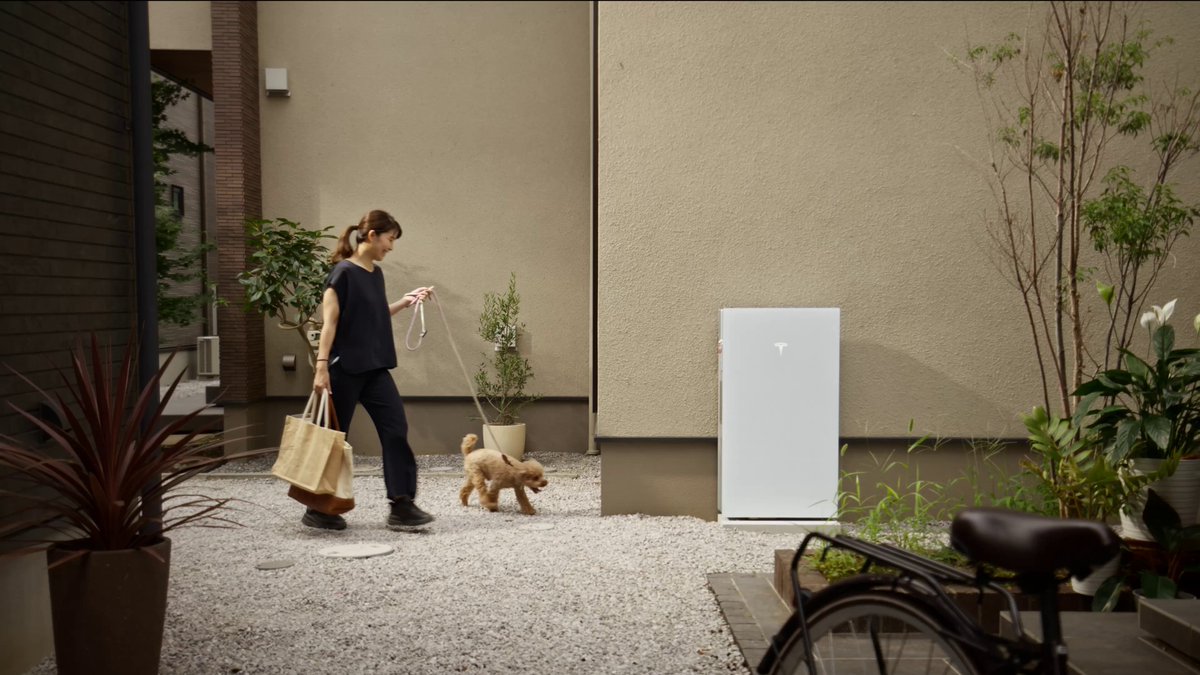
At 609×193×1,105mm and 19.8cm deep, Powerwall 3 is built slim enough for the tighter installation spaces common in Japanese residential construction. It supports both floor-standing and wall-mounted configurations and can be installed indoors or outdoors. The unit operates across a wide temperature range (-20°C to 50°C) and carries water resistance up to 60cm from its base — relevant for outdoor installs in regions that see heavy seasonal rainfall. Weight is 130kg, so professional installation is required.
6. A 10-Year Warranty Backs the Investment
Powerwall 3 ships with a 10-year warranty in Japan. Given that the typical payback period for home battery storage in Japan — factoring in solar feed-in tariffs, subsidy eligibility, and rising grid electricity costs — can run anywhere from several years to over a decade depending on usage, the warranty coverage aligns with the investment horizon most buyers are working within.
Installations are slated to begin between September and October 2026. Japanese households interested in ordering can visit Tesla's Japan energy page directly. With subsidy eligibility now confirmed via the relevant certifications, the timing for evaluating a Powerwall 3 installation is better than it has been for any previous Tesla Energy product in this market.
Sources & reporting notes
The links below identify the material source records used for this report.
- @teslaenergy on X (2026-09-08T21:46:44.000Z) — Direct source
- @teslaenergy on X (2026-09-08T21:46:45.000Z) — Direct source
Source links are preserved as published or accessed. See our editorial standards and corrections policy.
The BASENOR Editorial Desk covers Tesla, SpaceX, and related technology, curating reporting from primary sources — official accounts, regulatory filings, and software release data. Every article passes source-record and fact-checking review before publication. About the newsroom.
This report was curated by the BASENOR Editorial Desk from the sources listed above. Read our editorial standards or email editorial@basenor.com to report an error.